Seasons
The northern lights, and an honest forecast
No operator can sell you a guaranteed sighting of the aurora, and any that implies otherwise is not being straight with you. What can be improved, considerably, are your odds.
By Arthur Penhallow26 September 20264 min read
The aurora borealis is caused by charged particles from the sun colliding with the earth's upper atmosphere, guided towards the poles by the planet's magnetic field, and it has been doing this for as long as the earth has had an atmosphere worth speaking of. None of that physics makes it predictable on any given Tuesday. What follows from a solar event ninety-odd million miles away is, by the time it reaches a particular fjord or hillside, a matter of local cloud cover, the solar cycle, and a fair amount of luck. Anyone selling a guaranteed sighting is selling something the sun has not agreed to.
Where the odds are genuinely good
The aurora is visible, in principle, in a band around both magnetic poles known as the auroral oval, which over the northern hemisphere sits roughly across northern Norway, northern Finland and Sweden, Iceland and similar latitudes. Within that band, the odds depend on darkness, clear skies and being far enough from artificial light to see anything at all, which is why Arctic Norway, above the Arctic Circle around Tromsø and Alta, has built a genuine tourism industry around the chase.
Land, sea or somewhere between
The three main ways of pursuing a sighting each trade something for something else. A ship sailing the Norwegian coast can move to escape cloud in a way that a fixed hotel cannot, which is a real advantage when the forecast for one bay differs from the forecast fifty miles up the coast, but it also means clearer skies are not guaranteed just because the itinerary says the ship is in the right latitude. A land-based trip into Finnish Lapland, based around Inari and Ivalo in the far north, keeps you still for longer in one of the more reliably dark and unpolluted stretches of the Arctic, with the forest and frozen lakes providing about as little competing light as northern Europe has left.
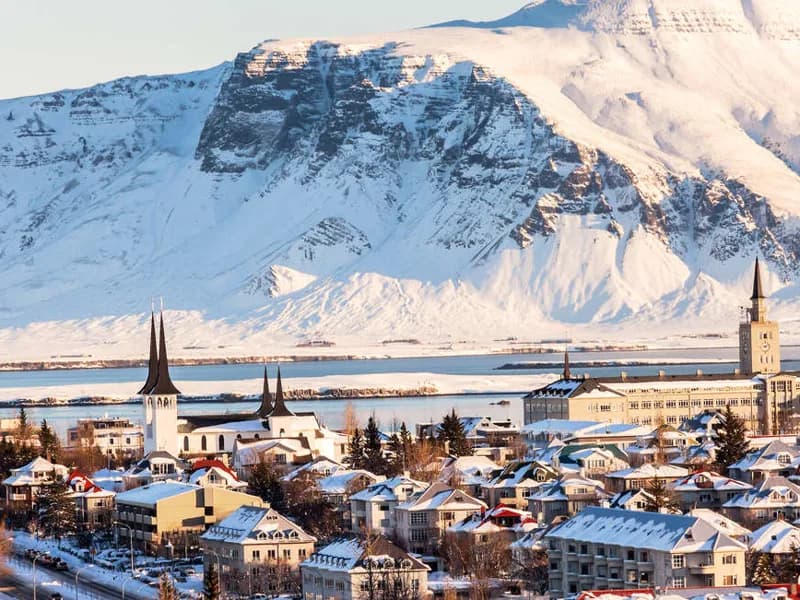
Iceland offers a third option, and the most accessible one for a short trip: a few nights based around Reykjavik, with excursions out to darker countryside away from the city's own glow, combined with waterfalls, black sand beaches and the geothermal landscape of the Golden Circle regardless of what the sky does after dark. It is the sensible choice for anyone who wants a full holiday whether or not the aurora shows up.
When to actually go
The season runs, broadly, from around September to March or April, whenever the nights are dark enough for a fainter light to register, and completely useless in the height of an Arctic summer when the sun barely sets. Within that window, the moon phase matters more than most people realise; a bright full moon washes out all but the strongest displays, so a new moon and a clear forecast are worth more than any particular month on a calendar. Some scientists have also noted a modest statistical tendency towards more geomagnetic activity around the spring and autumn equinoxes, though this is a nudge in your favour rather than a rule.
What to actually expect
The camera-phone photograph that convinced most people to go is usually a longer exposure than the naked eye experiences; a strong display genuinely does fill the sky with visible colour and movement, but a faint one can look more like a pale, shifting haze than the vivid green of the postcards. Dress for standing still in serious cold for an hour or more, manage your expectations honestly, and treat any sighting as a bonus on top of a trip that was worth taking anyway. That is, in the end, the only strategy that has never once failed to work.
The solar cycle, briefly
One more variable is worth knowing about, because it genuinely moves the odds more than most seasonal advice does: the sun runs on an eleven-year cycle of activity, and displays tend to be more frequent and more vivid, further from the poles, around solar maximum than solar minimum. This is not something a holiday brochure will usually mention, because it changes year to year rather than month to month, but anyone planning a trip specifically for the aurora is better off checking roughly where the current cycle stands than fixating on a single destination's reputation. Even at the best point in the cycle, though, the basic honesty of the whole pursuit does not change: nobody can promise you the sky.
By Arthur Penhallow, the name Atlas & Passage’s editorial team writes under. Prices and dates in the trips below come from the operators and can change.