Journeys
India and the Maldives: the Golden Triangle, then a week at sea
A week among the forts, tombs and bazaars of northern India is exhilarating and exhausting in equal measure. A week sailing among the coral islands of the Maldives is the opposite. Put together, in the cool, dry months of winter, they make a well-balanced trip.
By Walter Pellow20 October 20264 min read
There are trips that work because the two halves are similar, and trips that work because they are not. India and the Maldives belong to the second kind. Northern India is crowded, noisy, intensely colourful and full of history, with some of the greatest monuments in the world and a press of life in every street. The Maldives are a scattering of small, flat coral islands in an empty ocean, quiet and slow, where the main attractions are the water, the reefs and the sky. A week of one followed by a week of the other makes a trip of contrasts.
The timing works too. The best season for northern India is the cool, dry winter, roughly from October to March, and the best season for the Maldives is the dry north-east monsoon, roughly from December to April. The overlap, from about November to February, suits both.
The Golden Triangle
The classic first trip to India links three cities in the north. Delhi, the capital, has layers of history, from the Mughal Red Fort and the great Jama Masjid in the old city to the imperial avenues of New Delhi. Agra has the Taj Mahal, the white marble tomb that Shah Jahan built for his wife, and the great Mughal fort on the river. Jaipur, the capital of Rajasthan, is the pink city of palaces, with the Amber Fort on its ridge outside town.
Between Agra and Jaipur lie two sights well worth the stop. Fatehpur Sikri is the red sandstone city built by the emperor Akbar in the sixteenth century and abandoned within a generation. At Abhaneri, the Chand Baori is one of the deepest and most spectacular stepwells in India, a vast square pit lined with thousands of steps in geometric flights descending many storeys to the water. It was built more than a thousand years ago to store water through the dry season.
The Maldives by dhoni
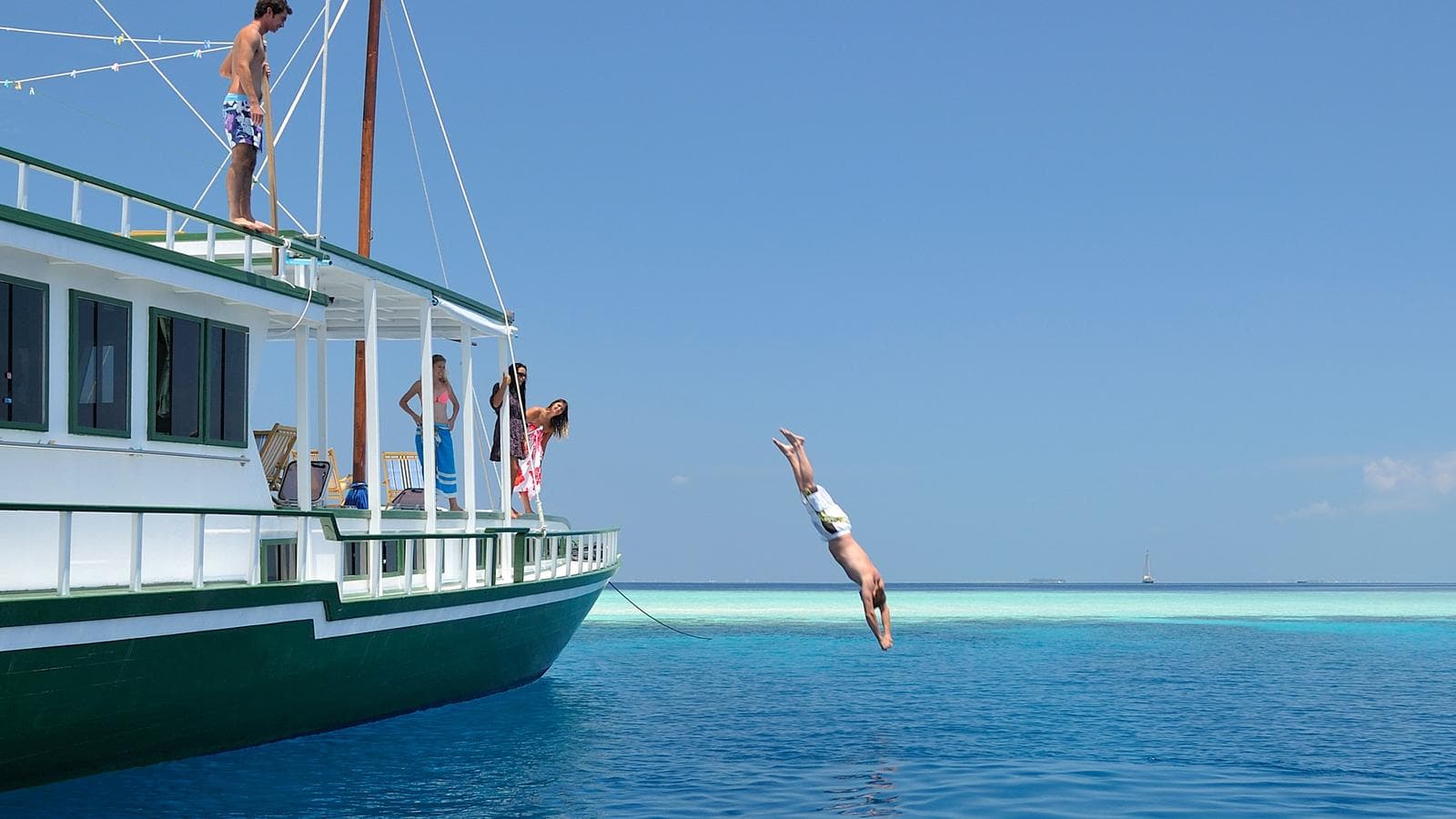
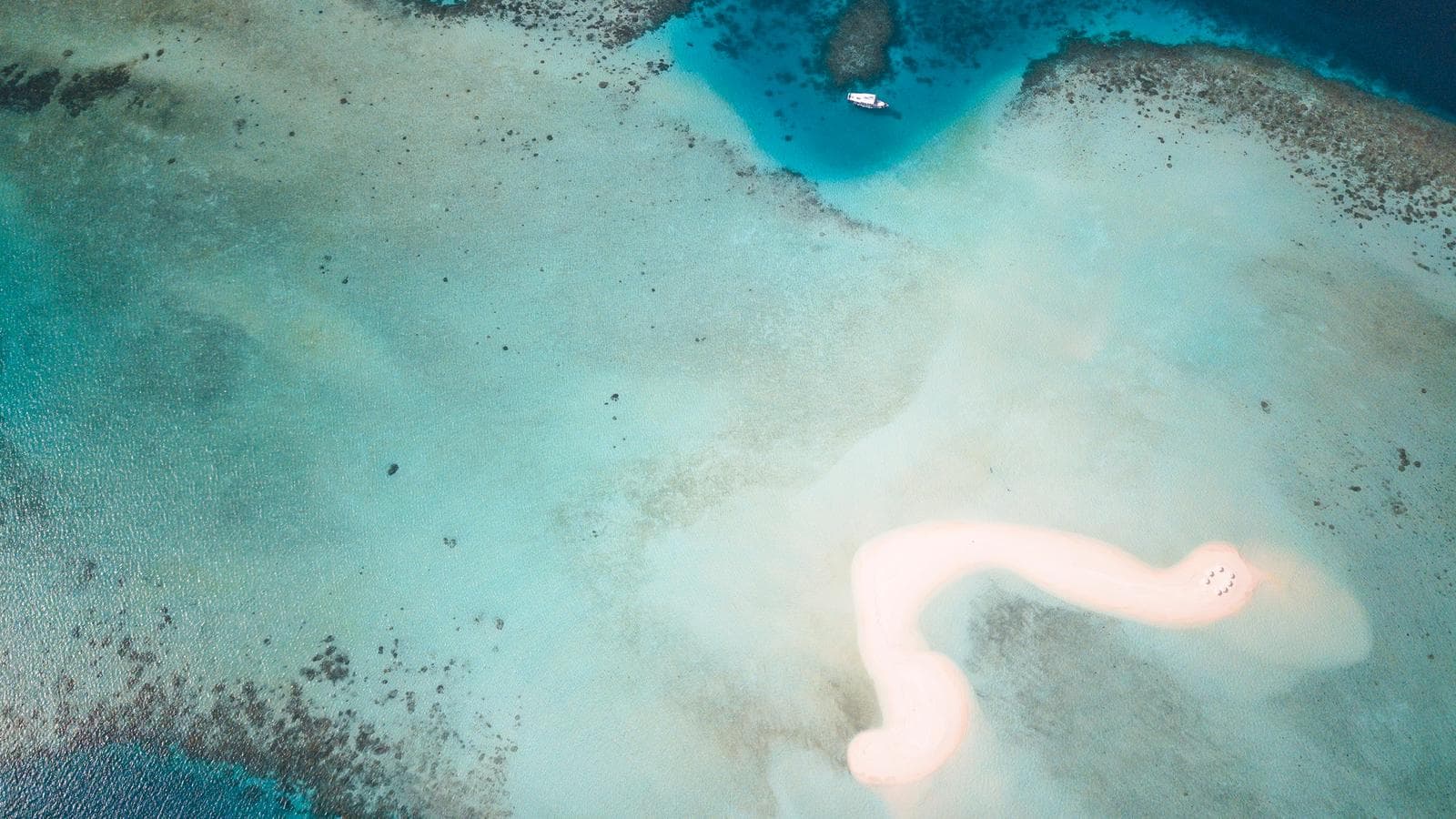
From Delhi, a flight of a few hours across the Arabian Sea reaches Malé, the Maldivian capital, a small, densely packed island city. From there the dhoni, the traditional Maldivian wooden boat, heads out into the atolls. Days are spent snorkelling on the coral reefs among turtles, rays and shoals of fish, swimming from the boat, lazing on sandbanks and visiting local islands. The Vaavu atoll, south of Malé, is a quiet, less developed atoll. Its small inhabited islands, such as Fulidhoo and Felidhoo, have sandy lanes, coral-stone houses, mosques and fishing boats.
After the intensity of India, the stillness is striking. There are no crowds, no traffic and little noise beyond the sea and the wind.
On the local islands of the Maldives, visitors see a side of the country that resort guests rarely do. Islanders fish, mend nets, build boats and play football in the evening, and the pace of life is slow. Alcohol is not served, and visitors are expected to dress modestly away from the beaches set aside for tourists. Most of the time on a dhoni, though, is spent at sea: swimming off the boat in the morning, snorkelling over a reef at midday, watching the sunset from the deck and sleeping to the sound of the water.
There is also something to be said for the order. India first, while you are fresh, then the Maldives to recover. I would not do it the other way round.
The tour that does both
G Adventures' Essential India and Maldives Sailing, thirteen nights in November, January and February, combines the two. In India its places include Delhi, Agra, Fatehpur Sikri, Jaipur and Abhaneri. In the Maldives they include Malé, Fulidhoo, Felidhoo and Bodu Mora.
For those who have already seen India, or who want to combine the Maldives with another trip, G Adventures' Maldives Dhoni Cruise, six nights from October to March, covers the same islands of the Vaavu atoll on its own.
A practical note: India's food is famously generous and can be challenging for the stomach. The Maldives' cooking, based on fish, coconut and rice, is gentler. It is one more reason to do the two in that order.
By Walter Pellow, the name Atlas & Passage’s editorial team writes under. Prices and dates in the trips below come from the operators and can change.