Slow travel
The Maldives by dhoni, the islands people actually live on
Most visitors to the Maldives see one private resort island and the sea around it. A dhoni cruise among the local islands shows the country Maldivians live in, with its fishing villages, mosques and football pitches, as well as the reefs.
By Walter Pellow20 October 20264 min read
The Maldives are a nation of islands: some twelve hundred of them, grouped in a double chain of coral atolls stretching across the Indian Ocean south-west of India. Only about two hundred are inhabited by Maldivians. Many of the rest have been leased as resorts, each a self-contained island with its own hotel, restaurants, water villas and staff. For decades, foreign visitors were in effect confined to the resorts and to brief visits to the capital, Malé. Local islands were largely closed to tourists. That changed in the late 2000s, when the government began allowing guesthouses on inhabited islands. Since then a different kind of Maldives holiday has grown up, among the island communities rather than apart from them.
The dhoni
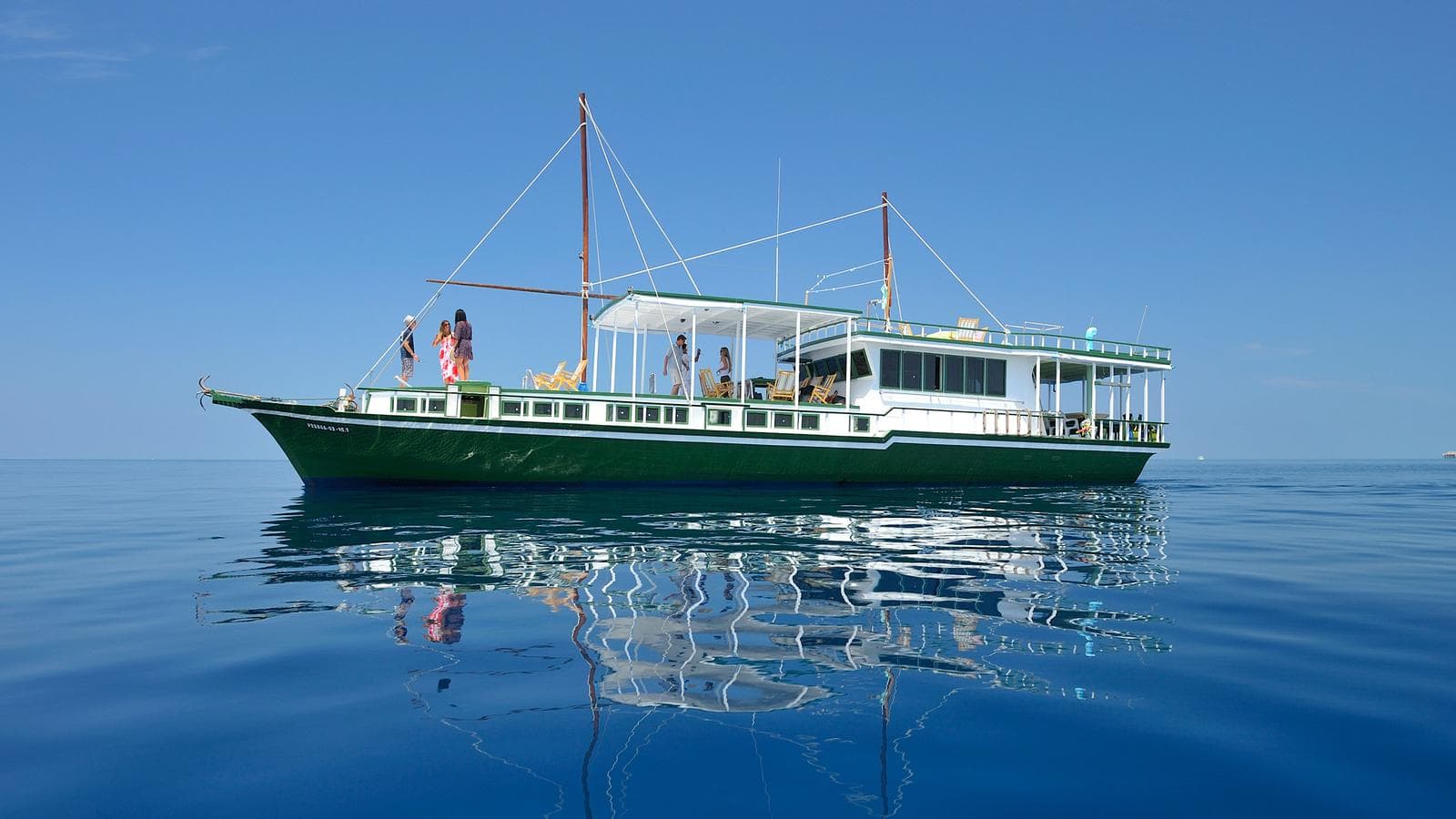
The dhoni is the traditional Maldivian boat, a wooden vessel with a high, curved prow. For centuries dhonis carried fishermen, traders and travellers between the islands. Many are still used for pole-and-line tuna fishing, one of the country's main industries and a famously sustainable one. Some have now been converted to carry small groups of visitors among the islands on cruises of a week or so, with simple cabins below deck, a shaded deck above and meals cooked on board.
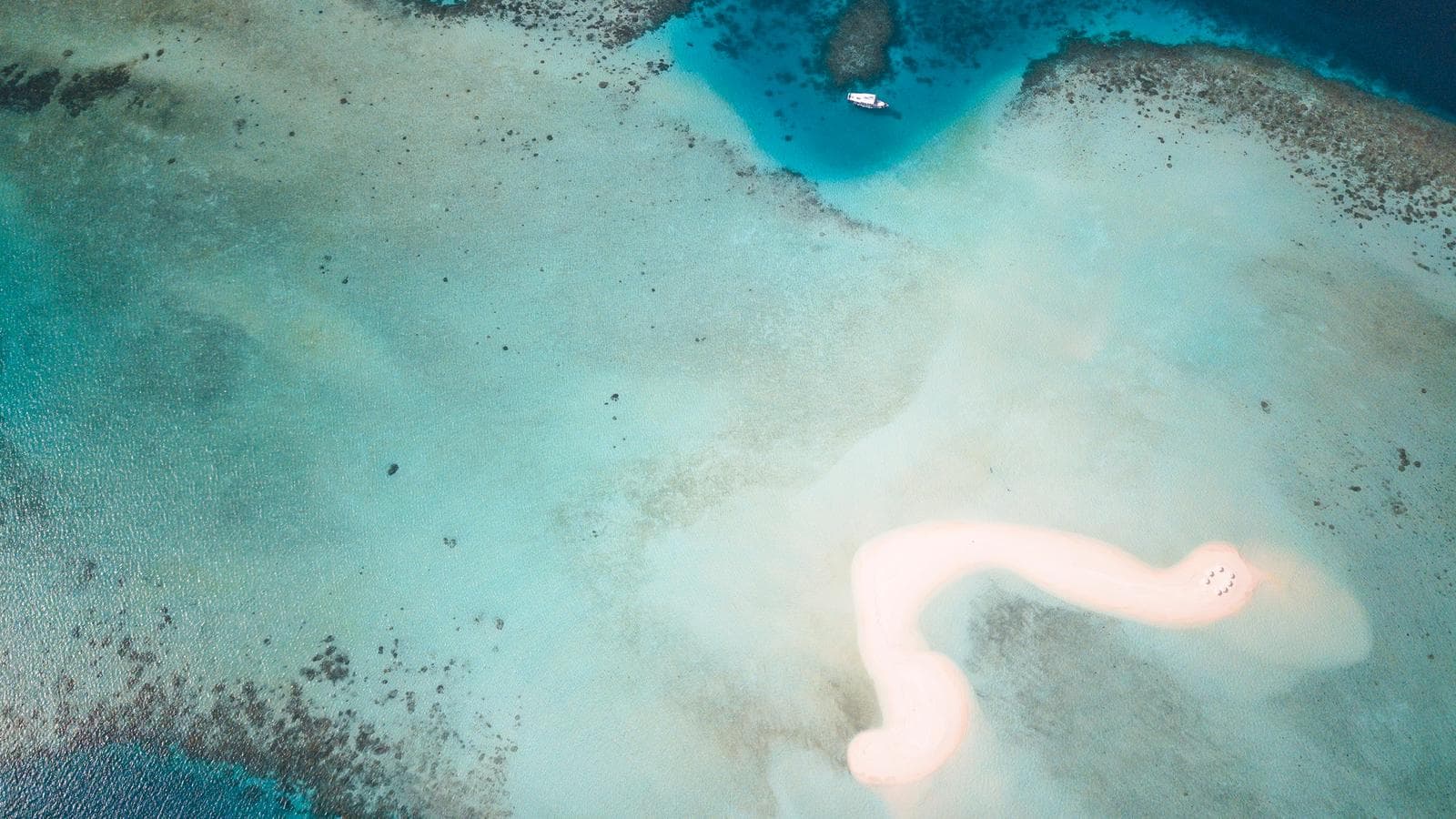
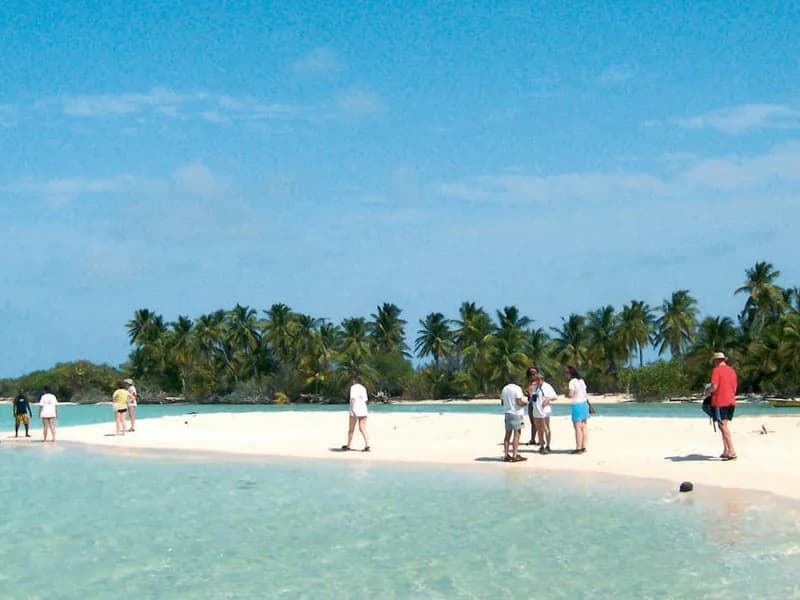
Life on board is simple and unhurried. Days are spent swimming and snorkelling on the reefs, stopping at sandbanks and uninhabited islands, fishing, and visiting the local islands.
Island life
The local islands are where the Maldives makes sense. A typical inhabited island is small enough to walk across in a few minutes, with sandy streets lined with coral-stone walls and houses, a mosque or two, a school, a harbour full of fishing boats and a football pitch, the centre of village life in the evening. The Maldivians have been Muslim since the twelfth century, and Islam shapes daily life. Their language, Dhivehi, is written in its own script, Thaana, which runs from right to left.
The food is based on fish, coconut and rice. Mas huni, a breakfast dish of tuna, grated coconut, onion and chilli eaten with flatbread, is the national favourite. Garudhiya, a clear fish broth, is the traditional staple, and small fried snacks called hedhikaa are served with tea in the afternoon.
Visitors to local islands are expected to respect local customs. Away from designated beaches for tourists, modest dress is expected, covering shoulders and knees. Alcohol is not available on local islands. Fulidhoo, in the Vaavu atoll, is a small island known for its tradition of bodu beru, the big drum music, which is sometimes performed for visitors in the evening.
The local islands have changed since they opened to visitors. Guesthouses, small cafés and dive centres have appeared, and tourism has brought money and jobs to communities that once depended almost entirely on fishing. It has also brought questions, about how much change islanders want and how to keep the character of their islands. Choosing locally owned guesthouses and boats, respecting local customs and buying from local shops are the best ways to make sure that the benefits stay on the island.
Malé, the capital, is worth a few hours too. It is one of the most densely populated cities in the world, an island packed edge to edge with buildings, with a fish market, a colourful old mosque built of carved coral stone, and narrow streets full of scooters. It is a lively contrast to the quiet of the atolls.
The cruises
G Adventures' Maldives Dhoni Cruise, six nights from October to March, sails among the local islands and reefs of the Vaavu atoll, including Fulidhoo, Felidhoo and Bodu Mora.
Explore Worldwide's Maldive Dhoni Cruise, seven nights through most of the year, sails from Malé and Hulhumalé through the South Malé, Vaavu and Meemu atolls. Its places include Kudiboli, Loabi Faru, Bongo Veli, Ruhhuri Hura and the Acho Kacho reef, and the islands of Felidhoo and Fulidhoo. G Adventures' Maldives Cruise: Indian Ocean Dhoni Life, six nights, covers Fulidhoo, Felidhu, Bodu Mora and Malé.
The Maldives are low-lying, with most islands only a metre or two above the sea, and among the countries most threatened by rising sea levels. Seeing the islands where people live, rather than only the resorts, gives a clearer sense of what is at stake.
By Walter Pellow, the name Atlas & Passage’s editorial team writes under. Prices and dates in the trips below come from the operators and can change.