Slow travel
The Garden Route, a coast built for a slow drive
Between Cape Town and Kruger, a strip of forest, lagoon and cliff runs along South Africa's southern coast, named, with unusual accuracy, for how green it stays.
By Arthur Penhallow26 September 20263 min read
South Africa's interior runs dry for a good part of the year, but a narrow coastal strip east of Cape Town, roughly from Mossel Bay to Storms River, stays reliably green thanks to rain that falls across both winter and summer rather than concentrating in one season the way it does further inland. The Garden Route takes its name directly from that greenness, indigenous forest, fynbos-covered hills and freshwater lagoons, and it has become one of the country's most travelled roads precisely because the landscape changes noticeably every hour or so of driving.
Where the route actually runs
Most itineraries begin the drive after Cape Town and the Winelands, following the N2 highway east through a sequence of small towns and natural landmarks: Hermanus and the Overberg, Mossel Bay, the Cango Caves and ostrich farms around Oudtshoorn, and on through George, Sedgefield, Knysna and Plettenberg Bay before the road climbs into the deep indigenous forest of Tsitsikamma National Park and the gorge crossed by the Storms River suspension bridge. The route can be driven in a couple of days at a push, but most escorted tours give it the better part of a week, which suits a stretch of coast built more for stopping than for covering ground quickly.
Knysna's lagoon, and what closed it off
Knysna sits on a large tidal lagoon that opens to the sea through a narrow gap in sandstone cliffs known as the Knysna Heads, a formation dramatic enough on its own to have become one of the route's most photographed spots. The lagoon supports oyster farming and a long-established fishing industry, and its sheltered water offers a notable contrast to the open Indian Ocean swell breaking against the Heads only a short distance away, two entirely different kinds of coastline separated by a channel a few hundred metres wide.
A stretch of coast built more for stopping than for covering ground quickly.
Forest, cliffs and one very long bridge
Tsitsikamma, toward the eastern end of the route, protects one of South Africa's largest remaining stands of indigenous forest, including yellowwood trees that can live for thousands of years, along with a dramatic stretch of rocky coastline where the Storms River meets the sea through a narrow gorge. A suspension bridge across the river mouth, reached along a coastal path from the national park's rest camp, gives a close view of water forcing its way between cliffs that close in tightly enough to turn a gentle river into something considerably more forceful right at the point it reaches the ocean.
Inland from the coastal strip proper, the route also typically detours through Oudtshoorn, the centre of South Africa's ostrich-farming industry since the late nineteenth century, when demand for ostrich feathers in European fashion briefly made the area one of the wealthiest farming districts in the country. Nearby, the Cango Caves offer a considerably older story: a network of limestone chambers formed over hundreds of thousands of years, with some of the larger caverns open to visitors on a guided route that gives a sense of scale most itineraries elsewhere on the coast do not.
Pairing the coast with the bush
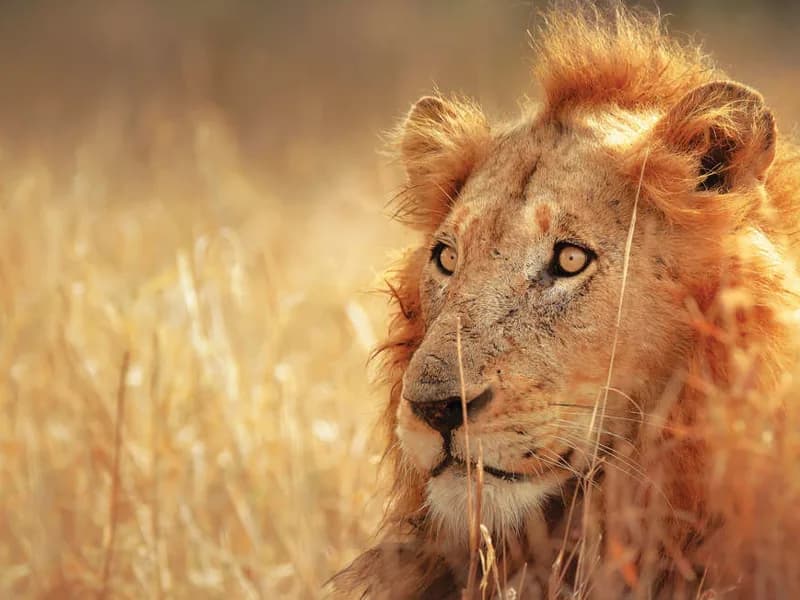
Because the Garden Route sits a considerable distance from Kruger and the northern game reserves, most itineraries that include both treat them as genuinely separate chapters of the same trip, connected by an internal flight rather than a continuous drive, coastal forest and lagoon in one half, dry bush and wildlife in the other. It is a pairing that works precisely because the two halves do not resemble each other; a traveller who has just spent days admiring yellowwoods and lagoons arrives at a game lodge with a useful sense of how differently the rest of the country behaves.
The route is at its best in South Africa's autumn and spring, March to May and September to November, when temperatures are comfortable for the walking many of its stops invite and the coast is clear of both the winter's Cape storms and the crowds of the local summer holiday season.
By Arthur Penhallow, the name Atlas & Passage’s editorial team writes under. Prices and dates in the trips below come from the operators and can change.