Walking
The mountain that hasn't finished rising
Mount Kinabalu is the highest peak between the Himalayas and New Guinea, a granite mass still slowly pushing upward, and a two-day climb most trekkers feel for a week afterwards.
By Arthur Penhallow26 September 20263 min read
Mount Kinabalu, at 4,095 metres, is Malaysia's highest peak and, more strikingly, one of the highest points anywhere in Southeast Asia outside the mountain ranges bordering Myanmar. What sets it apart from most mountains of comparable height is that it is not, geologically speaking, finished: Kinabalu is a granite pluton, a mass of molten rock that solidified underground and has been pushed upward by tectonic forces ever since, and geological surveys have measured ongoing uplift of a few millimetres a year, a slow but genuinely active process rather than a historical footnote.
A two-day climb, not a walk
Reaching the summit is a serious undertaking, though not a technical one: the standard route covers roughly nine kilometres from the park gate to the top, climbing through several distinct vegetation zones, lowland rainforest, montane forest, and finally bare granite above the treeline, split over two days with an overnight stop partway up. Most climbers set out again well before dawn on the second day specifically to reach the summit for sunrise, before cloud typically builds across the peak later in the morning, and the scramble across open granite slabs near the top, assisted by fixed ropes in places, is unlike anything encountered lower down the mountain.
Laban Rata, and the reason for the overnight stop
The overnight stop, at a rest house called Laban Rata around three-quarters of the way up, exists because the final summit push is far more manageable broken into two shorter days than attempted in one very long one, and because the pre-dawn departure it enables is the only realistic way to catch the summit before weather closes in. Nights here are cold by Bornean standards, a genuine shock after the humid lowland forest below, and the altitude itself, while not extreme, is enough to affect some climbers' sleep and appetite.
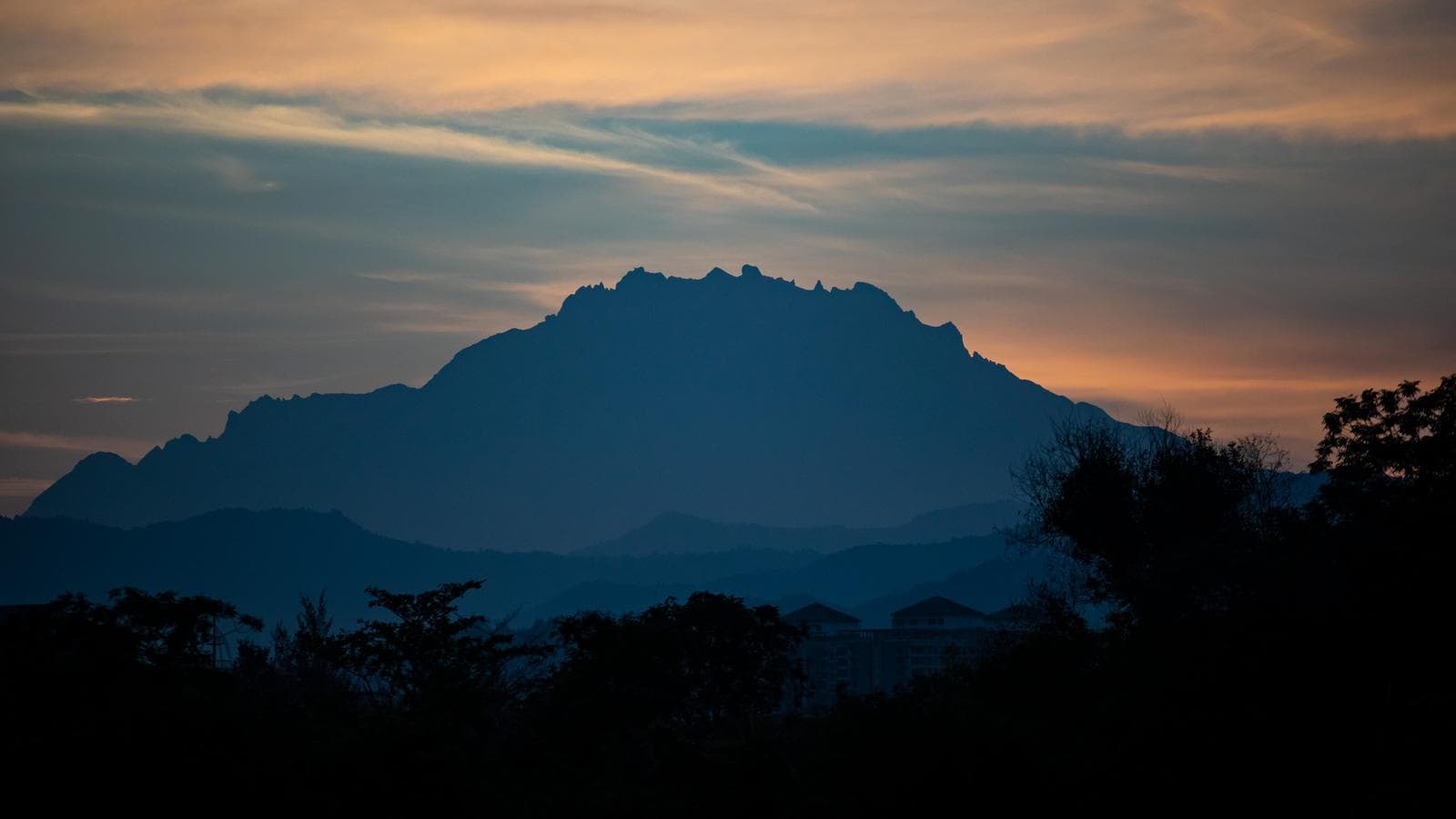
Kinabalu is a granite pluton that has been pushed upward by tectonic forces ever since.
A sacred mountain before it was a trekking route
Long before Kinabalu became a climbing destination, it held, and still holds, deep significance for the Kadazan-Dusun people of Sabah, whose traditional belief holds the mountain to be the resting place of ancestral spirits, a belief reflected in the name Kinabalu itself, commonly explained as deriving from "Aki Nabalu", roughly "the revered place of the dead". A ceremony asking permission of the mountain's spirits is still performed periodically by local elders, a reminder that the mountain's meaning to the people who have lived beside it for generations predates, and exceeds, its status as a physical challenge for visitors.
A permit system that limits numbers by design
Access to the summit trail is restricted to a fixed daily quota of climbers, booked through the park authority well in advance during busier months, along with a compulsory registered guide for every climbing party, a requirement introduced partly for safety on the exposed granite sections and partly to manage the trail's environmental impact. The quota system means Kinabalu, unlike many popular treks elsewhere, rarely feels overcrowded even at altitude, though it also means the climb generally needs to be arranged and paid for some weeks ahead rather than decided on a whim once already in Sabah.
After the descent
Poring Hot Springs, a short distance from the mountain, offers a genuinely welcome stop for descending legs, natural hot water piped into pools within a forest reserve that also holds a canopy walkway strung between tall trees, high enough above the forest floor to give an unusual vantage point over the rainforest canopy for anyone with legs still willing to climb a further set of stairs. It is a modest attraction on its own terms, but positioned, as it usually is, immediately after a two-day mountain descent, it tends to be appreciated rather more than its scale alone would suggest. The reserve also holds a small orchid garden and a Kadazan-Dusun cultural exhibit, both worth the short additional walk for travellers not yet ready to sit still.
By Arthur Penhallow, the name Atlas & Passage’s editorial team writes under. Prices and dates in the trips below come from the operators and can change.