Wildlife
The orangutans of Sepilok, and the river where they still roam wild
Sabah's rehabilitation centre has been returning orphaned and displaced orangutans to the forest since 1964. The Kinabatangan River nearby is where the results of that work, and a great deal else, can still be seen from a boat.
By Arthur Penhallow26 September 20263 min read
Sepilok, on the outskirts of Sandakan in Malaysian Borneo, is home to one of the oldest orangutan rehabilitation centres in the world, established in 1964 to care for orphaned, injured or displaced orangutans, largely a consequence of logging and land clearance for agriculture, and to prepare them for eventual release back into protected forest once they have relearned the skills a mother would ordinarily have taught them. The centre now sits within a larger forest reserve, and its resident population is genuinely semi-wild: animals come and go from the surrounding rainforest at will, drawn to scheduled feeding platforms as a supplement rather than a guarantee, which means every visit carries some uncertainty about what, exactly, will turn up.
A working rehabilitation centre, not an enclosure
Sepilok's process typically starts with young or newly rescued orangutans in a nursery setting, where they are taught, sometimes by older orangutans already resident, the climbing, foraging and nest-building skills a wild-born infant would ordinarily learn from its mother. As they mature, animals are gradually given more freedom to range into the surrounding forest, with feeding platforms open to visitors at set times each day acting as the main viewing point, though sightings are never certain, since a well-fed forest full of fruiting trees will draw orangutans away from the platform entirely.
The river that holds everything else
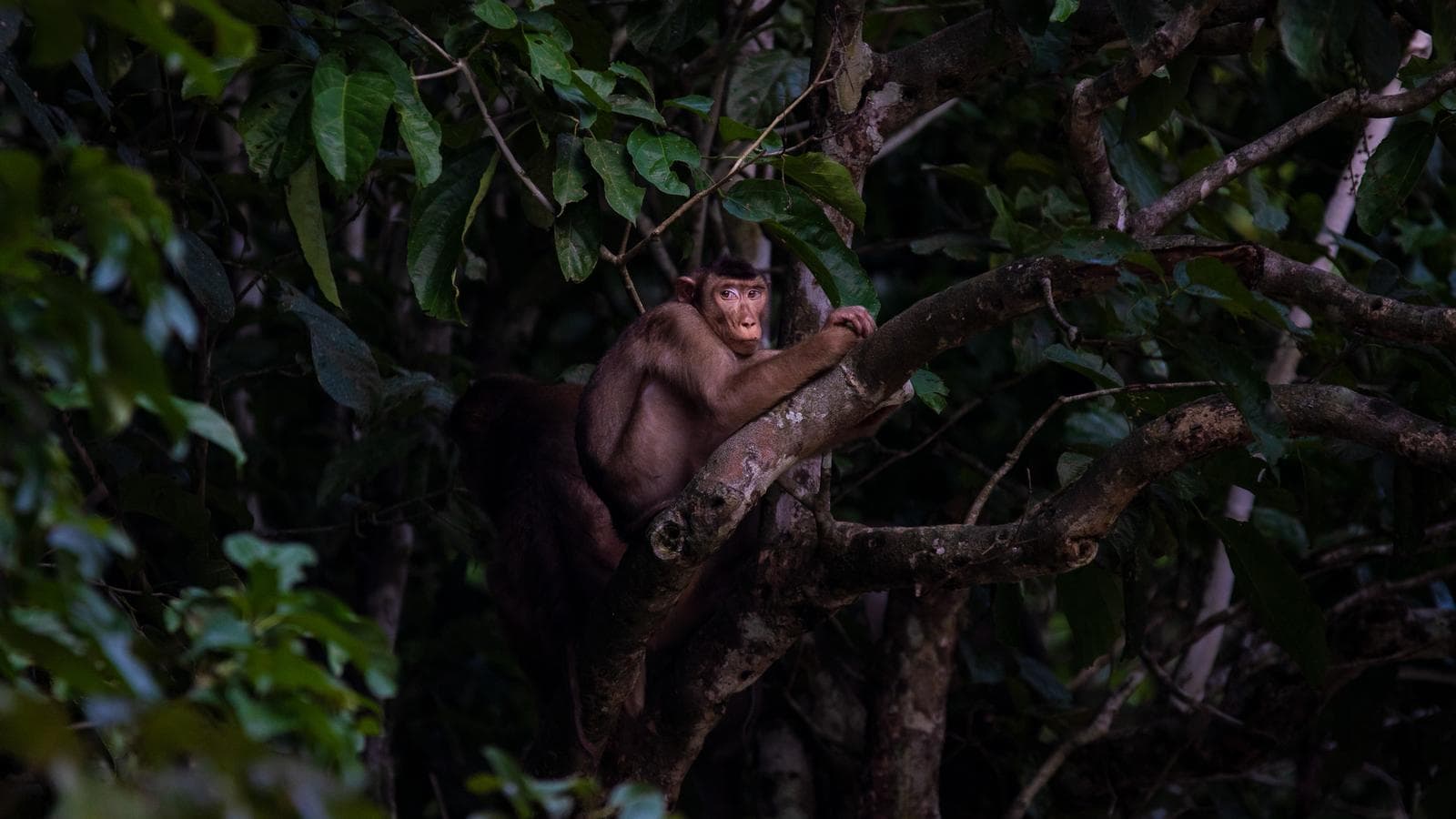
A short distance away, the Kinabatangan River, Sabah's longest at well over five hundred kilometres, cuts through a narrow but exceptionally wildlife-dense corridor of forest, much of it protected but bordered increasingly closely by oil palm plantation. Boat trips along the river at dawn and dusk, when animals are most active and the light is at its best for spotting movement along the banks, regularly turn up proboscis monkeys, a species found only on Borneo and recognisable by the males' large pendulous noses, along with silvered langurs, hornbills, crocodiles and, with more patience, pygmy elephants, Borneo's own smaller subspecies, moving along the riverbanks in family groups.
Every visit carries some uncertainty about what, exactly, will turn up.
Land under pressure
None of this wildlife exists apart from the pressures reshaping Borneo more broadly. Palm oil cultivation has replaced a substantial share of Sabah's lowland forest over recent decades, and the Kinabatangan corridor itself is, in places, a narrow ribbon of protected habitat squeezed between plantations on either bank, which concentrates wildlife into a smaller space than it would naturally use and makes river-based tourism, ironically, one of the more direct incentives for keeping that ribbon of forest standing at all.
A sanctuary within reach for other rescued animals too
Sepilok's forest reserve also hosts the Bornean Sun Bear Conservation Centre, established more recently than the orangutan programme and built on broadly the same principle: sun bears, the smallest bear species, are frequently kept illegally as pets or rescued from captivity in poor conditions, and the centre rehabilitates them where possible within large forested enclosures rather than traditional cages. Visiting both centres on the same morning gives a fuller picture of the range of rescue and rehabilitation work now based around Sepilok, rather than treating the orangutans as the sole reason to come.
Putting the two together
Sepilok and the Kinabatangan are usually combined on the same trip, typically alongside Sandakan as a base, since the rehabilitation centre gives a close, near-guaranteed look at orangutans while the river offers the wider cast of Bornean wildlife in a genuinely wild setting. Neither substitutes for the other; together they give a reasonably complete picture of what Sabah's forests still hold, and what keeping them standing actually requires. River trips typically run as two separate outings, one at dawn and one at dusk, since Bornean wildlife along the Kinabatangan is markedly more active in the cooler hours at either end of the day than through the heat of the middle afternoon, when most animals retreat into shade and stillness.
By Arthur Penhallow, the name Atlas & Passage’s editorial team writes under. Prices and dates in the trips below come from the operators and can change.