Cruise
A week from Piraeus, four islands and no unpacking
Island-hopping by ferry means a new port, a new timetable and a suitcase dragged up a new set of steps every couple of days. Doing it by ship means the cabin stays put and the islands are the ones that move.
By Arthur Penhallow26 September 20264 min read
There is a particular kind of exhaustion that comes from doing the Greek islands properly by ferry: the early alarm, the suitcase down a gangplank, the taxi to a new hotel, the working out of a new town's geography before dinner, and then doing the whole thing again forty-eight hours later. It is a fine way to travel if you enjoy logistics. If you would rather spend the energy on the islands themselves, a ship that moves overnight and leaves you to wake up somewhere new solves the problem by simply removing it.
Syros, the island that is not on the postcards
The Cyclades are usually represented in photographs by Santorini and Mykonos, which is a little unfair to Syros, the island that actually governs them. Ermoupoli, its capital, was one of Greece's principal ports in the nineteenth century, and the town still has the neoclassical mansions and grand town hall to prove it, arranged around a harbour that looks more like a small Italian city than the whitewashed cube-house villages most people picture when they think of the Cyclades. It is a useful early stop on a week like this, because it resets the expectations: not every island in this sea looks the same, and some of the best ones are not the famous ones.
The caldera, and the crater it sits in
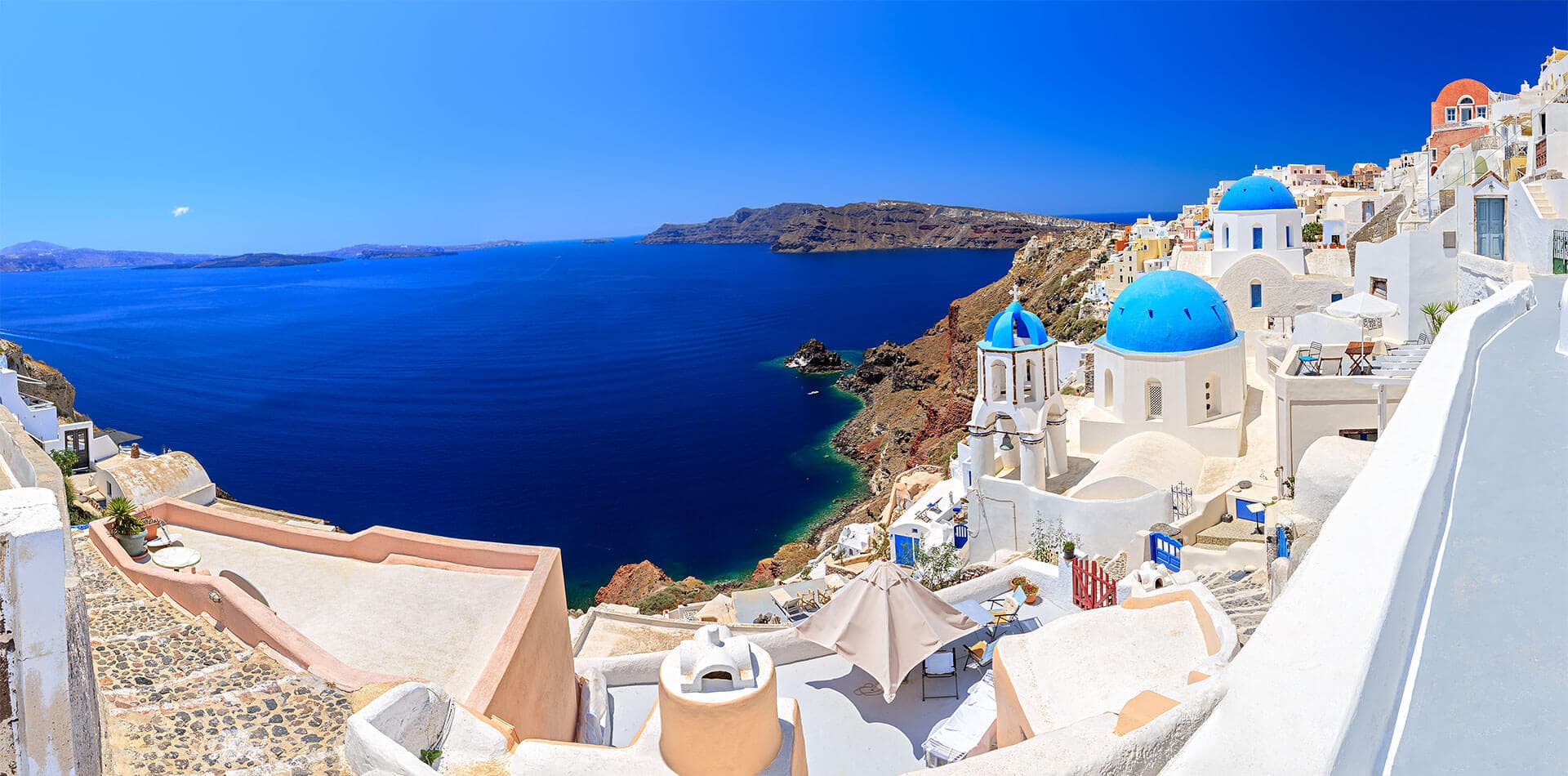
Santorini needs less introduction, though it is worth remembering what you are actually looking at when the ship approaches: the island is what remains of the rim of a volcanic caldera, formed by an eruption in the Bronze Age so severe that it is one of the leading theories for the destruction of the Minoan settlement at Akrotiri, buried in ash on the same island and excavated only in the twentieth century. The famous view, of white villages strung along the cliff edge above a flooded crater several hundred metres deep, is a geological event wearing a very photogenic disguise. Arriving by ship, at anchor below the cliffs, gives you the version of that view the eruption actually created, rather than the one from the clifftop looking outward.
The famous view is a geological event wearing a very photogenic disguise.
Crete, and the Dodecanese for contrast
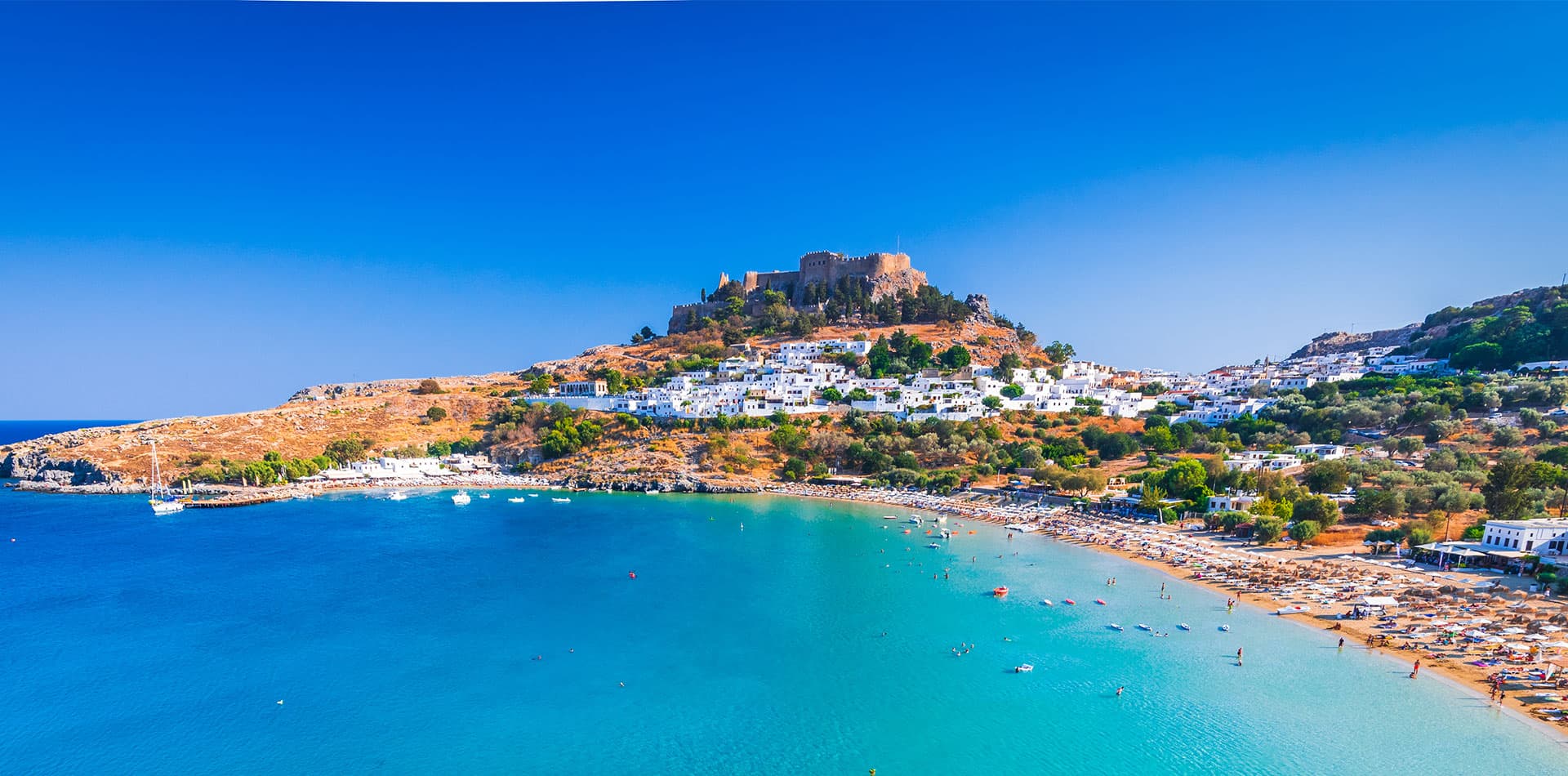
Crete, the largest of the Greek islands, gets a call of its own: enough for the old Venetian harbour at Heraklion or the ruins at Knossos, depending on how the day is spent, but not enough to pretend you have seen an island that is nearly the size of a small country. Kos, further east in the Dodecanese, changes the register again. It was the birthplace of Hippocrates, the physician whose name is still attached to the oath doctors take, and the island's long history as a centre of medicine sits alongside a much more recent one as a straightforward, easy-going beach destination. Seeing Syros, Santorini, Crete and Kos inside a single week, without repacking between any of them, is the kind of itinerary that would take considerably longer to arrange yourself.
The version that starts in Crete instead
A different route runs the other way, based out of Heraklion rather than Piraeus, and trades some of the island variety for a longer, more contemplative pace, with Ermoupoli again among the calls. It suits travellers who have already done the classic Cyclades circuit and would rather slow down than cover new ground, or who prefer to fly into Crete directly and let the ship do the rest of the work from there.
What a week actually buys you
Neither of these itineraries claims to be exhaustive, and nobody sensible would want it to be: a single week that tried to do justice to Syros, Santorini, Crete and Kos on foot would be nothing but transfers. What a ship offers instead is a fair sample, seen at a pace that leaves room to sit somewhere with a coffee and watch a harbour work, rather than sprinting for the next connection. The islands do not get any smaller for being seen this way, and the sea between them, which is most of what an island-hopping ferry itinerary spends its time crossing anyway, stops being a logistical problem and starts being the point.
By Arthur Penhallow, the name Atlas & Passage’s editorial team writes under. Prices and dates in the trips below come from the operators and can change.