Culture
Dharamshala, the Tibetan town in the Indian hills
Above the Indian town of Dharamshala, in the foothills of the Himalaya, is McLeod Ganj, where the Dalai Lama has lived in exile since 1960. It is a small hill town of monasteries, prayer flags and momo stalls, and the centre of Tibetan life outside Tibet.
By Walter Pellow2 November 20264 min read
In 1959, after a failed uprising against Chinese rule in Tibet, the fourteenth Dalai Lama escaped from Lhasa and crossed the Himalaya into India, followed by tens of thousands of Tibetans. India gave them refuge, and in 1960 the Dalai Lama settled in Dharamshala, a hill town in the state of Himachal Pradesh, in the foothills of the western Himalaya. It has been the seat of the Tibetan government in exile ever since, and the small settlement above the town, McLeod Ganj, has become the heart of the Tibetan diaspora.
For visitors, it is a fascinating place: a corner of Tibetan culture, preserved in exile, in the Indian hills.
McLeod Ganj
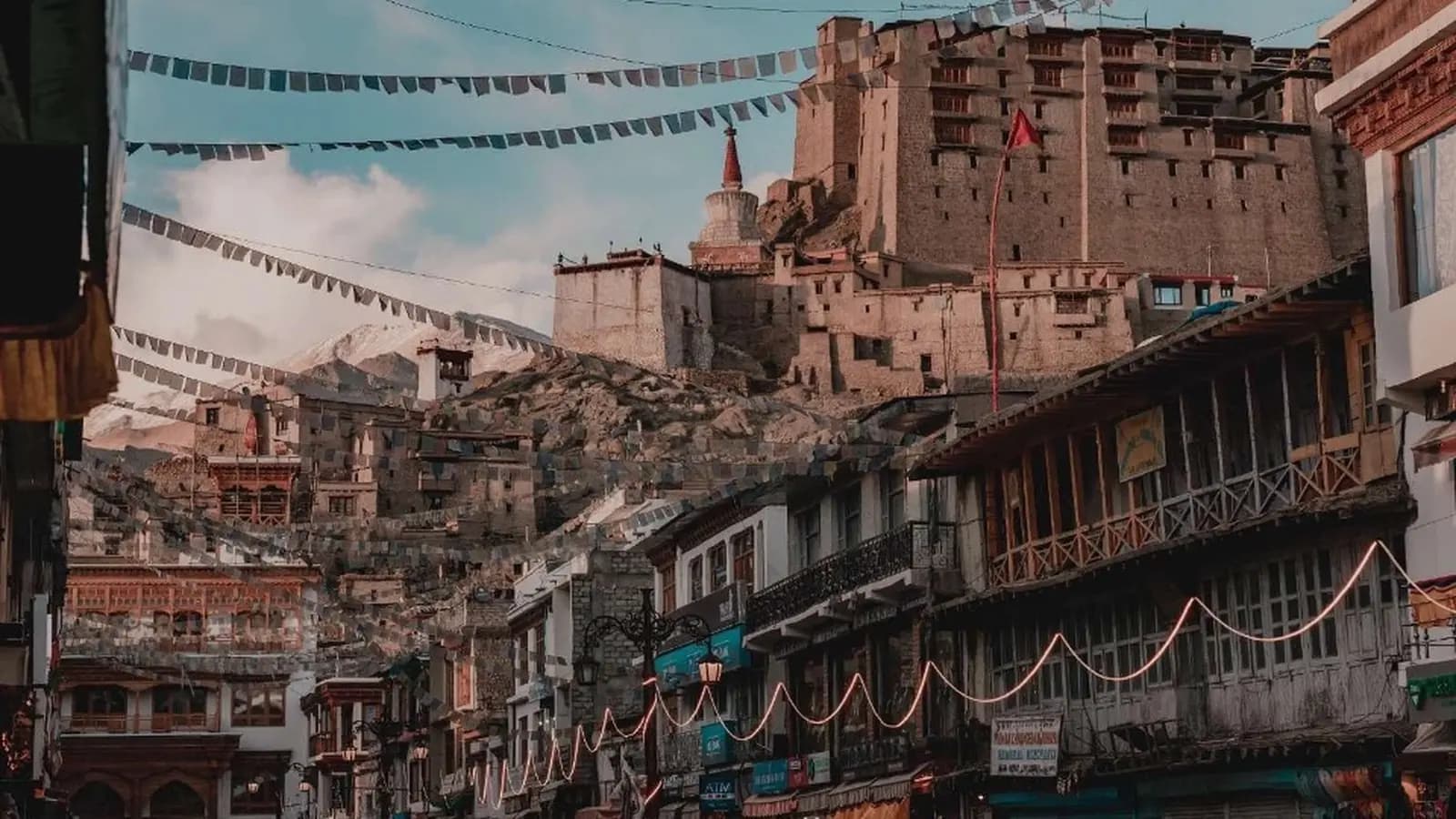
McLeod Ganj began life as a British hill station, named after a nineteenth-century lieutenant governor of the Punjab, and it was largely abandoned after a severe earthquake in 1905. When the Tibetans arrived, they turned it into something else. Today it is a busy little town clinging to a ridge, its streets lined with Tibetan restaurants, bookshops, handicraft stalls and guesthouses, with strings of prayer flags fluttering between the buildings and maroon-robed monks among the crowds.
At its centre is the Tsuglagkhang complex, which includes the Dalai Lama's residence and the main temple, where he gives teachings when he is in residence. Pilgrims and visitors walk the kora, a path around the complex lined with prayer wheels, which the faithful turn as they pass. Nearby, the Tibet Museum tells the story of the occupation and the exile, and the Library of Tibetan Works and Archives, lower down the hill, holds a great collection of Tibetan books and manuscripts, many of them carried out of Tibet by refugees.
A corner of Tibetan culture, preserved in exile, in the Indian hills.
Below the town, the Norbulingka Institute was set up to keep the traditional arts of Tibet alive in exile. Its workshops, set in Japanese-style gardens of streams and bridges, train young Tibetans in thangka painting, the detailed religious scrolls of Tibetan Buddhism, along with wood carving, metalwork and embroidery, and visitors can watch them at work. It is a reminder that the exile is not only political: it is a long effort to preserve a whole culture.
The hills around
Dharamshala sits beneath the Dhauladhar range, a wall of snowy peaks that rises abruptly from the Kangra valley. There are good walks into the hills from McLeod Ganj, through forests of oak and rhododendron, to villages, waterfalls and, for the energetic, the ridge at Triund, with its views of the high peaks and the valley far below.
The region around has its own history. The Kangra valley was famous for its school of miniature painting, and Chamba, further into the mountains, is an old hill kingdom with stone temples and a long royal history.
Amritsar and the border
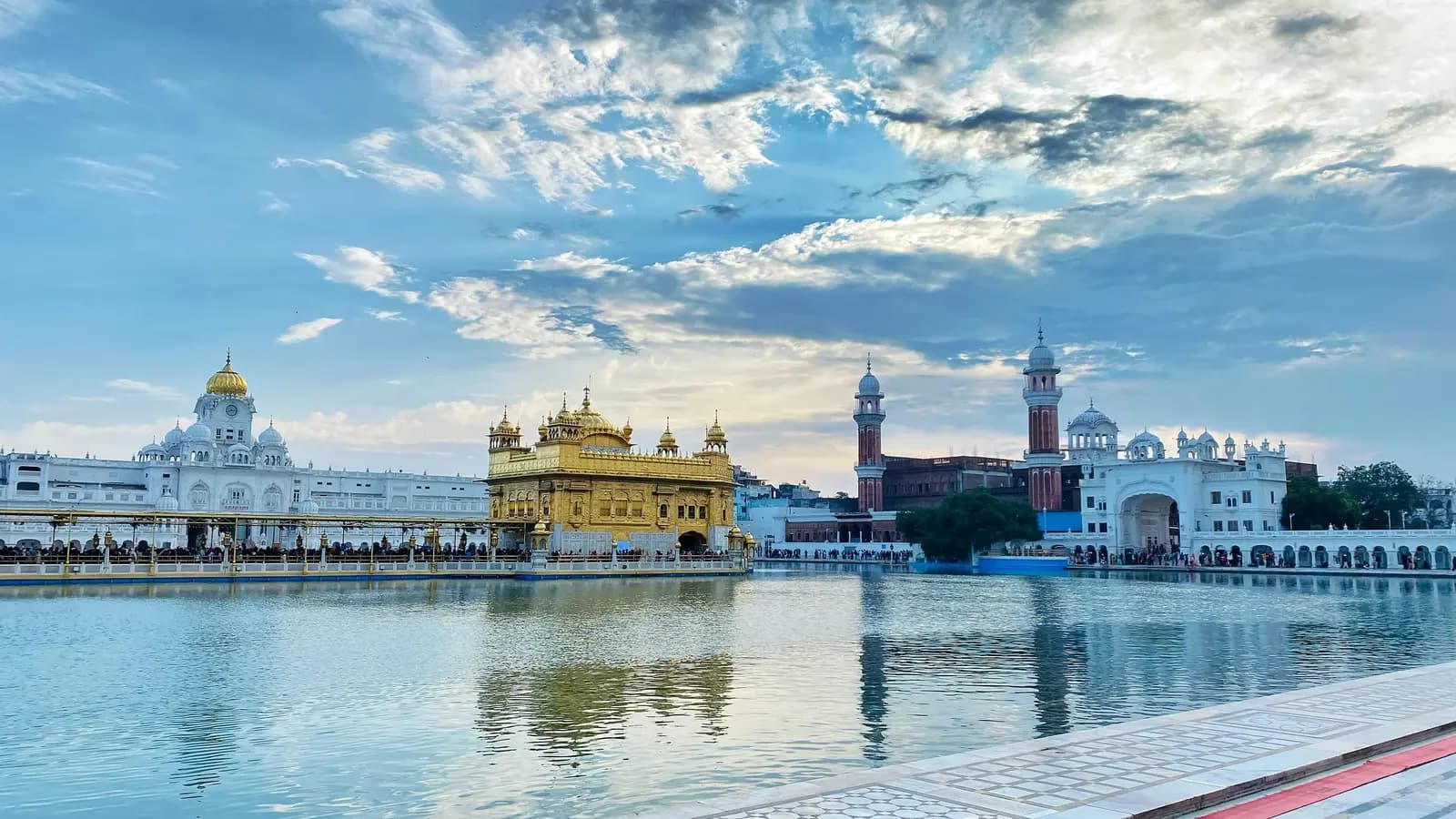
Most journeys to Dharamshala pass through Amritsar, in the Punjab, a few hours away. It is the holiest city of the Sikhs, and the Golden Temple, the Harmandir Sahib, stands in the middle of a great sacred pool, its upper storeys covered in gold. The temple's community kitchen, the langar, serves free meals to tens of thousands of visitors every day, regardless of faith, prepared and served by volunteers.
West of Amritsar, at Wagah, is the main road crossing between India and Pakistan, where each evening a flag-lowering ceremony of high-kicking soldiers and rousing crowds is staged on both sides of the border, an extraordinary piece of theatre.
The tours
G Adventures' North India: Delhi, Dharamshala & the Golden Temple, seven nights, visits Chamba, Dharamshala, Amritsar and the Wagah border, with Delhi and Pathankot. It runs in spring, summer and autumn, in April, May, June, September and November.
G Adventures' India Discovery: Golden Triangle & Himalayan Highlights, fourteen nights, combines the classic route through Delhi, Agra and Jaipur with Chamba, Dharamshala, McLeod Ganj and Amritsar.
G Adventures' Northern India: Dharamshala, Kashmir & Ladakh Highlights, twenty-one nights, continues from Dharamshala and Amritsar to Srinagar and Sonmarg in Kashmir, and into Ladakh, with Lamayuru, Leh, the Nubra Valley and Pangong Lake. It runs in May and September.
Spring and autumn are the best times to visit Dharamshala. The monsoon, from July to September, brings very heavy rain to the town, and winter is cold, with snow on the peaks and sometimes in the town itself.
By Walter Pellow, the name Atlas & Passage’s editorial team writes under. Prices and dates in the trips below come from the operators and can change.