Journeys
From a houseboat on Dal Lake to the high desert of Ladakh
Kashmir and Ladakh sit either side of the same mountain range and feel like different countries. The road that connects them is one of the more dramatic ways to notice the difference.
By Arthur Penhallow26 September 20264 min read
Srinagar's houseboats have an origin that is more administrative than romantic. During the period of British rule, colonial law prevented non-Kashmiris from owning land in the Kashmir Valley, so British residents and visitors built elaborate, carved wooden houseboats on Dal and Nagin lakes instead, and stayed there. The boats remain, still largely wooden, still elaborately carved, now run as guesthouses on water rather than as a workaround for a property law long since gone. Mornings on the lake move at the pace of the shikaras, the narrow paddle boats used for everything from grocery deliveries to floating vegetable markets, gliding between houseboats on water that reflects the poplar-lined shore and the mountains behind it.
A valley shaped by water and altitude
The Kashmir Valley sits at a relatively modest altitude for the region, around one and a half thousand metres, which gives it a climate mild enough for orchards, rice paddies and the Mughal-era gardens that several emperors built around Srinagar specifically because the valley offered relief from the summer heat of the plains below, the same logic that built the hill stations further south. Pahalgam and Sonmarg, reached by road from Srinagar, sit higher again, forested valleys used as staging points before the road climbs properly into the mountains.
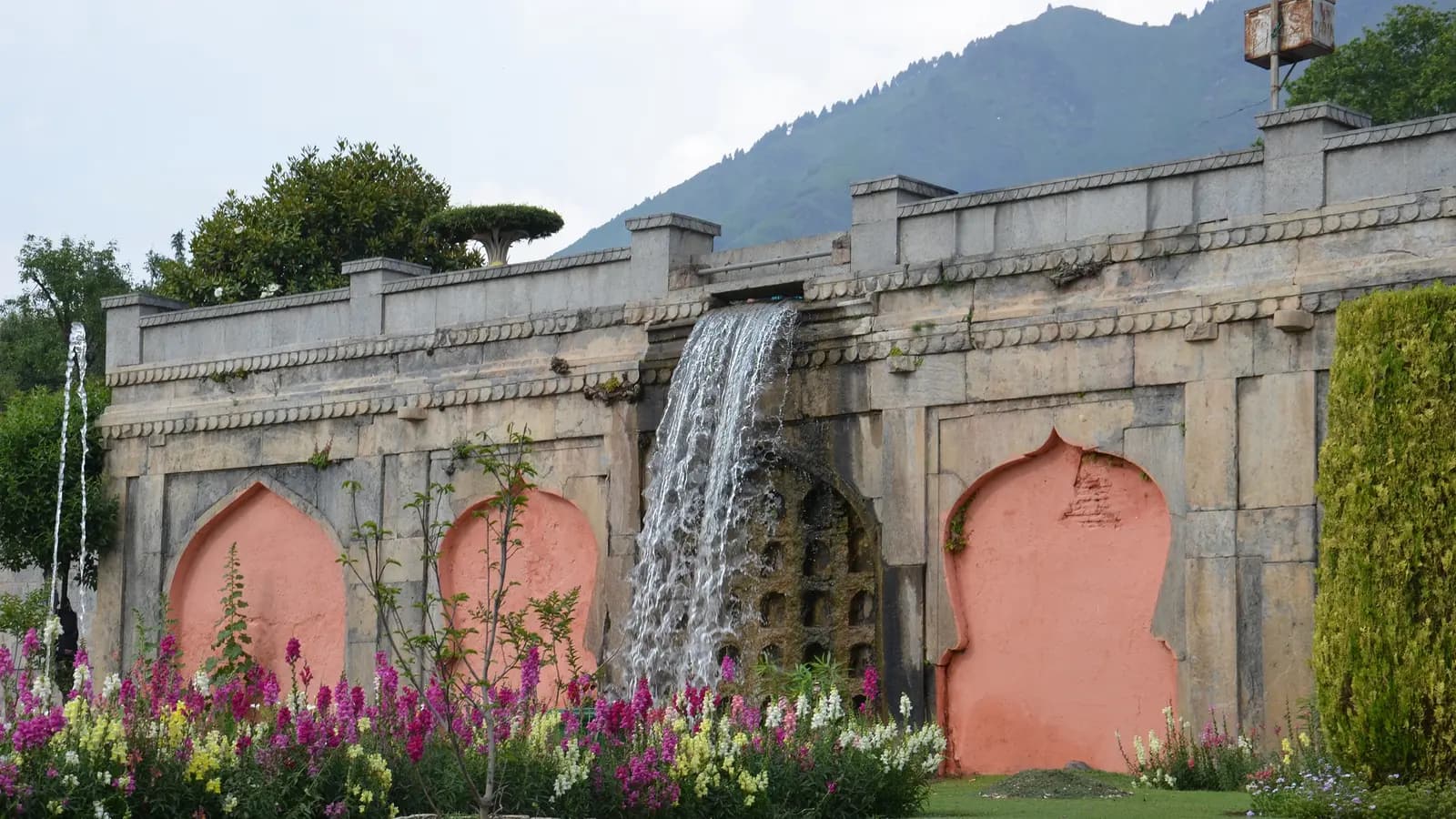
The Mughal gardens around the lake are part of the same story of retreat. Shalimar Bagh and Nishat Bagh, terraced formal gardens laid out in the early seventeenth century under Emperor Jahangir and his officials, were built as summer pleasure grounds, with channelled water, fountains and chinar trees planted specifically because the valley's climate suited them better than the plains the court had left behind. They remain functioning public gardens today, busiest in spring when the fruit blossom the emperors also admired returns to the surrounding orchards.
Crossing into a different climate entirely
The road from Kashmir to Ladakh crosses the Zoji La pass and, shortly afterwards, the climate changes more abruptly than the map suggests it should. Ladakh sits in the rain shadow of the Himalaya, which blocks most of the monsoon moisture that reaches Kashmir and the plains beyond, and the result is a high-altitude desert: bare, folded mountains in shades of ochre and grey, villages clustered improbably around irrigated patches of green, and a light with a clarity that comes from very thin, very dry air at altitudes generally above three thousand metres. It is a landscape that owes almost nothing to the lush valley it connects to, despite sitting on the far side of a single mountain pass. Kargil, roughly midway along the route, sits close to the historic Line of Control and marks a further cultural shift again, from the Buddhist character further east to a largely Shia Muslim population, a reminder that this single road corridor crosses several distinct religious and cultural regions within the space of a single day's drive.
Leh and its monasteries
Leh, Ladakh's main town, grew as a trading post on the route between Tibet, Kashmir and Central Asia, and its Buddhist character, distinct from the rest of Jammu and Kashmir, is visible in the monasteries scattered across the surrounding hills: Thiksey, built in a tiered style often compared to Lhasa's Potala Palace, and Hemis, among the region's largest and wealthiest monastic institutions. Further into Ladakh, the Nubra Valley and Pangong Lake extend the journey into still higher and more remote territory, with some roads among the highest motorable passes in the world. The Nubra Valley in particular sits at the historic junction of trade routes running toward Central Asia, and a double-humped Bactrian camel, a legacy of that old Silk Road traffic, is still occasionally seen grazing near its sand dunes, an incongruous sight this far into the mountains.
A narrow window to travel it
This is one of the more seasonally constrained journeys in India. The high passes connecting Kashmir to Ladakh are generally only open from around late May or June through September, once the winter snow has cleared, and close again as autumn sets in. Outside that window, the road journey described here simply is not possible, which makes summer, ordinarily the season to avoid across most of the country, the only realistic time to make it.
By Arthur Penhallow, the name Atlas & Passage’s editorial team writes under. Prices and dates in the trips below come from the operators and can change.