Culture
Jaffna, and the Sri Lanka the south rarely sees
The Jaffna peninsula was largely closed to travellers for a generation. It is now open again, and it looks, sounds and eats differently from anywhere further south on the island.
By Arthur Penhallow26 September 20264 min read
For most of the standard route around Sri Lanka, the island reads as predominantly Sinhalese and Buddhist: Kandy's Temple of the Tooth, the dagobas of Anuradhapura, Buddhist monks at temples up and down the coast. Jaffna, at the northern tip of the island, is a different Sri Lanka again, predominantly Tamil and Hindu, with a distinct language, cuisine and architectural character shaped by centuries of trade and cultural exchange across the narrow strait to southern India.
The city's history predates any of the modern divisions that later shaped it. Jaffna was the seat of an independent Tamil kingdom for several centuries before Portuguese, then Dutch, then British colonial powers took control in succession from the sixteenth century onward, each leaving a layer still visible in the town today: Portuguese and Dutch fort walls, colonial-era churches standing alongside far older Hindu temples, and a library, Jaffna Public Library, that once held one of South Asia's most significant collections of Tamil literature before it was destroyed by arson in 1981, an event still remembered locally as a turning point in the years leading up to the wider conflict. The building has since been rebuilt and its collection rebuilt with it.
A region closed, then reopened
Jaffna and the wider north were largely inaccessible to ordinary travel for close to three decades, during the civil conflict between the Sri Lankan government and Tamil separatist forces that ran from 1983 until its end in 2009. The war caused significant destruction and loss of life concentrated heavily in the north and east, and its effects, on infrastructure, on communities, and on the region's relationship with the rest of the island, are still part of daily life there rather than settled history. In the years since 2009, the region has reopened steadily to travellers, roads and rail links have been rebuilt, and Jaffna today functions as a place that welcomes visitors while still carrying the visible and less visible marks of what it went through.
What sets Jaffna apart
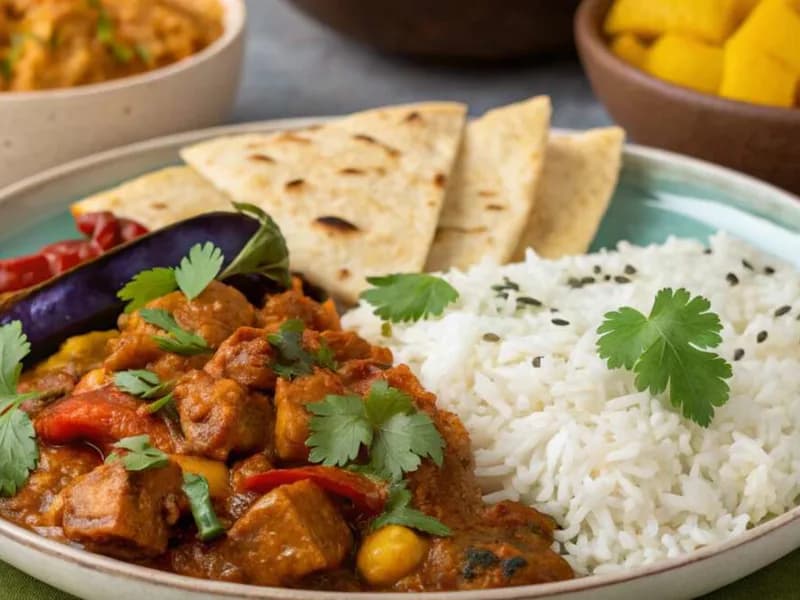
Jaffna's Hindu temples, or kovils, are architecturally distinct from anything in the Buddhist south, built with the tiered gopuram gateway towers characteristic of South Indian temple architecture, brightly painted and densely carved. Nallur Kandaswamy Kovil, the city's principal temple, is among the most significant Hindu sites on the island. The food follows the same southern Indian influence: Jaffna's cuisine is built around fiercely spiced curries, seafood drawn from the surrounding lagoons, and a use of palmyra palm products, from syrup to a flour used in local sweets, that is distinctive to this part of the island. Crab curry, cooked with the region's characteristic blend of roasted spices, is among the dishes most closely associated with Jaffna cooking, and the flat, sun-baked landscape of the peninsula, quite different from the humid green of the south, suits the salt-tolerant crops, palmyra palms and chillies among them, that define much of the local diet.
The islands offshore
A short crossing from Jaffna town reaches a scatter of smaller islands, including Delft Island, known for a population of wild ponies descended from horses brought by Dutch colonial traders, and the remains of a Dutch fort, and Nagadeepa, a site of pilgrimage for both Buddhists and Hindus, who each hold distinct traditions about its significance. The crossing and the islands themselves add a genuinely different rhythm to a trip otherwise built around temples and cities. Casuarina Beach, on nearby Karainagar Island, is shallow and calm enough for swimming in a way the more exposed south coast rarely offers, a quieter reward for the extra distance travelled to reach it.
Travelling there
The north sits within the reach of the northeast monsoon rather than the southwest one that governs the rest of the island, which means its wettest months, roughly October to January, fall opposite the dry season enjoyed by Colombo and the south at the same time. The more comfortable months to visit Jaffna are broadly February to September, with the earlier part of that window, before the year's heat builds fully, generally the most pleasant for a few days spent walking the town and crossing to the islands.
By Arthur Penhallow, the name Atlas & Passage’s editorial team writes under. Prices and dates in the trips below come from the operators and can change.