Seasons
Japan's Golden Week, and how to travel around it
At the turn of April and May, four public holidays fall within a week, and much of Japan goes on holiday at once. In 2027 Golden Week runs from 29 April to 5 May. A visitor can avoid it, or plan around it, but should not ignore it.
By Walter Pellow2 November 20263 min read
Late April and early May is one of the loveliest times of year in Japan. The cherry blossom has gone from the cities of the south, but the hills are fresh and green, the azaleas and wisteria are in flower, the weather is warm and mostly dry, and in the mountains the blossom is still coming. It is also, for one week, when a great many Japanese people go on holiday at once.
That week is Golden Week, a cluster of national holidays that, with a weekend or two and a day of leave, gives many workers a long spring break. Trains are full, hotels are booked, motorways jam, and the famous sights are crowded with families. Knowing when it falls, and how to work around it, makes a real difference to a spring trip.
The holidays
Golden Week is made of four public holidays. The first is Shōwa Day, on 29 April, the birthday of the Shōwa Emperor, Hirohito. Then come three in a row in May: Constitution Memorial Day on the 3rd, Greenery Day on the 4th, and Children's Day on the 5th, when families fly carp-shaped streamers, koinobori, from poles outside their houses.
In 2027, Shōwa Day is a Thursday and the three May holidays fall on Monday, Tuesday and Wednesday. Friday 30 April is an ordinary working day, but with the weekend in between, a single day of leave turns the whole stretch into seven days off, from Thursday 29 April to Wednesday 5 May. Many people will take it.
What it means for travellers
The busiest days are the start and end of the holiday, when people leave the cities and return. The shinkansen, the bullet trains, are heavily booked in both directions, and reserved seats can sell out well in advance. Flights and hotels, especially in popular places such as Kyoto, Hakone, Nikko and the hot-spring towns, fill up early and often cost more.
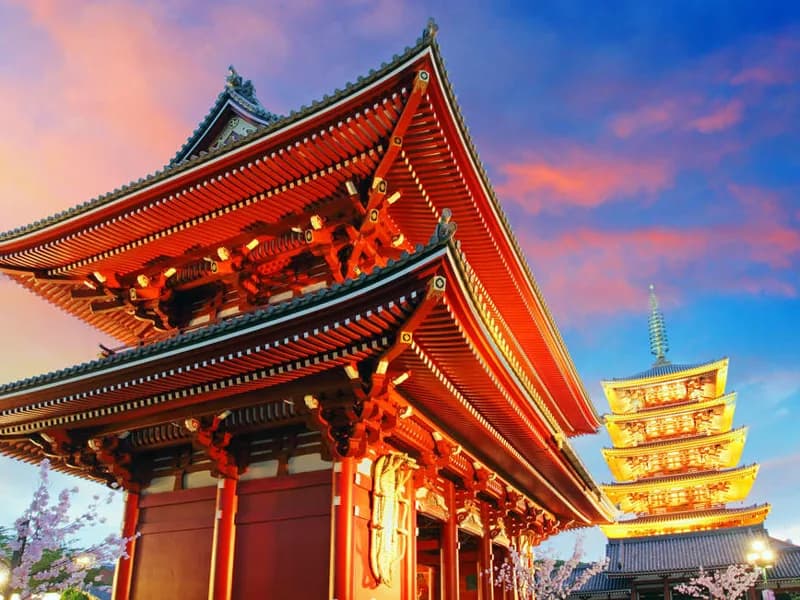
The famous sights are at their busiest: the temples of Kyoto, the deer park at Nara, the theme parks, the shrine on Miyajima. Queues are long, and some restaurants run out of seats.
For one week, a great many Japanese people go on holiday at once.
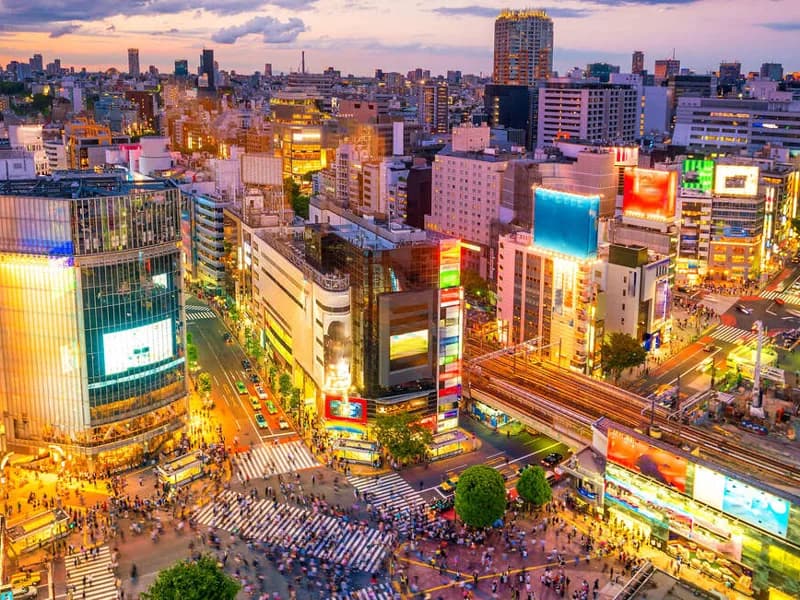
Not everything is worse. Tokyo itself can be pleasantly quieter, as many residents leave it, though its own big sights and shopping areas stay busy. Museums and attractions generally stay open, and there are festivals and events all over the country.
How to travel around it
The simplest approach is to avoid the week altogether. Mid to late April, after the cherry blossom crowds have gone, and the second half of May, after Golden Week, are among the best times to travel in Japan: the weather is fine, the gardens are lovely and the crowds are moderate.
If your dates include Golden Week, plan for it. Book trains, flights and hotels as early as you can, reserve seats on the shinkansen, and avoid travelling on the first and last days of the holiday if possible. Stay put for the busiest days, in a big city or somewhere less famous, rather than moving around. Visit the famous sights very early in the morning, before the day-trippers arrive, and look for quieter alternatives: a lesser-known temple instead of the most famous one, a walk in the hills instead of the queue for the cable car.
On a group tour, the arrangements and reserved seats are made for you, which removes much of the strain, though the crowds at the sights will be the same.
Spring tours
Explore's thirteen-night Simply Japan departs in every month of the year. It goes from Tokyo to Matsumoto, the snow monkeys of Jigokudani and Nagano, then Kanazawa and Takayama, Hiroshima and Miyajima, and Kyoto and Arashiyama.
Explore's seven-night Highlights of Japan departs from March to June and again in late summer and autumn, with Tokyo, Nagano and Jigokudani Onsen, Kanazawa, Osaka, Hiroshima and Miyajima, and Kyoto in its list.
G Adventures' seven-night Tokyo to Osaka: Neon-lit Cities & Tranquil Countryside departs in May, from Tokyo to Kanazawa, Miyajima Island, Hiroshima and Osaka.
Whichever you choose, check the dates against 29 April to 5 May 2027. A departure that begins after the 5th, or ends before the 29th, will have the spring without the crush. One that spans it will have a livelier, busier Japan, which has its own pleasures, as long as you know it is coming.
By Walter Pellow, the name Atlas & Passage’s editorial team writes under. Prices and dates in the trips below come from the operators and can change.