Seasons
New Year in Japan, the holiday that closes the country for three days
Shōgatsu, the Japanese New Year, is a quiet family holiday of temple bells, shrine visits and special food, and for its first three days much of the country shuts its doors. A visitor who plans for it sees Japan at its most traditional.
By Walter Pellow2 November 20264 min read
In Britain, New Year is a night out. In Japan it is the great holiday of the year, and it is mostly spent at home. In the last days of December, offices close, people travel to their family homes in the country, and houses are cleaned from top to bottom to start the year fresh. Then, from New Year's Day, much of Japan simply stops for a few days, while families eat, rest, visit shrines and see relatives.
This is Shōgatsu, and for a visitor it can be one of the most rewarding times to be in Japan, as long as you know that the ordinary rhythm of the country is suspended.
The last night of the year
On New Year's Eve, Ōmisoka, many families eat a bowl of toshikoshi soba, year-crossing noodles, whose long strands are linked with a long life. Television has its own rituals. And at midnight, across the country, the bells of Buddhist temples are rung 108 times, the joya no kane. Each stroke is said to drive out one of the 108 earthly desires that, in Buddhist teaching, trouble the human heart. At many temples you can queue to strike the great bell yourself, a few times each in turn, with a heavy wooden beam hung on ropes. It is a deep, slow, solemn sound, very different from fireworks.
The first shrine visit
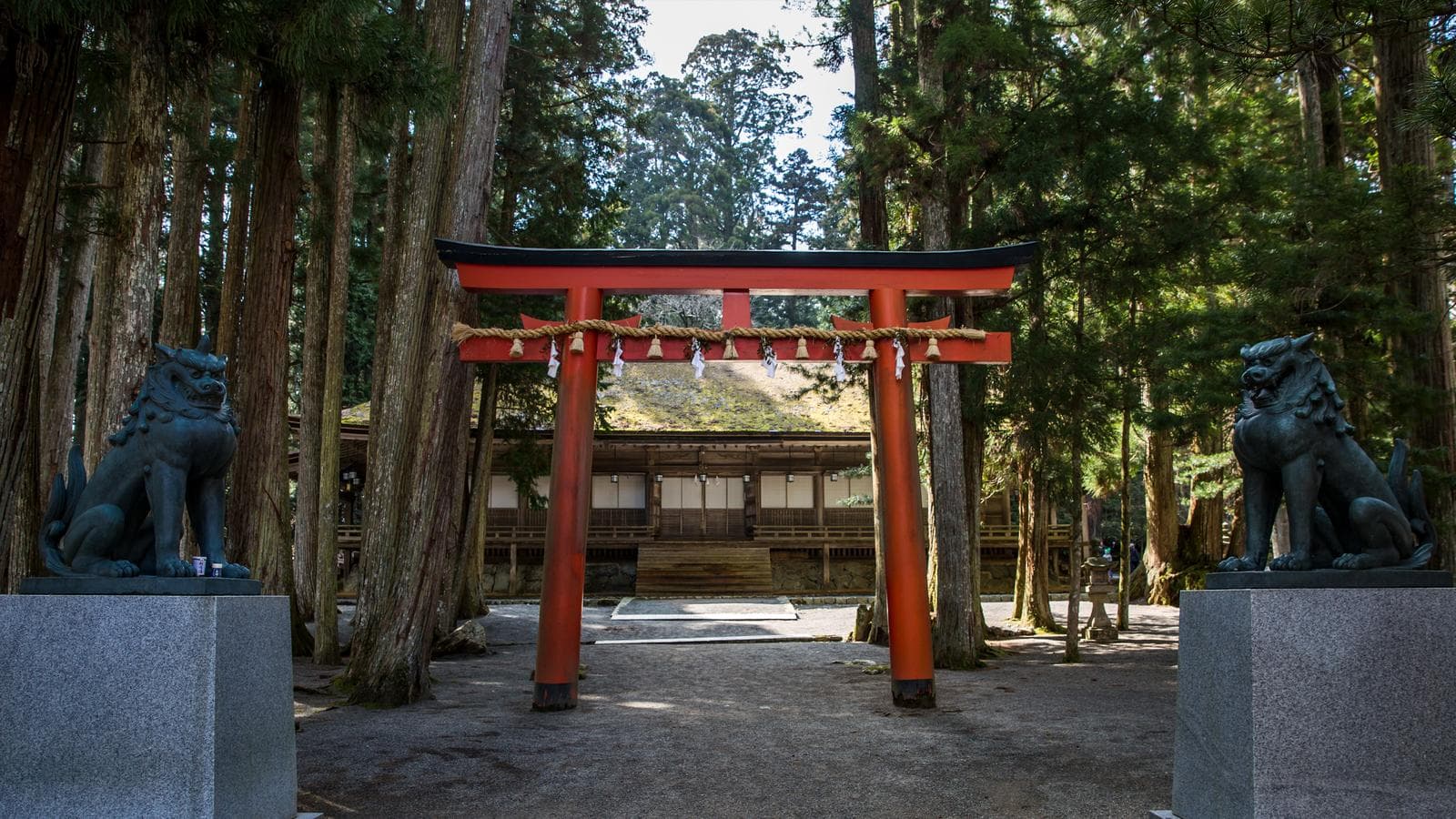
From the first morning of the year, people make their hatsumōde, the first visit of the year to a Shinto shrine or Buddhist temple, to pray for health and luck in the year ahead. They buy new amulets and arrows to ward off evil, return last year's to be burned, and draw paper fortunes, tying the unlucky ones to a rack so that the bad luck stays behind.
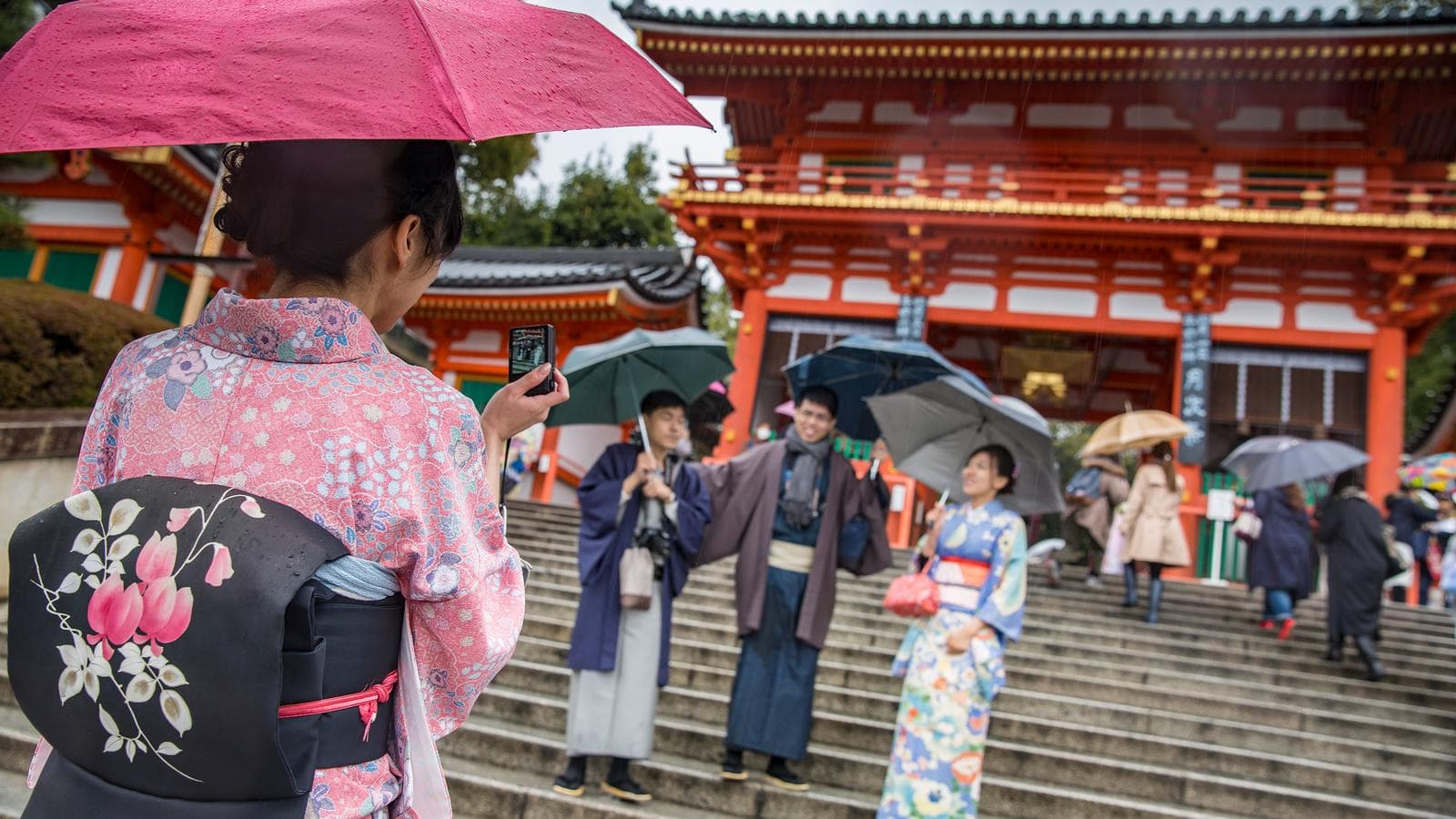
The big shrines are extremely busy. Meiji Jingu in Tokyo typically receives millions of visitors over the first three days of January, and the queues at Sensō-ji in Asakusa are long. Smaller neighbourhood shrines are calmer and often more charming, with stalls selling hot food and sweet sake outside. In Kyoto, the great shrines such as Fushimi Inari and Yasaka are packed, but the city has many quieter temples.
At midnight, across the country, the bells of Buddhist temples are rung 108 times.
The food
The New Year has its own cuisine, osechi ryōri: dozens of small, carefully prepared dishes packed in lacquered boxes, each with a meaning, from black beans for health to prawns, bent like an old man's back, for long life. They are traditionally prepared in advance so that nobody has to cook in the first days of the year. Many hotels serve an osechi breakfast on 1 January, and department stores sell the boxes in the days before. Mochi, rice cakes, appear in soups and grilled, and the family often stays at the table a long time.
What closes
This is the important part. Closures vary, but many shops, restaurants and small businesses close from about 29 or 30 December to 3 or 4 January. Department stores are usually closed only from the afternoon of 31 December and on 1 January, and when they reopen, many sell lucky bags, fukubukuro, of surprise goods at a discount, which draw crowds at the door. Restaurants outside hotels may be closed for several days, while hotel restaurants usually stay open. Many museums and some sights close over the period, so check before you go.
Transport works, but it is crowded either side of the holiday as people travel home and back, so book trains and flights early. Hotels in Tokyo and Kyoto fill well in advance.
G Adventures' five-night Japan: Tokyo Nights & Kyoto Temples departs in December, and it goes from Tokyo to Takayama, the old merchant town in the mountains, and on to Kyoto.
G Adventures' eight-night Japan Express – Osaka to Tokyo departs in October, November and December, from Osaka to Mount Kōya, Hiroshima and Miyajima, Kyoto, Tokyo and Lake Ashi.
For families, G Adventures' ten-night Japan Family Journey: From Ancient to Modern Times has December departures among others, with Tokyo, Nagano, Matsumoto, Kyoto and Nara in its list.
None of these is sold as a New Year holiday, so check whether a December departure will be in Japan over 31 December and 1 January, and if so, where.
Plan your days around what is open: shrines and temples, gardens, walks, and the hotel restaurant. Find a temple near your hotel for the bells at midnight, and get there early if you want to ring one. Go to a small shrine on the morning of the 1st, rather than a famous one at its busiest. And accept the quiet. For a few days a year, a very busy country takes a deep breath, and it is a privilege to be there when it does.
By Walter Pellow, the name Atlas & Passage’s editorial team writes under. Prices and dates in the trips below come from the operators and can change.