Culture
Otavalo, and the market the Andes come down to
In a green valley north of Quito, beneath two volcanoes, the town of Otavalo holds one of the best-known markets in South America. Its weavers and traders have been selling their cloth for centuries, and today they sell it around the world.
By Walter Pellow20 October 20264 min read
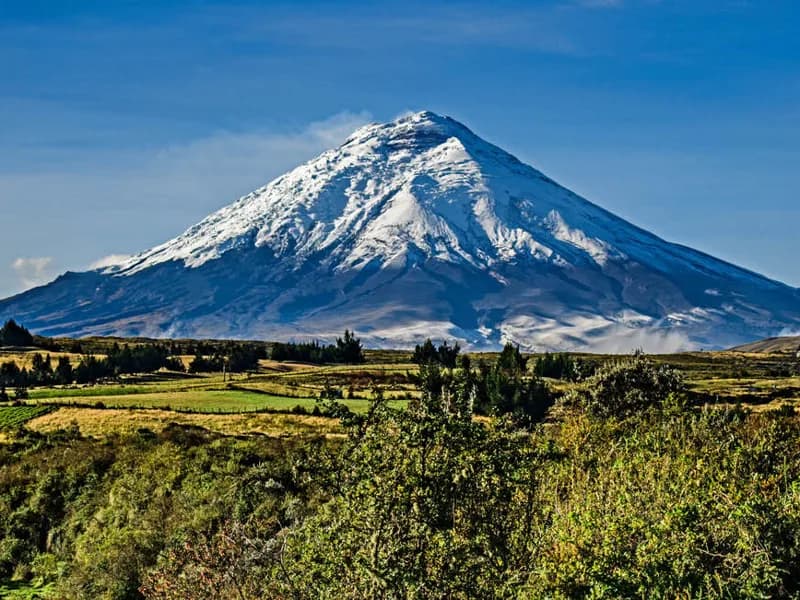
Otavalo lies about two hours' drive north of Quito, in a broad valley of the Andes at about two and a half thousand metres. Two volcanoes stand over it: Imbabura, to the east, and Cotacachi, to the west, and in the local Kichwa tradition the two mountains are a couple, father and mother of the valley. Below them lie farms, villages, eucalyptus groves and lakes. The people of the valley, the Otavaleños, are an indigenous Kichwa-speaking people famous throughout South America for their weaving and their skill as traders.
The weavers
Weaving in the valley goes back a long way, before the Spanish conquest. Under Spanish rule, the people of the region were forced to work in textile workshops, the obrajes, under harsh conditions. In the twentieth century, as the old systems of forced labour and great estates broke down, the Otavaleños built on that skill to create their own successful textile trade. Families in the villages around the town weave on looms at home, and many make a good living from it.
The Otavaleños are also known for travelling. Since the middle of the twentieth century, traders and musicians from the valley have taken their textiles and their Andean music to cities across the Americas and Europe, and it is not unusual to meet Otavaleños selling their goods on a street in Madrid or New York. Many have returned home and invested in the town, which is one reason it is relatively prosperous.
Their traditional dress is distinctive. Men wear their hair in a single long plait, with white trousers, a dark felt hat and a blue or grey poncho. Women wear white embroidered blouses, dark wrap skirts, layers of gold-coloured bead necklaces and coral-red bracelets wound round their wrists.
The market
The textile market fills the Plaza de los Ponchos, in the centre of town, every day. On Saturdays it spills out into the surrounding streets, which fill with stalls, and that is the day the people of the villages come down to the town to buy and sell. Early on a Saturday morning, on the edge of town, there is also a livestock market, where farmers trade cattle, pigs, sheep and guinea pigs, an older and more local affair.
The stalls sell woollen sweaters, ponchos, blankets, scarves, wall hangings, tablecloths and hammocks, alongside jewellery, carvings, leather goods and paintings. Some of what is sold is made in the valley, some comes from elsewhere in the Andes, and some is made in factories. A little bargaining is normal, done with good humour. In the food market, women sell fruit, vegetables, grains, potatoes of many kinds, and cooked dishes from big pots.
Around the valley
The countryside around Otavalo is worth exploring. In the village of Peguche, families of weavers work on traditional looms, and some welcome visitors to watch. Above the village, a path through a eucalyptus wood leads to the Peguche waterfall, a sacred place where ritual bathing takes place.
To the west, below the Cotacachi volcano, the Cuicocha crater lake fills a caldera about three kilometres across, with two wooded islands in its deep blue water. A path follows the crater rim, with views across the lake to the volcano. The town of Cotacachi is known for its leather goods, and its main street is lined with leather shops. East of Otavalo, San Pablo Lake lies at the foot of Imbabura.
Explore Worldwide's Ecuador: Andes to Amazon, thirteen nights in March, May, June, September and October, includes Otavalo, San Pablo Lake, Cuicocha and Peguche, with Quito, Cotopaxi, Papallacta, Tena, Misahualli, Baños and the Chimborazo reserve.
Explore Worldwide's Volcanoes and Galápagos, fourteen nights, includes Otavalo, Peguche and Cuicocha with Quito, Mindo and Cotopaxi on the mainland, and Santa Cruz and Isabela in the Galápagos. Travelsphere's Galápagos Island Hopping, thirteen nights, includes Otavalo and Cotacachi with Quito, Mindo and three of the Galápagos Islands.
The valley lies close to the equator, and its climate is mild all year, with warm days and cool nights. It rains more from about October to May. Bring a warm layer for the evenings, or buy one in the market.
By Walter Pellow, the name Atlas & Passage’s editorial team writes under. Prices and dates in the trips below come from the operators and can change.