Walking
Walking in Bosnia, from Sarajevo to the village of Lukomir
An hour or two from Sarajevo, on a high plateau above a canyon, stands Lukomir, the highest and one of the most remote villages in Bosnia and Herzegovina. Walking there is a way into the mountains most visitors to the Balkans never see.
By Walter Pellow2 November 20264 min read
Bosnia and Herzegovina is mountainous to an extent that surprises most visitors. Much of it is mountain and forest, and outside the cities its high country is one of the least visited corners of Europe. It is also very beautiful: limestone plateaus, deep river canyons, beech and pine forests, and villages where life has changed less than almost anywhere else on the continent.
Sarajevo and its mountain
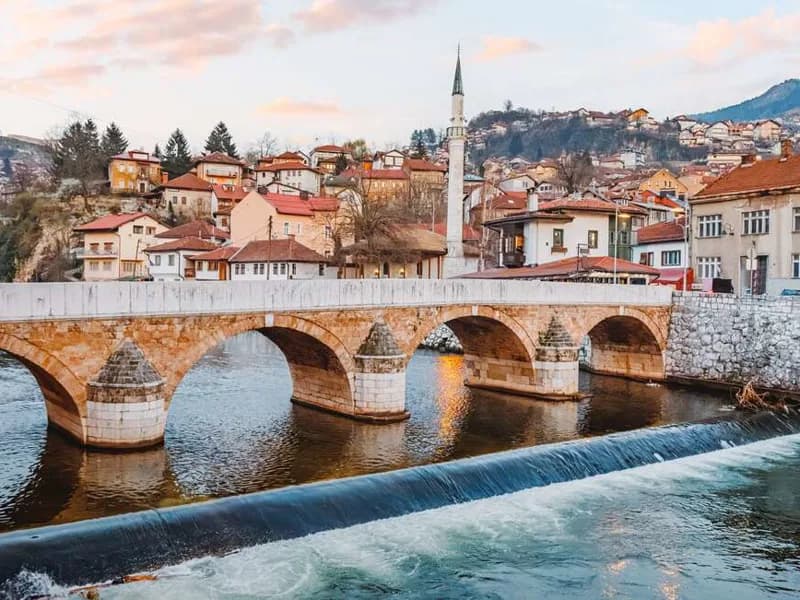
Sarajevo lies in a long valley surrounded by hills, and the mountains come right to the edge of the city. Mount Trebević, which rises above the old town, was a favourite place for an outing before the war of the 1990s, when its slopes became part of the front line around the besieged city. The cable car to its summit was destroyed and only reopened in 2018. The bobsleigh track built for the 1984 Winter Olympics, which winds down through its forest, survives as a ruin covered in graffiti, an eerie and much-photographed walk.
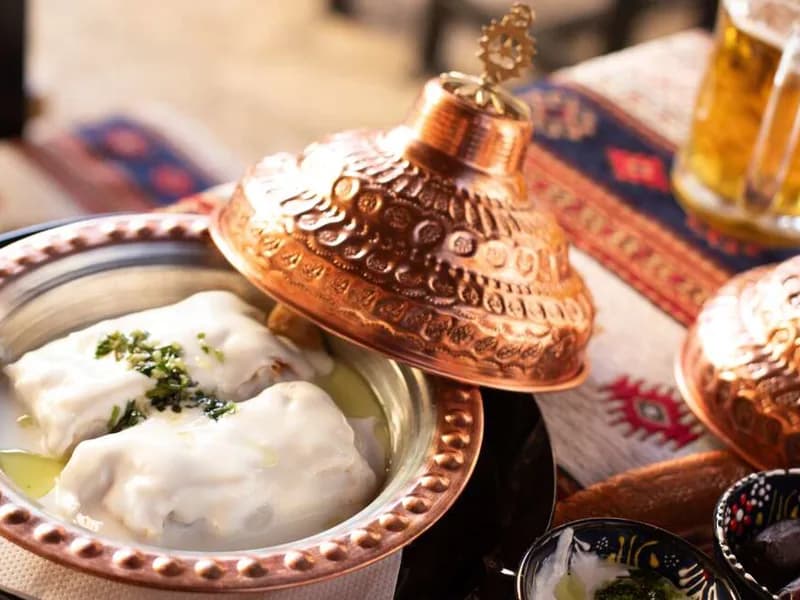
Sarajevo is also a good city to eat in before and after the mountains. Its old bazaar is full of small grills serving ćevapi, little sausages of minced meat in flatbread with raw onion, and bakeries selling burek, spiralled pastry filled with meat, cheese or spinach. Bosnian coffee, brewed in a long-handled copper pot and served with a cube of sugar and a piece of Turkish delight, is a ritual to be taken slowly.
The Olympics also made famous the other mountains around the city, Igman and Bjelašnica, where the skiing events were held. Beyond Bjelašnica lies the high plateau where Lukomir stands.
Lukomir is the highest and one of the most remote villages in Bosnia and Herzegovina.
Lukomir
Lukomir sits at about 1,500 metres, on the edge of the Rakitnica Canyon, one of the deepest and wildest in the country. It is a small cluster of stone houses with steep roofs, traditionally covered in wooden shingles, and a little old graveyard with carved medieval-style stones, the stećci, that are characteristic of the region. For much of the winter the village is cut off by snow, and many of its few inhabitants still move down to the valleys for the cold months and return in spring with their sheep.
The people of Lukomir are known for their traditional costumes and knitted woollen socks and gloves, which they sell to the walkers who make it up to the village in summer. Their way of life, based on sheep, cheese and the short mountain summer, is one of the last of its kind in the Balkans. The walk to the village across the open plateau, with the canyon dropping away beside it and the mountains all round, is one of the finest in Bosnia.
On into Serbia and Montenegro
The mountains do not stop at the border. In western Serbia, Tara National Park covers a forested plateau above the canyon of the Drina river, home to bears and to the Serbian spruce, a tree found only in this region. Further south, the Uvac Nature Reserve is known for the extraordinary meanders of its river through a limestone gorge, and for its griffon vultures. In Montenegro, Durmitor National Park is a high limestone massif with glacial lakes, among them the Black Lake, and the Tara Canyon, the deepest in Europe.
The walking holidays
Explore Worldwide's Walking the Balkans: Bosnia, Serbia & Montenegro, eight nights, crosses all three countries on foot. It starts in Sarajevo, walks to Lukomir and on Mount Trebević, then crosses into Serbia for Mitrovac and Tara National Park, Sjenica and the Uvac Nature Reserve, before continuing to Pljevlja and Žabljak in Montenegro for Durmitor National Park and Lake Jablan. It runs in May, June, September and October.
Explore's Balkans Rail Adventure, fifteen nights, travels largely by train from Ljubljana through Zagreb and the Plitvice Lakes to Sarajevo and Mostar, then on to Dubrovnik, the Bay of Kotor, Belgrade and Novi Sad, a way of seeing the region's cities rather than its mountains.
Late spring and early autumn are the best seasons for walking here, when the paths are clear, the meadows green or golden, and the heat of the valleys is far below. Summer brings the shepherds back to the plateaus and the chance to buy cheese and socks from the villagers.
By Walter Pellow, the name Atlas & Passage’s editorial team writes under. Prices and dates in the trips below come from the operators and can change.