Seasons
Where to go in May, the month that the well-travelled keep for themselves
Long days, fresh landscapes, school still in session. May is when the fjords are loudest with meltwater, the Azores are busiest with whales and Tuscany is green rather than gold.
By Arthur Penhallow26 September 20264 min read
Ask anyone who organises holidays for a living which month they would choose for themselves, and a surprising number will say May. The days are long, the weather in most of Europe is settled enough to plan around, the landscapes are at their freshest, and the schools have not yet broken up. Prices, on the whole, have not yet climbed to their summer heights. It is a month for going somewhere at exactly the right time.
The fjords at full volume
Norway's fjords are at their most theatrical in May. The winter snow on the mountains is melting fast, and the result pours off every cliff, so that the famous named waterfalls are joined by hundreds of unnamed ones that will be gone by August. In the Hardanger country the fruit trees are in blossom below the snowline. The midnight sun is still a few weeks off in the south, but the evenings go on for a very long time.
Fred. Olsen's Springtime Falls & Fjords of Norway leaves Southampton in May for eight nights, and it goes deep. The first fjord is the Lysefjord, beneath the flat-topped cliff of Preikestolen, some six hundred metres above the water. Then come Eidfjord and the Hardangerfjord, the narrow Maurangerfjord and its Furebergsfossen waterfall, Skjolden at the very end of the Lustrafjord, the innermost arm of the Sognefjord, and finally Olden on the Nordfjord, with the Briksdal Glacier and the Loen Skylift among the places listed. Briksdal is an arm of Jostedalsbreen, the largest glacier on the European mainland.
Whales and crater lakes in the Azores
Nine volcanic islands in the middle of the Atlantic, a third of the way to America, the Azores are Portuguese, green and famously changeable in their weather; locals like to say you can have all four seasons in a day. In spring they are also on the migration route of the great whales. Sperm whales live around the islands all year, but in April and May they are joined by blue and fin whales passing north, and the islands' old whaling lookouts, once used to direct the hunt, now direct the boats that go out to watch.
Fred. Olsen's fourteen-night Volcanos & Whales of the Remote Azores sails from Liverpool in May, with three days at sea before Praia da Vitória on Terceira and Ponta Delgada on São Miguel, and then Funchal and Matosinhos on the way home. The places listed include Sete Cidades, the twin crater lakes, one blue and one green; Terra Nostra Park, whose warm iron-rich bathing pool is the colour of strong tea; and Algar do Carvão, an old volcanic vent on Terceira that you can walk down into. The whales, like all wildlife, keep their own schedule.
The famous named waterfalls are joined by hundreds of unnamed ones that will be gone by August.
Tuscany while it is still green
By July, Tuscany is gold and hot; in May, it is green, the poppies are out in the wheat, and walking between hill towns is a pleasure rather than an endurance test. Just You's Walking in Tuscany, for solo travellers, is based in Chianti and runs from April to September. May is the month I would choose. The days include a Chianti walk to the Castello di Verrazzano, the family seat of Giovanni da Verrazzano, who sailed into what is now New York harbour in 1524; Volterra, an Etruscan town before it was Roman; San Gimignano and its towers; the Mugello, the valley north of Florence where the Medici came from; and finally Siena and the walled hilltop of Monteriggioni, whose towers Dante borrowed as an image in the Inferno.
Bhutan before the rains
Further afield, May is late spring in the eastern Himalaya, when the rhododendrons are flowering on the hillsides and the monsoon has not yet arrived. Bhutan, the small Buddhist kingdom between India and Tibet, controls its visitor numbers carefully, and its valleys have a composure that is rare in the modern world.
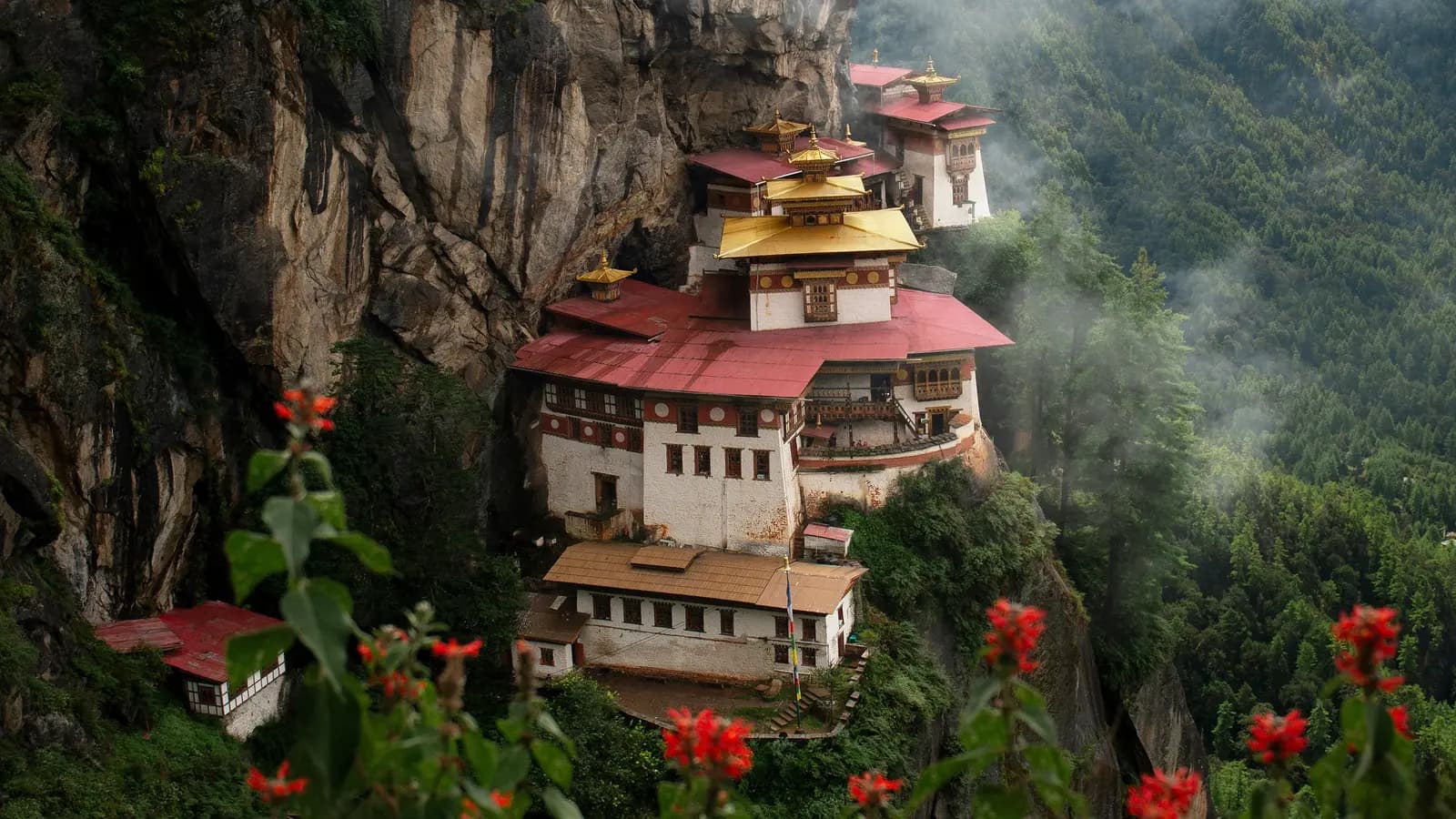
G Adventures' seven-night Signature: Bhutan & the High Himalayan Valleys departs in May, and its route runs from Thimphu over the Dochula Pass to Punakha, whose great fortress-monastery stands where two rivers meet, then to the Gangtey Valley and finally Paro, for the walk up to Tiger's Nest. That monastery clings to a cliff face some nine hundred metres above the valley floor, on the spot where, tradition says, Guru Rinpoche arrived in the eighth century on the back of a flying tigress. It is a steep climb and worth every step.
A month to use well
May's weakness is that everyone who knows about it books early. Its strength is that you are always seeing a place at its freshest: before the heat, before the crowds, before the waterfalls dwindle and the grass turns brown. If you can travel in May, do, and do not waste it on anywhere that is better in August.
By Arthur Penhallow, the name Atlas & Passage’s editorial team writes under. Prices and dates in the trips below come from the operators and can change.