Culture
Bali's rice terraces, and the temples that decide who gets water
Bali's famous green terraces are not just farmland; they are run by a cooperative water-sharing system, centuries old and still active, that answers to temples rather than a water authority.
By Arthur Penhallow26 September 20263 min read
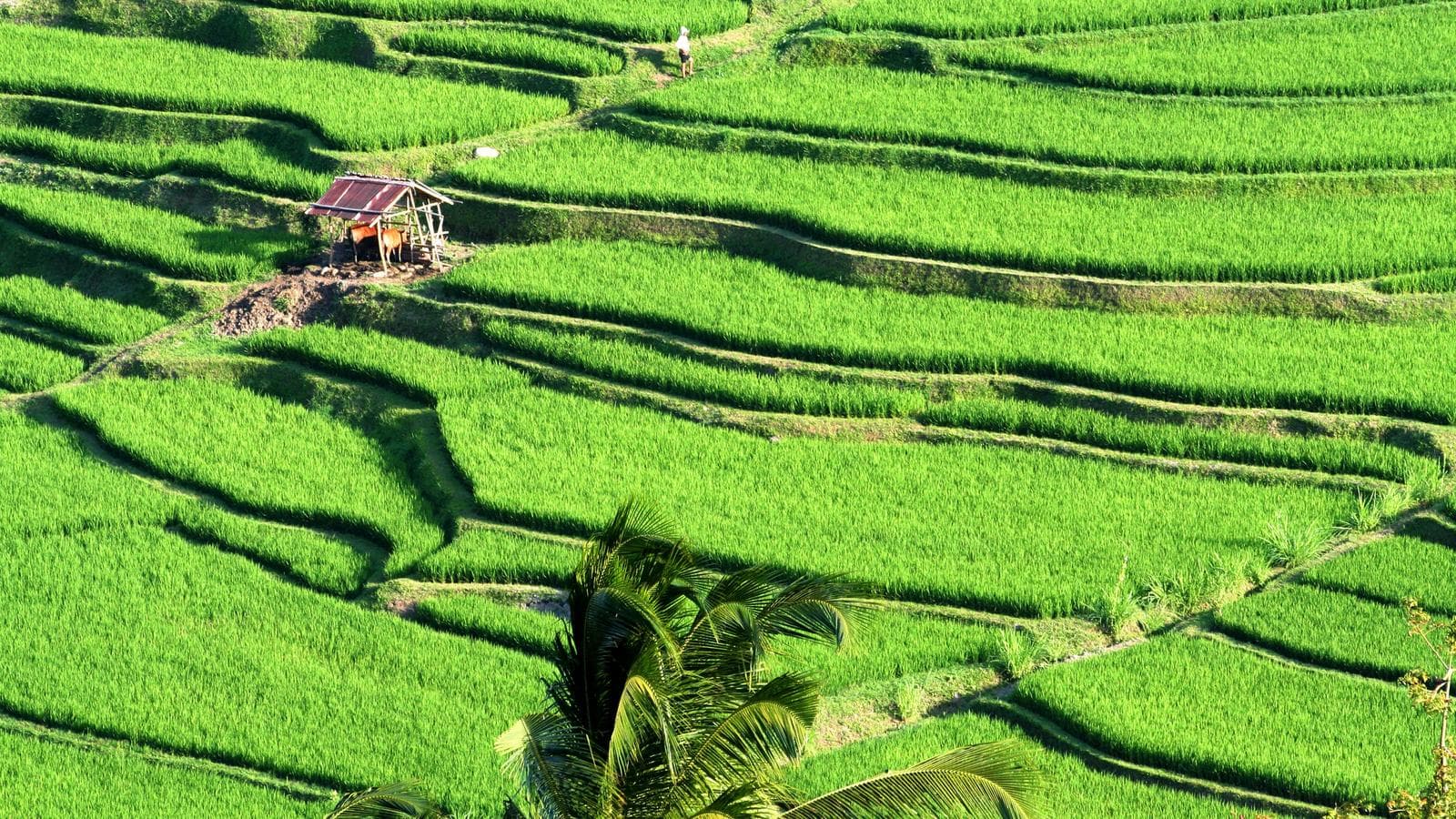
The rice terraces around Ubud and further west at Jatiluwih are, by now, one of the more photographed sights in Indonesia, and it is easy to look at their carved green steps and see only landscape. What is harder to see, because it mostly happens underground and in temple ledgers, is the system that keeps them working: a nine-hundred-year-old cooperative irrigation network called subak, which decides who gets water and when, and does it through religious institutions rather than a modern utility.
An irrigation system run by temples
Subak organises Balinese rice farmers into local cooperatives, each centred on a water temple that manages the timing and distribution of water drawn from a shared source, usually a river or spring, through a network of canals, tunnels and dams built up and maintained collectively over centuries. Farmers rotate planting schedules across a subak district partly to spread water demand evenly and partly to manage pests, since staggered planting denies insect populations a continuous food supply. The system is inseparable from Balinese Hinduism's Tri Hita Karana philosophy, broadly translated as harmony between people, nature and the spiritual world, and subak temples hold ceremonies at each stage of the rice cycle, from planting to harvest.
Jatiluwih, and why it looks the way it does
The Jatiluwih terraces, in the hills of central Bali, were added to UNESCO's World Heritage List in 2012 specifically as an example of the subak system in action, rather than simply as scenery. The terraces step down a slope wide enough to hold several subak districts at once, and the contour lines that make the view so legible from above are, in practice, an engineering solution: each terrace holds water at a slightly different level, passing the surplus down to the next as it fills, so that a single spring can eventually reach fields a considerable distance downhill.
Pressure on an old system
Bali's rice farming, and subak with it, sits under real strain: tourism development competes for the same water and the same land, younger generations increasingly work outside agriculture, and rice itself, grown this way, is more labour-intensive and lower-yielding than commercial alternatives. None of this has been resolved by the UNESCO listing, which recognises the system rather than protects it outright. What keeps Jatiluwih and similar terraces functioning is, largely, the fact that enough farmers still find it worth doing, alongside a tourism income that has, so far, made the terraces more valuable intact than converted.
A system studied as much as visited
Subak has attracted attention well beyond Bali's own farmers: the American anthropologist J. Stephen Lansing spent decades studying the system from the 1970s onward, and his work, alongside Balinese colleagues, demonstrated that the staggered planting schedules coordinated through water temples were not simply tradition for its own sake but a genuinely effective way of managing water scarcity and pest cycles across an entire watershed, one that outperformed, in modelling, a more centralised irrigation schedule imposed without reference to the temple network. It is a rare example of an agricultural system built on religious ritual turning out, on closer study, to be doing sound water engineering as well.
Temples along the way
Several water temples sit within easy reach of Ubud and the central highlands, among them Tirta Empul, built around a holy spring where Balinese Hindus still come to bathe in ritual purification, and Gunung Kawi, a set of shrines carved directly into a river cliff face in the eleventh century for a Balinese king and his family. Ulun Danu Beratan, further north on the shore of a crater lake, is dedicated to Dewi Danu, the goddess of water and lakes, a dedication that makes its purpose within the wider subak network fairly explicit: the lake it sits beside feeds much of the irrigation for the rice country downhill. Neither is presented as a museum piece; both remain places of active worship, which is worth bearing in mind when visiting; modest dress and a degree of quiet are expected, as they would be at any working place of religion.
By Arthur Penhallow, the name Atlas & Passage’s editorial team writes under. Prices and dates in the trips below come from the operators and can change.