History
The Dieng Plateau, Java's oldest temples in the clouds
On a cold volcanic plateau two thousand metres up in central Java stand some of the oldest Hindu temples on the island, built before Borobudur. Around them are steaming craters, coloured lakes and potato fields in the mist.
By Walter Pellow20 October 20264 min read
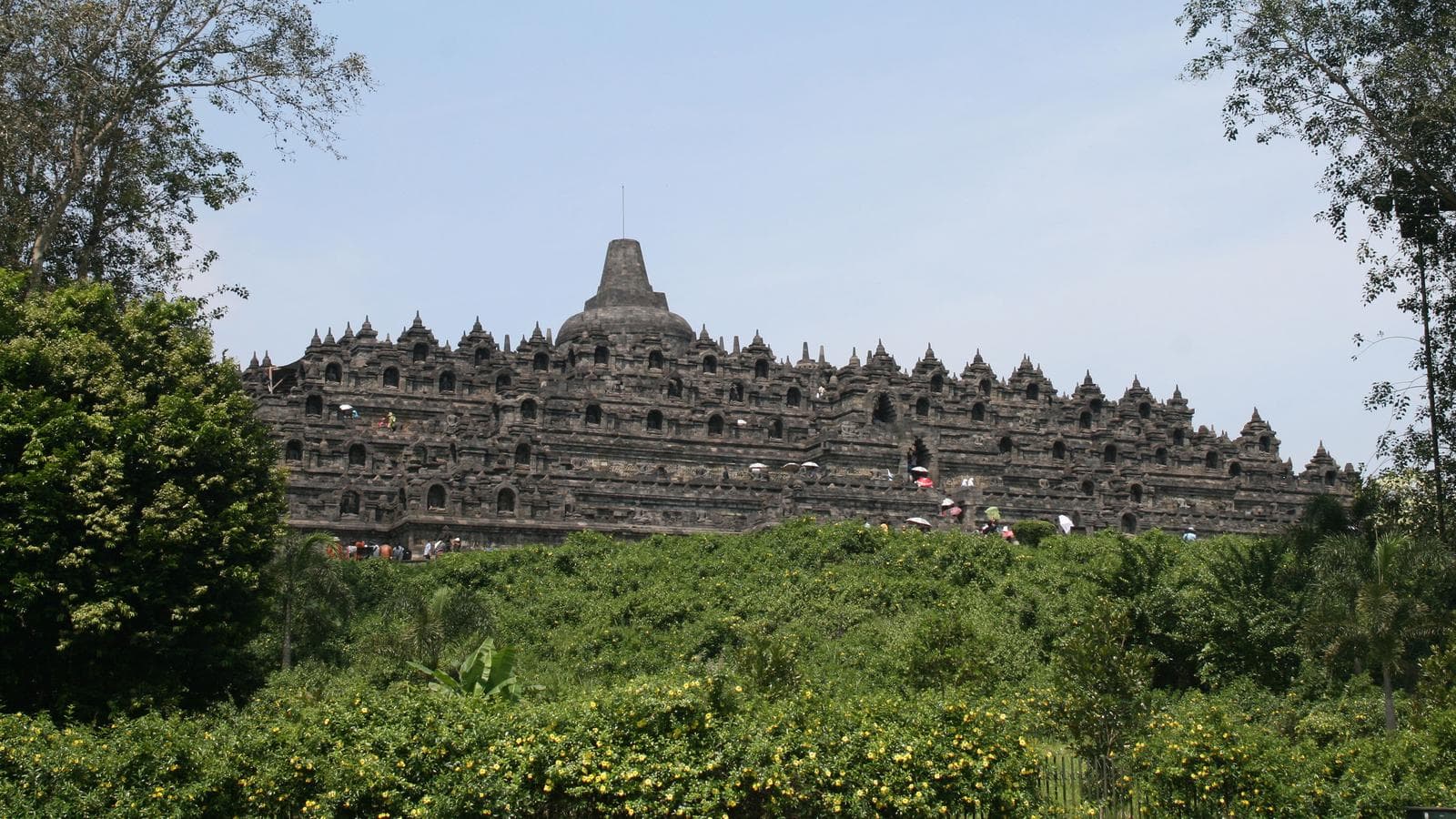
Most visitors to central Java come for Borobudur, the great Buddhist monument, and the Hindu temples of Prambanan. Fewer make the journey up into the mountains to the north, to a high plateau where the story of those monuments begins. The Dieng Plateau lies at about two thousand metres, in the caldera of an ancient volcano, surrounded by peaks and still steaming in places. Its name is often explained as coming from old Javanese words meaning "abode of the gods". On this plateau, around the seventh and eighth centuries, Java's Hindu rulers built some of the earliest stone temples on the island.
The temples
Of the many temples that once stood on the plateau, a small number survive. The best known are a group of small, square shrines of grey volcanic stone standing together on a level field, the Arjuna group. Centuries later they were named after heroes of the Mahabharata, the Hindu epic popular in the Javanese shadow-puppet theatre: Arjuna, Semar, Srikandi, Puntadewa and Sembadra. Their original names are lost. They are modest in size, simple in form and weathered by more than a thousand years of mountain weather. Standing among them in the early morning mist, with the hills rising around, it is easy to see why the builders chose this place to be close to their gods.
Other temples are scattered across the plateau, including Gatotkaca, named after another hero of the epic, and the small Bima temple. A site museum explains what is known of the temples' history, and displays carvings and statues found on the plateau. The temples are generally considered among the oldest standing Hindu buildings in Java, pre-dating the far grander monuments of the plains below.
Craters and lakes
The plateau is still volcanically active. At Kawah Sikidang, a crater a short walk from the temples, steam and sulphurous gas pour from vents and grey mud bubbles in pools, with a smell of rotten eggs. Telaga Warna, the "coloured lake", lies in a forested hollow, its water tinted green, turquoise or yellow depending on the light and the sulphur content. A smaller lake beside it reflects the trees more calmly. Visitors are advised to keep to the marked paths at the craters, where the ground can be unstable and the gases dangerous.
For the view, many visitors climb Sikunir hill in the dark to watch the sunrise. On a clear morning, the sun rises over a sea of cloud, with the cones of several great volcanoes, including Sindoro and Sumbing, standing up through it.
The temples of Dieng are important for what came after them. The style of building developed here, with small square shrines raised on platforms and topped by stepped roofs, was refined over the following century in the much larger temples of the Kedu and Prambanan plains. That process culminated in the great monuments of the ninth century, Borobudur and Prambanan. Seeing Dieng first makes those later masterpieces easier to understand.
The cold, and the culture
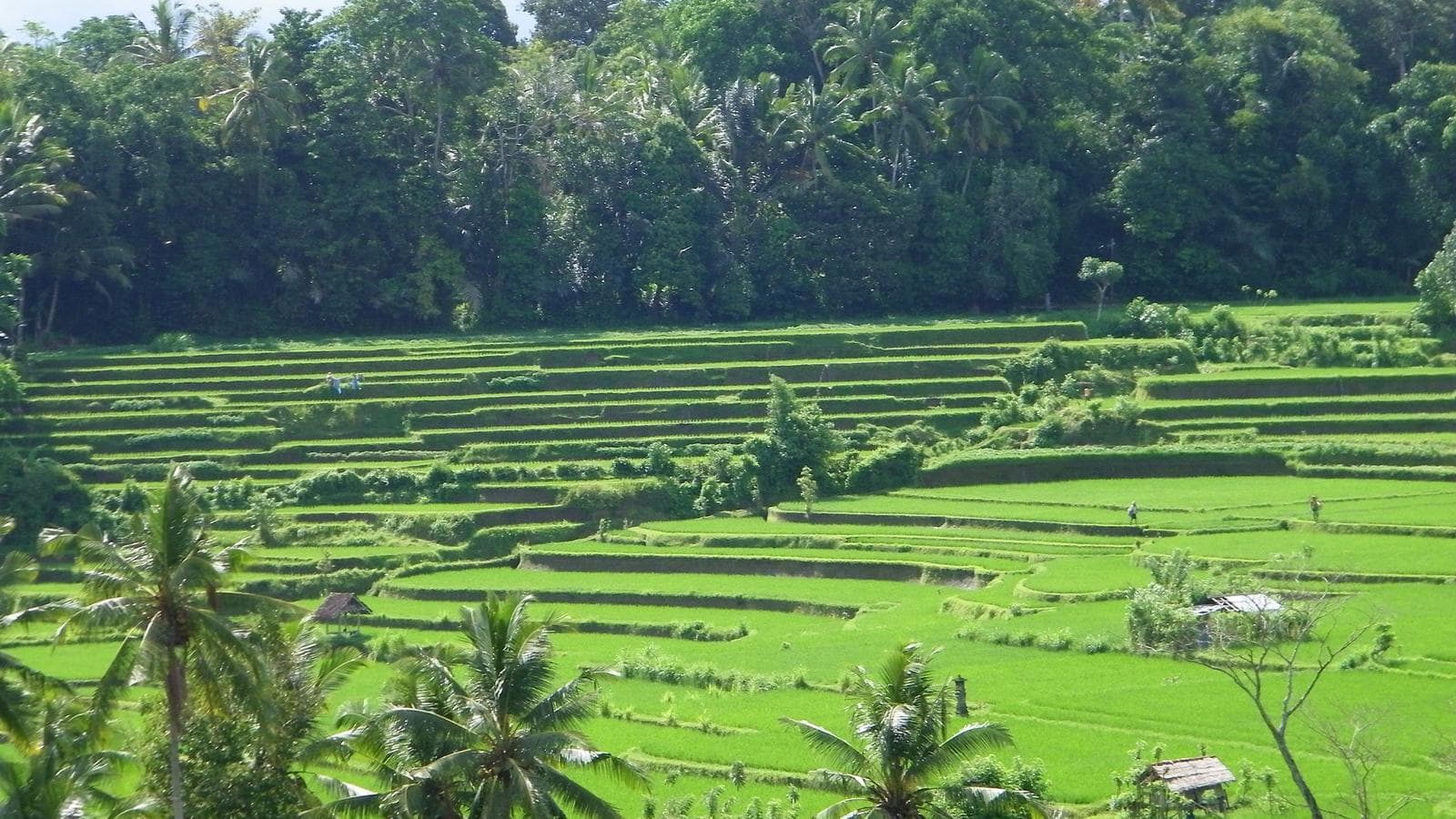
Dieng's altitude means it is cold, especially at night. In the dry season, temperatures can drop close to freezing, and frost sometimes forms on the fields. That is a surprise in the tropics, and warm clothes are essential. The plateau is intensively farmed, with potatoes, cabbages and other vegetables grown on terraces up the steep hillsides. An annual cultural festival includes a ritual haircut for local children born with naturally matted hair, a tradition unique to the area.
G Adventures' Highlights of Java: Temples and the Dieng Plateau, seven nights, combines Dieng with Jakarta, Bandung and Semarang.
G Adventures' Indonesia: Absolute Java, fourteen nights, includes Dieng with Jakarta, Bandung, Semarang and Solo, the villages around Borobudur, Yogyakarta, Mount Bromo and Malang's Jodipan village. G Adventures' Indonesia: Jakarta, Bali and Lombok, twenty-eight nights, includes Dieng on a much longer route that continues through Java to Bali and Lombok.
The dry season, from about May to September, gives the clearest skies. Whenever you go, bring a jumper, a hat and a waterproof, and allow time for the mist to lift.
By Walter Pellow, the name Atlas & Passage’s editorial team writes under. Prices and dates in the trips below come from the operators and can change.