Journeys
Lake Toba, the supervolcano with an island in it
In the highlands of northern Sumatra, a lake almost a hundred kilometres long fills the crater of one of the largest volcanic eruptions in the earth's recent history. In the middle is an island nearly the size of Singapore, home to the Batak people.
By Walter Pellow20 October 20264 min read
Around seventy-four thousand years ago, a volcano in what is now northern Sumatra erupted with a violence that is hard to imagine. The Toba eruption was one of the largest volcanic events of the last few million years. It threw thousands of cubic kilometres of ash and rock into the air, scattering ash as far as India and beyond. The effects on the global climate and on early human populations are still debated by scientists, with some arguing for a dramatic impact and others for a more modest one. What is beyond doubt is what it left behind: a huge collapsed crater, a caldera, that slowly filled with water to become Lake Toba, the largest volcanic lake in the world.
The lake is about a hundred kilometres long and around thirty wide, surrounded by steep, green hills that rise to the old crater rim. Its surface lies about nine hundred metres above the sea. The climate is pleasantly cool compared with the steamy lowlands. In the middle of the lake, the floor of the caldera was later pushed up by molten rock beneath it, forming the island of Samosir, which is almost as large as Singapore.
The Batak
The hills around the lake and the island of Samosir are the homeland of the Toba Batak, one of several Batak peoples of northern Sumatra. They have a strong culture of their own, with their own language and script, music, textiles, and a complex system of clans that still governs marriage and inheritance. Most Toba Batak became Christian after German missionaries arrived in the nineteenth century, and churches stand in many villages, but older traditions of ancestor veneration remain strong.
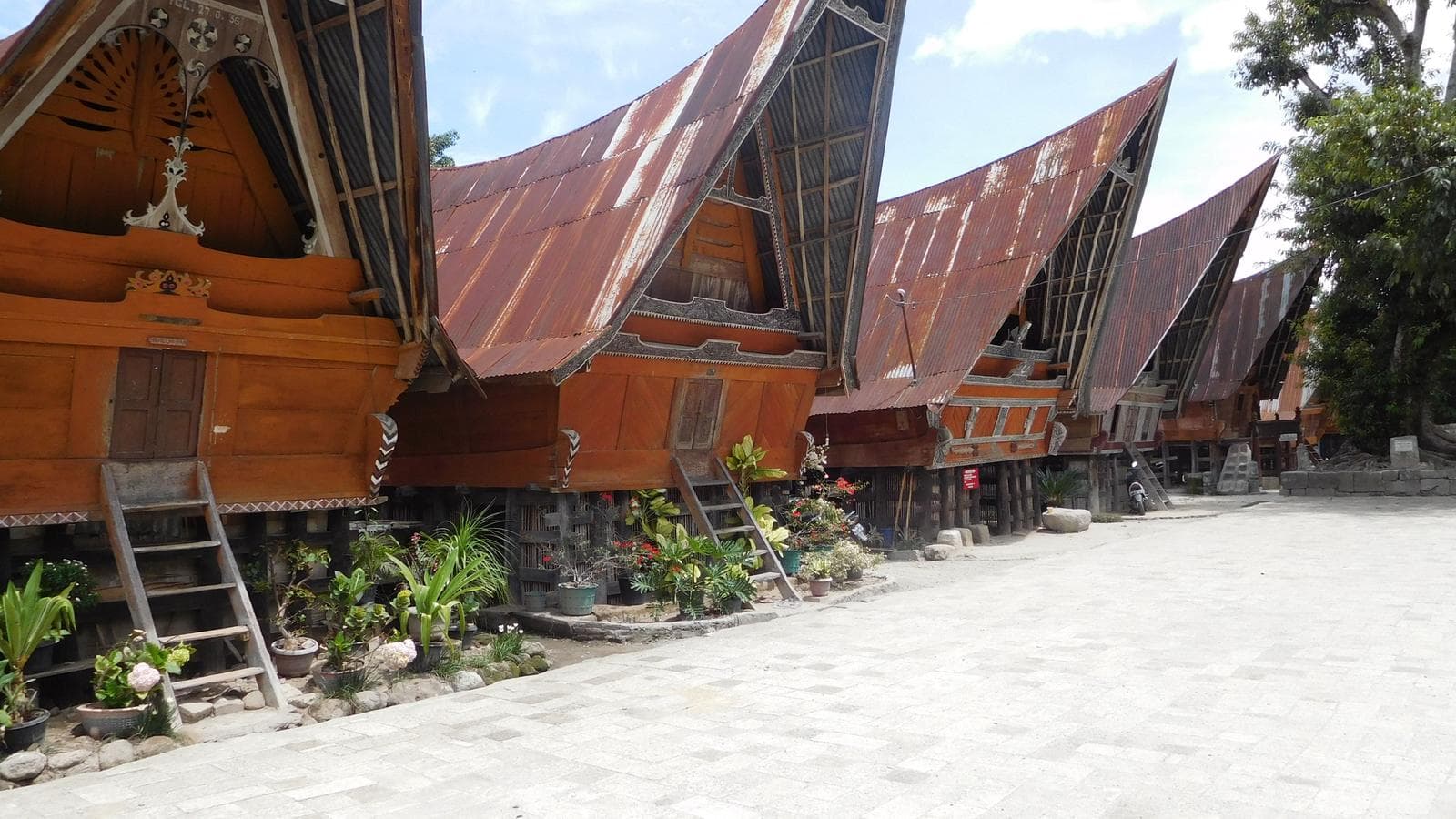
The Batak are known for their striking traditional houses, built of timber on stilts, with great saddle-shaped roofs that sweep up at each end like the prow of a boat, decorated with carved and painted designs in red, black and white. Villages on Samosir still have rows of these houses. The island also has carved stone tombs of Batak kings. At Ambarita there are stone chairs where, by tradition, village elders sat in judgement. At Tomok, the sigale-gale, a life-size wooden puppet, is made to dance at funerals and for visitors, a tradition with its roots in mourning rituals.
Around the lake
Visitors usually reach Samosir by ferry from Parapat, a small town on the eastern shore. Once on the island, the pace is slow. You can cycle or scooter around the villages, swim in the cool water of the lake, and sit in the evening watching the light fade on the hills across the water.
To the north of the lake, the Sipiso-piso waterfall drops more than a hundred metres from the edge of the plateau into a gorge near the lake shore, one of the highest falls in Indonesia. Further north, the highland market town of Berastagi sits between two active volcanoes, Sibayak and Sinabung, in a landscape of vegetable farms and fruit orchards.
Batak music is another of the island's pleasures. Gondang ensembles of drums and gongs play at ceremonies, and the Batak are famous across Indonesia for their singing. In the evenings, guitar-led songs in close harmony drift out of the cafés and churches around the lake. Batak food is distinctive too, with spicy dishes of pork and fish seasoned with andaliman, a tingling relative of Sichuan pepper that grows in the highlands.
The Sumatra tours
G Adventures' Highlights of Sumatra, six nights, combines Lake Toba, Samosir Island, Parapat and the Sipiso-piso waterfall with Medan and its historic Kesawan district, Berastagi and Mount Sibayak. It also visits Bukit Lawang on the edge of Gunung Leuser National Park, where orangutans live in the rainforest.
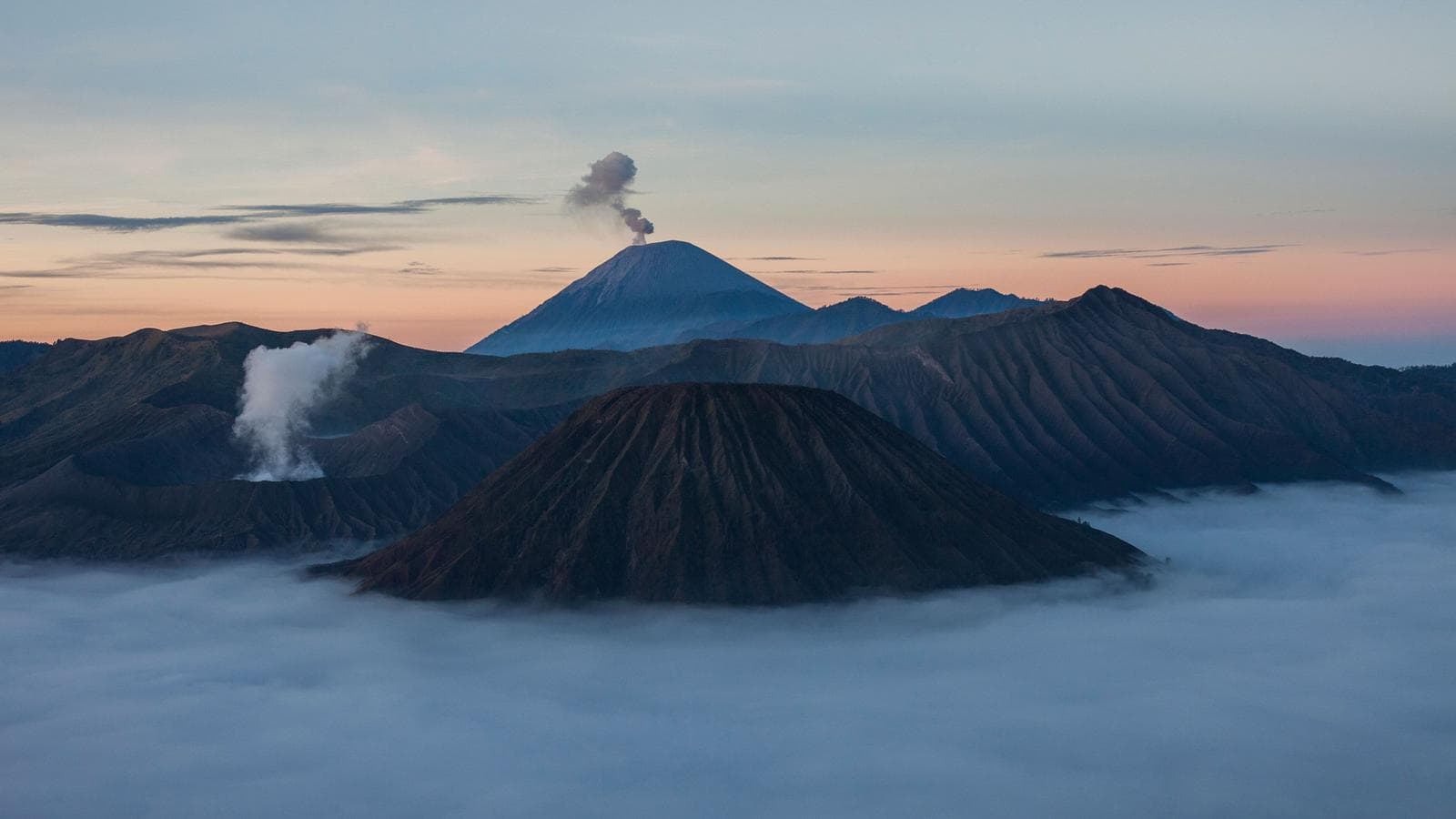
G Adventures' Highlights of Java and Sumatra, thirteen nights, pairs Toba, Samosir and a Batak village with Gunung Leuser in Sumatra and, in Java, the villages around Borobudur, Yogyakarta, Solo and Ngadas near Mount Bromo. G Adventures' Best of Java and Sumatra, twenty nights, adds Berastagi, Sabang, Jakarta, Bandung and Semarang.
The drier months, from about May to September, are the best time to go, though the lake is pleasant much of the year. Whenever you visit, it is hard to look out over its calm water and remember what made it.
By Walter Pellow, the name Atlas & Passage’s editorial team writes under. Prices and dates in the trips below come from the operators and can change.