Culture
Yogyakarta, the city that still has a sultan
In a republic of more than two hundred and seventy million people, one province is still headed by a hereditary sultan who lives in his palace in the middle of the city. Yogyakarta is Java's cultural capital, and the base for Borobudur and Prambanan.
By Walter Pellow20 October 20264 min read
Indonesia is a republic, and has been since it declared independence in 1945. But in central Java there is an exception. The Special Region of Yogyakarta is governed by its sultan, a hereditary ruler whose dynasty has reigned since the eighteenth century and who serves, by right of his throne, as the province's governor. It is a unique arrangement, and it goes back to the war of independence. When the Dutch returned after the Second World War, the sultan of the time, Hamengkubuwono IX, sided firmly with the young republic, and Yogyakarta served as its capital for several years while Jakarta was under Dutch control. His loyalty was rewarded with the special status the city still holds.
The Kraton
The sultanate was founded in 1755, when the old Javanese kingdom of Mataram was divided in two. The new sultan built his palace, the Kraton, at the heart of the new city. It sits on a line running north to the active volcano of Merapi and south to the Indian Ocean, both of them powerful places in Javanese belief. The Kraton is a complex of pavilions, courtyards and gateways, part of it still the sultan's residence and part of it open to visitors. Palace retainers in traditional dress, with batik sarongs and blangkon headcloths, still perform their duties. In some of the pavilions there are regular performances of gamelan music, classical dance and wayang kulit, the shadow puppet theatre.
Close by is Taman Sari, the "fragrant garden", an eighteenth-century royal pleasure garden of bathing pools, pavilions and underground passages, built for the sultan and his household. Part of it is now surrounded by a neighbourhood of houses and lanes that grew up in the ruins.
The arts of Yogyakarta
Yogyakarta is the centre of classical Javanese culture, and of a lively contemporary art scene. It is one of the great centres of batik, the technique of dyeing cloth using wax to resist the dye, recognised by UNESCO as part of Indonesia's intangible heritage. Workshops all over the city produce traditional and modern designs, and it is possible to watch the work and to try it. Kotagede, a district to the south-east and the site of an older capital of Mataram, is known for its silversmiths, who work in small family workshops.
The food is distinctive too. Gudeg, the city's signature dish, is young jackfruit stewed slowly in coconut milk and palm sugar until it turns brown and sweet. It is served with rice, chicken, egg and a spicy stew of beef skin. Malioboro, the city's main street, is lined with shops, street stalls and pedicabs, and it comes alive in the evening.
To the north of the city rises Mount Merapi, one of the most active volcanoes in Indonesia, its smoking cone visible on clear mornings. It erupts regularly, sometimes with deadly force, as in 2010, when its eruption killed hundreds of people and forced the evacuation of many villages on its slopes. In Javanese belief the volcano is a sacred place, and the palace has a role in ceremonies to honour it. It is a reminder that the fertile land around the city, among the most densely farmed in the world, owes its richness to the same volcano that threatens it.
Borobudur and Prambanan
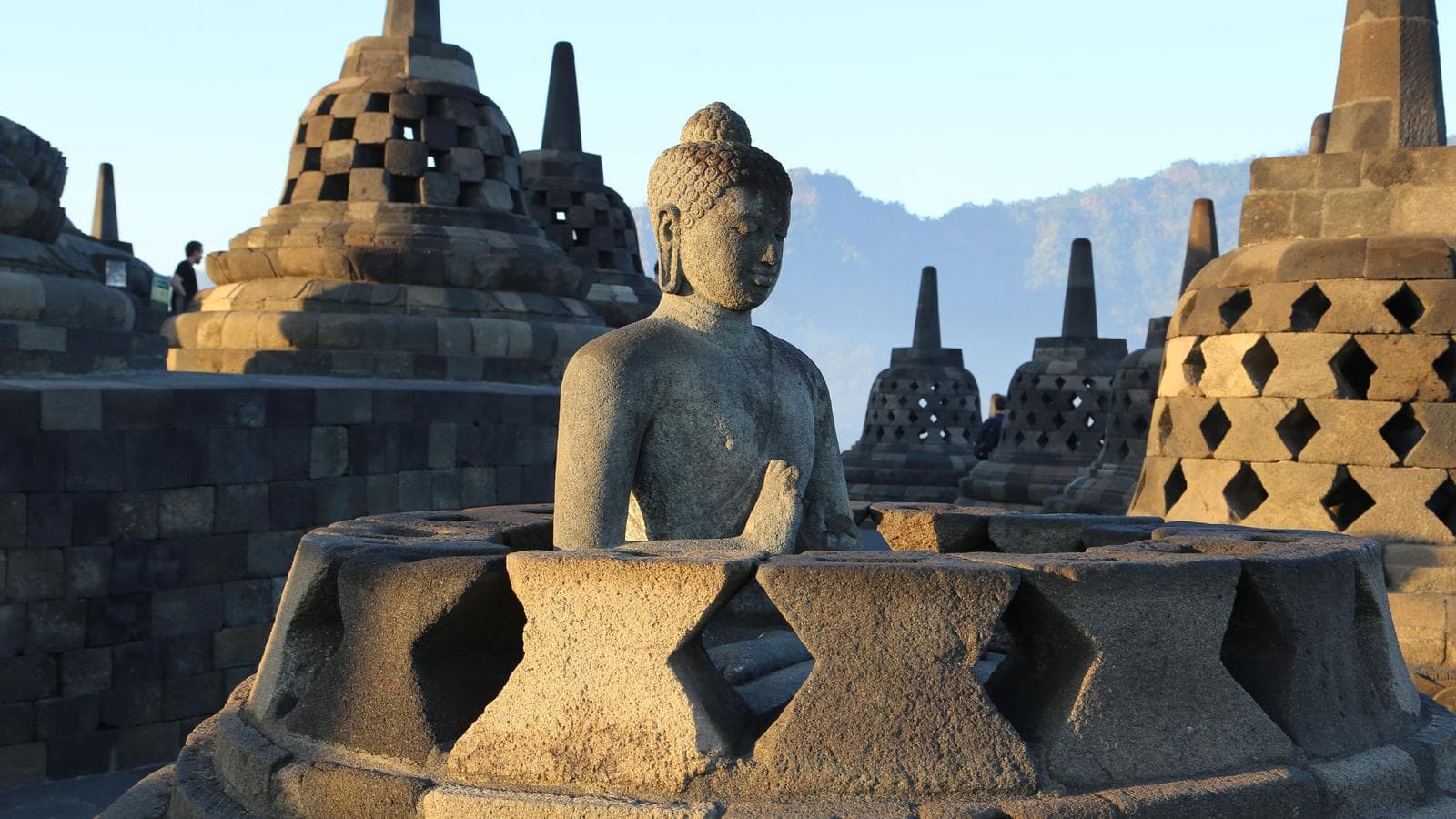
Yogyakarta is the base for two of the greatest monuments in South-east Asia. Borobudur, about an hour to the north-west, is the largest Buddhist monument in the world, a vast stepped pyramid of stone built in the ninth century, its terraces carved with more than two thousand relief panels and crowned by bell-shaped stupas. Prambanan, to the east, is a great Hindu temple complex from about the same time, with tall, slender towers dedicated to Shiva, Vishnu and Brahma. Both are World Heritage Sites.
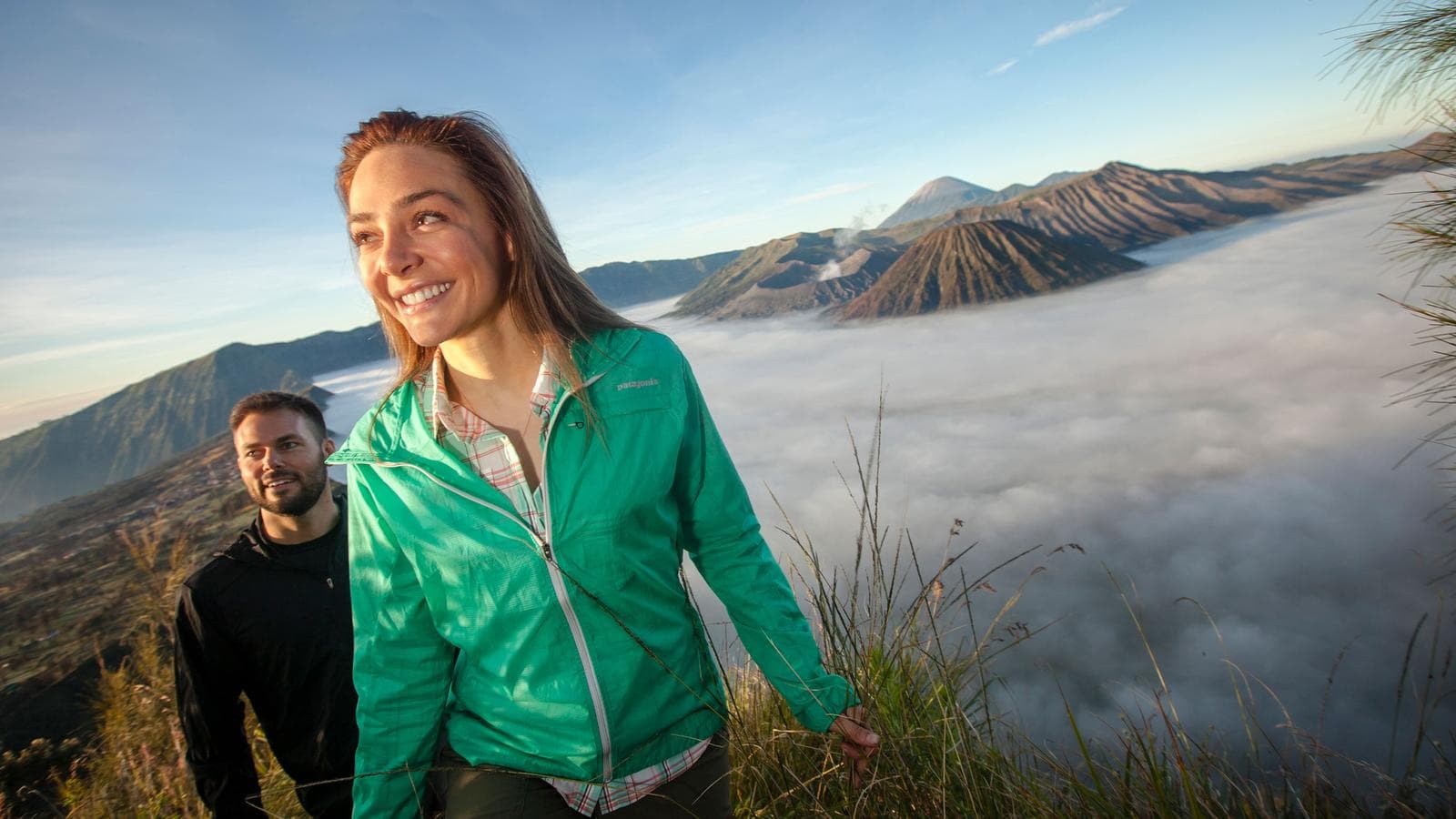
G Adventures' Classic Java: Borobudur and Mt Bromo, seven nights, includes Yogyakarta and Borobudur, the villages of Candirejo and Wanurejo, Solo, Ngadas near Mount Bromo, and Surabaya.
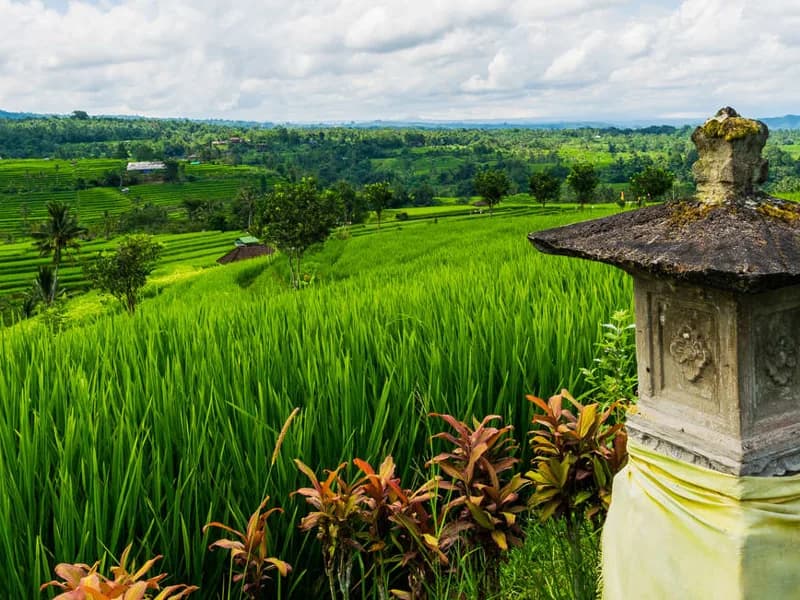
Explore Worldwide's Exotic Java and Bali, thirteen nights, includes Yogyakarta, Kota Gede, Borobudur and Prambanan, Malang and Cemoro Lawang on the rim of the Tengger caldera, then crosses to Bali for Pemuteran, West Bali National Park, Munduk and Ubud. G Adventures' Indonesia: Yogyakarta to Bali, fifteen nights, covers similar ground.
The dry season, roughly May to September, is the best time to go. Allow at least two full days in the city as well as the temples. Yogyakarta is worth knowing for itself, not just as the place you sleep before Borobudur.
By Walter Pellow, the name Atlas & Passage’s editorial team writes under. Prices and dates in the trips below come from the operators and can change.