History
Batavia's ghost, underneath the traffic of Jakarta
Jakarta rarely looks four hundred years old, but a walled Dutch trading town is still there, in the old harbour and the streets nobody bothered to redevelop.
By Arthur Penhallow26 September 20264 min read
Jakarta is not, on the face of it, an old city. It is a metropolis of tower blocks and permanent traffic, home to more than ten million people, and a first-time visitor could be forgiven for missing that a walled Dutch settlement called Batavia once stood more or less where its northern districts now sit, built on the ruins of a port town its founders had just burned to the ground.
A company town, literally
The Dutch East India Company, generally known by its Dutch initials VOC, took the harbour settlement of Jayakarta in 1619, destroyed most of it, and rebuilt a fortified trading town on the model of a Dutch canal city: straight waterways, brick warehouses, a town hall facing a central square. For the best part of two centuries Batavia was the company's headquarters in Asia, the hub through which spices, textiles and later coffee moved between the archipelago and Europe. The company ran it with the mix of commercial precision and outright coercion that VOC rule generally involved further inland, including forced cultivation quotas that fell heavily on Javanese farmers who had no real say in the arrangement.
Batavia's canals, dug to drain a swampy river delta, silted and stagnated instead, and by the nineteenth century the old town had a reputation as one of the less healthy postings in the Dutch colonial service, prone to cholera and malaria. The administration eventually moved its offices south to higher, drier ground, leaving the walled town behind, which is unexpectedly why so much of it survived: nobody had much reason to redevelop a district everybody had already abandoned.
Kota Tua, and the harbour that never stopped working
What remains is Kota Tua, Jakarta's old town: a cluster of Dutch colonial buildings around a cobbled square, including the former town hall, now a museum. A short distance north is Sunda Kelapa, the old harbour, which never really stopped being a harbour. Wooden pinisi schooners, a design that traces back centuries and is still built and sailed by Bugis crews from Sulawesi, load and unload cargo here in much the way boats have for a very long time, in a working, unadorned way that has nothing to do with sightseeing.
Nobody had much reason to redevelop a district everybody had already abandoned.
Indonesia's independence, declared in 1945 and recognised by the Netherlands in 1949 after years of fighting over the intervening period, renamed the city Jakarta and turned Batavia from a headline into a chapter. Kota Tua today is not treated as a monument to that period so much as one layer of a much longer story, and it is usually visited briefly, at the start or end of a Java itinerary, rather than dwelt on.
Older contacts, inland echoes
Java's foreign contact did not begin with the Dutch, and the country wears the evidence of that in places the VOC never controlled. At Semarang, the Sam Poo Kong temple marks where the Chinese Muslim admiral Zheng He is said to have landed during one of his great Ming-dynasty voyages in the early fifteenth century, two hundred years before Batavia existed. Further inland, at the sultan's court in Yogyakarta, the water castle known as Taman Sari was built in the late eighteenth century for Sultan Hamengkubuwono I, its pools and pavilions designed with input from a Portuguese-descended architect working under a Javanese court that answered, uneasily, to the VOC. It is a small detail, but a telling one: colonial Java was never simply a story of Dutch rule imposed on a blank page, but of older courts and older trading contacts absorbing, redirecting and occasionally outlasting it.
What to look for
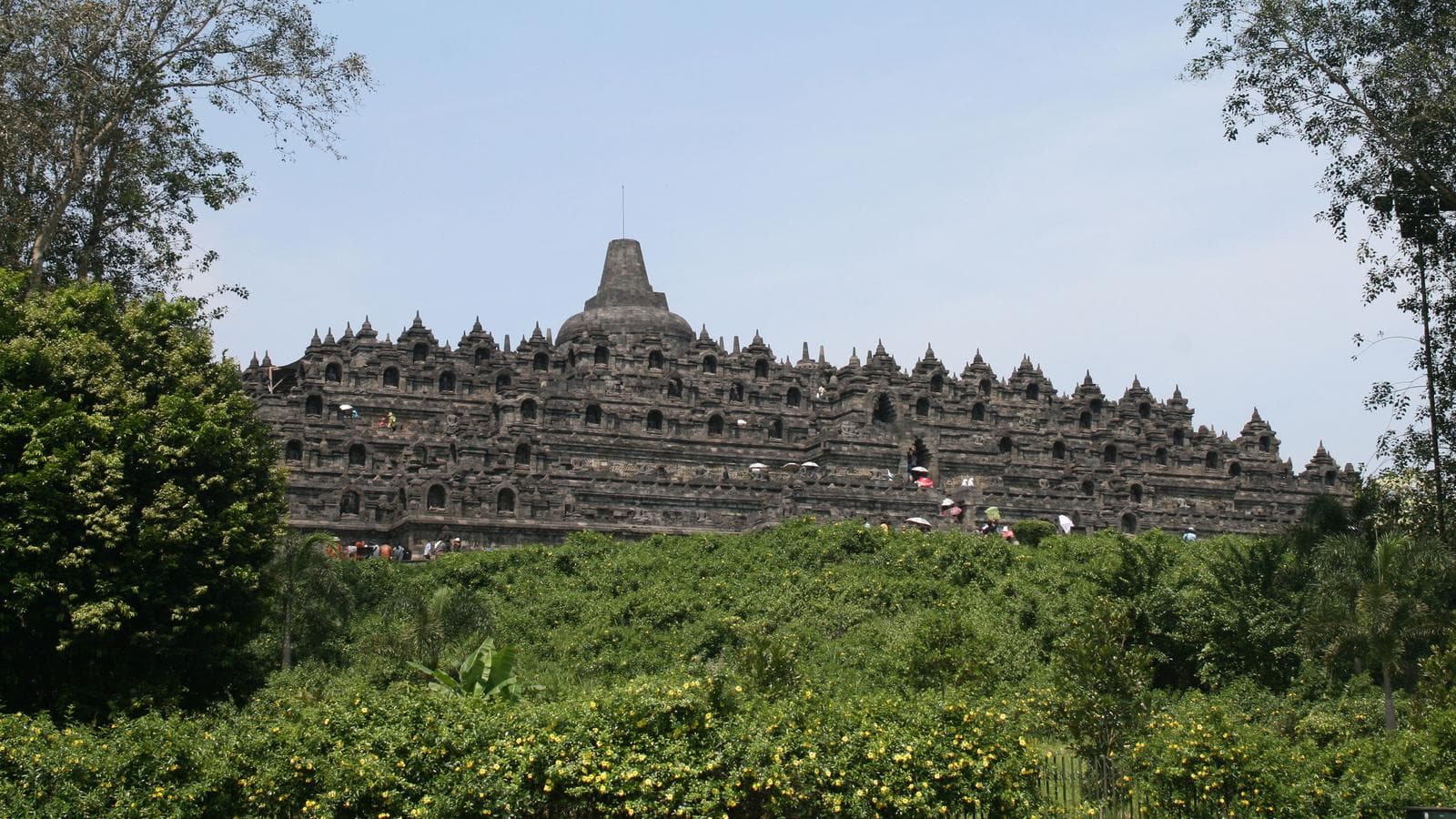
None of this requires a specialist itinerary. Java tours that begin or end in Jakarta generally build in an afternoon at Kota Tua and Sunda Kelapa, and those that continue to Yogyakarta usually take in Taman Sari alongside the more famous Borobudur and Prambanan. The interest, if you have read this far, is simply in knowing what you are looking at: not a preserved colonial theme park, but the actual working remains of a company town, still standing because nobody got round to knocking it down.
By Arthur Penhallow, the name Atlas & Passage’s editorial team writes under. Prices and dates in the trips below come from the operators and can change.