Culture
Beijing's hutongs, the city inside the ring roads
Inside Beijing's ring roads and around the Forbidden City survives a maze of grey-walled lanes and courtyard houses, the city's old neighbourhoods. They are shrinking, but they are still the best place to see how Beijing has lived for centuries.
By Walter Pellow20 October 20264 min read
From the air, central Beijing is a city of concentric rectangles. The ring roads encircle the centre one inside the other, carrying traffic around a city of more than twenty million people. The innermost of them, the Second Ring Road, follows roughly the line of the old city walls, which were pulled down in the 1960s to make room for it and for the first underground railway. Inside it lies what remains of the old imperial capital: the Forbidden City at the centre, and around it a grid of narrow lanes called hutong.
Lanes and courtyards
A hutong is a lane, typically just wide enough for a cart, running between the blank grey walls of single-storey courtyard houses. The word is often said to come from Mongolian, and the street plan goes back to the Yuan dynasty, when Kublai Khan built his capital here in the thirteenth century. The houses behind the walls, the siheyuan, are built around a square courtyard, with rooms on all four sides facing inward and a gate set into the wall. For a well-off family in imperial times, a siheyuan was a private world: trees, birdcages and pot plants in the courtyard, the generations of the family in their separate wings, and the noise of the city kept outside.
After 1949, many courtyards were divided up among several families, and extra rooms were built into the courtyards, so that they became crowded compounds. Many still have no plumbing of their own, which is why public toilets are such a feature of the lanes. The old way of life persists in pieces: people playing mahjong or chess on stools in the lane, elderly men airing their songbirds in cages, bicycles parked against every wall, and neighbours talking at the doorways.
The disappearing city
Beijing once had thousands of hutong. Since the 1990s, and particularly in the years leading up to the 2008 Olympics, large areas were demolished for wide roads, office towers and apartment blocks. Some have been restored or rebuilt, sometimes so thoroughly that they feel more like stage sets than neighbourhoods. Others survive in a more lived-in state. The protection of the remaining historic areas has become a subject of real debate within China.
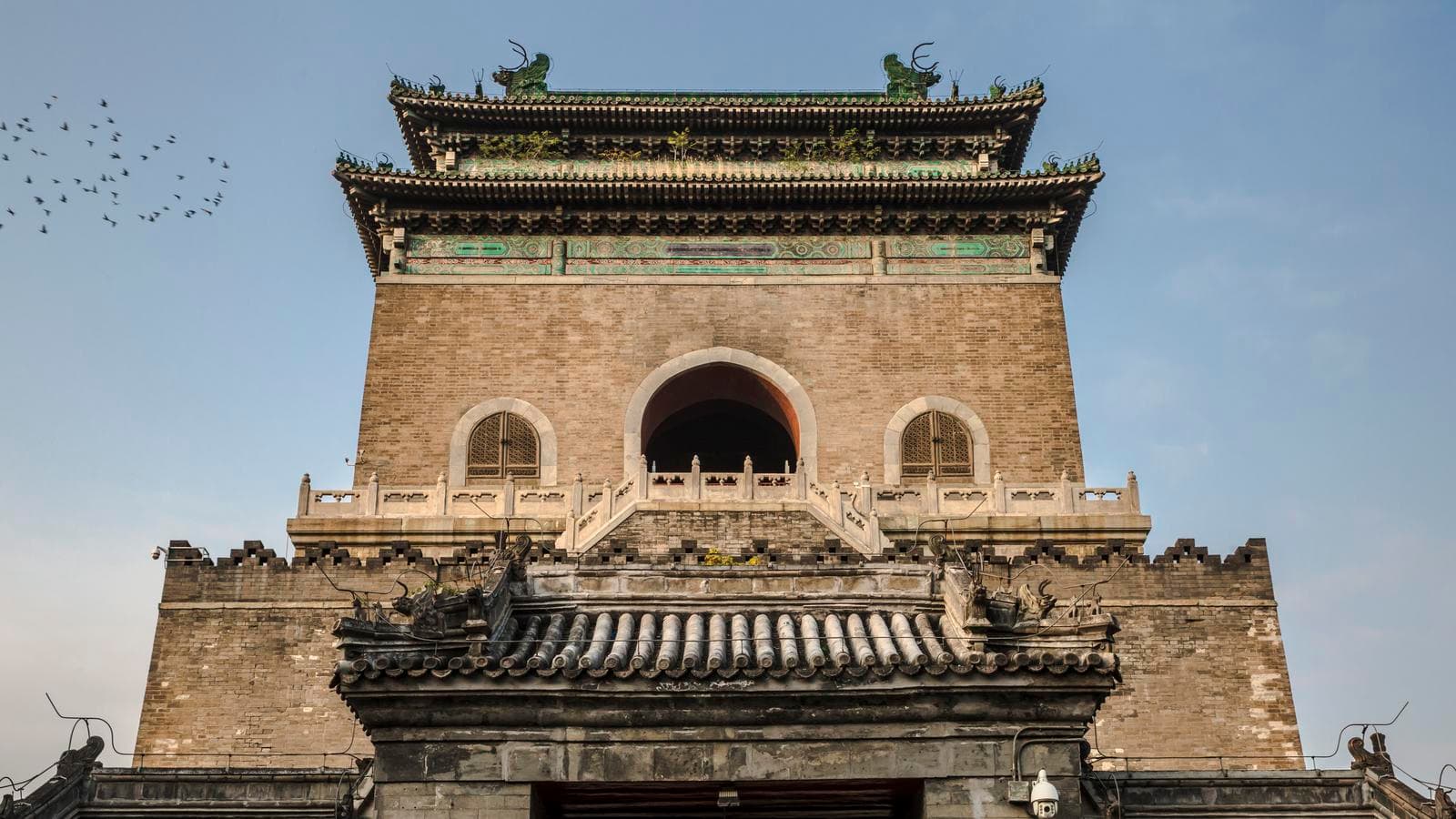
The most visited area lies north of the Forbidden City, around the lakes of Shichahai and Houhai and the Drum and Bell Towers, the great towers from which the city's time was once announced. Nanluoguxiang, nearby, is a lane of the Yuan-dynasty plan that has been heavily commercialised with cafés and shops, but the lanes running off it on either side are quieter and more residential. Dashilar, south of Tiananmen Square, is an old commercial district of shops that have been trading for generations.
The best way to see them is on foot or by bicycle, wandering without a fixed route, or in a cycle rickshaw with a local guide. Early morning and early evening are the times when the lanes are most alive.
The food of the hutong is part of their character. Small family restaurants and street stalls sell jianbing, a savoury crêpe folded around egg, spring onion and a crisp cracker, eaten for breakfast on the go. Dumplings come steamed or fried. There are bowls of zhajiangmian, wheat noodles topped with a thick, salty sauce of fermented soybean paste and pork, a dish closely associated with Beijing. Roast duck, the city's most famous dish, is served in grander restaurants. The simple places in the lanes are where locals eat every day.
The tours that start in Beijing
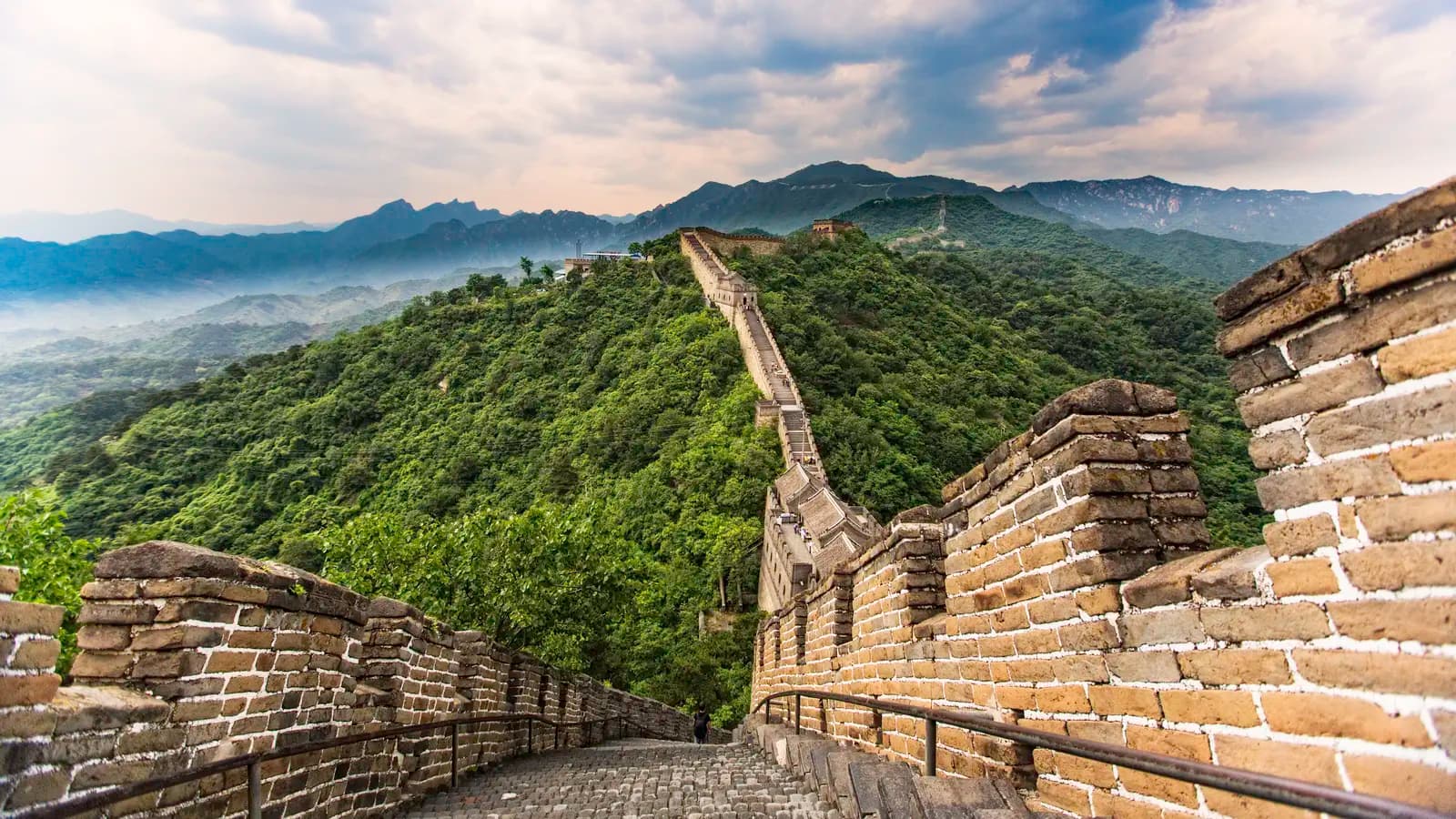
Beijing is the starting point for most first trips to China, and the tours below all give time in the capital. Explore Worldwide's Imperial China: Shanghai, Xi'an and Beijing, seven nights in spring and autumn, combines Beijing and the Great Wall at Mutianyu with Xi'an and its Muslim Quarter, the garden city of Suzhou and Shanghai.
G Adventures' China Express, seven nights in December, covers the same four cities, with Mutianyu. G Adventures' Ancient China, six nights in October and December, combines Beijing and Mutianyu with Xi'an and Chengdu.
The Forbidden City, the Temple of Heaven and the Great Wall are the reasons most people come to Beijing. But an hour lost in the hutong, among the grey walls and courtyard gates, shows the city that grew up around the palace, and it is the part that is disappearing fastest.
By Walter Pellow, the name Atlas & Passage’s editorial team writes under. Prices and dates in the trips below come from the operators and can change.