History
Dunhuang and the Mogao caves, at the western end of the wall
On the edge of the Gobi, where the Silk Road left China for Central Asia, Buddhist monks and pilgrims carved hundreds of painted caves into a cliff. They are among the great treasures of Asian art, and the oasis around them is a fitting place to end a journey west.
By Walter Pellow20 October 20264 min read
For more than a thousand years, the trade routes we now call the Silk Road carried silk, horses, glass, spices, ideas and religions between China and the West. Where they left China proper, at the far western end of the Hexi Corridor in what is now Gansu province, lay the oasis town of Dunhuang. Caravans heading west stocked up here before the desert crossings around the Taklamakan. Travellers arriving from the west gave thanks here for having made it. Monks, merchants and soldiers of many peoples passed through, and the town grew rich on the traffic.
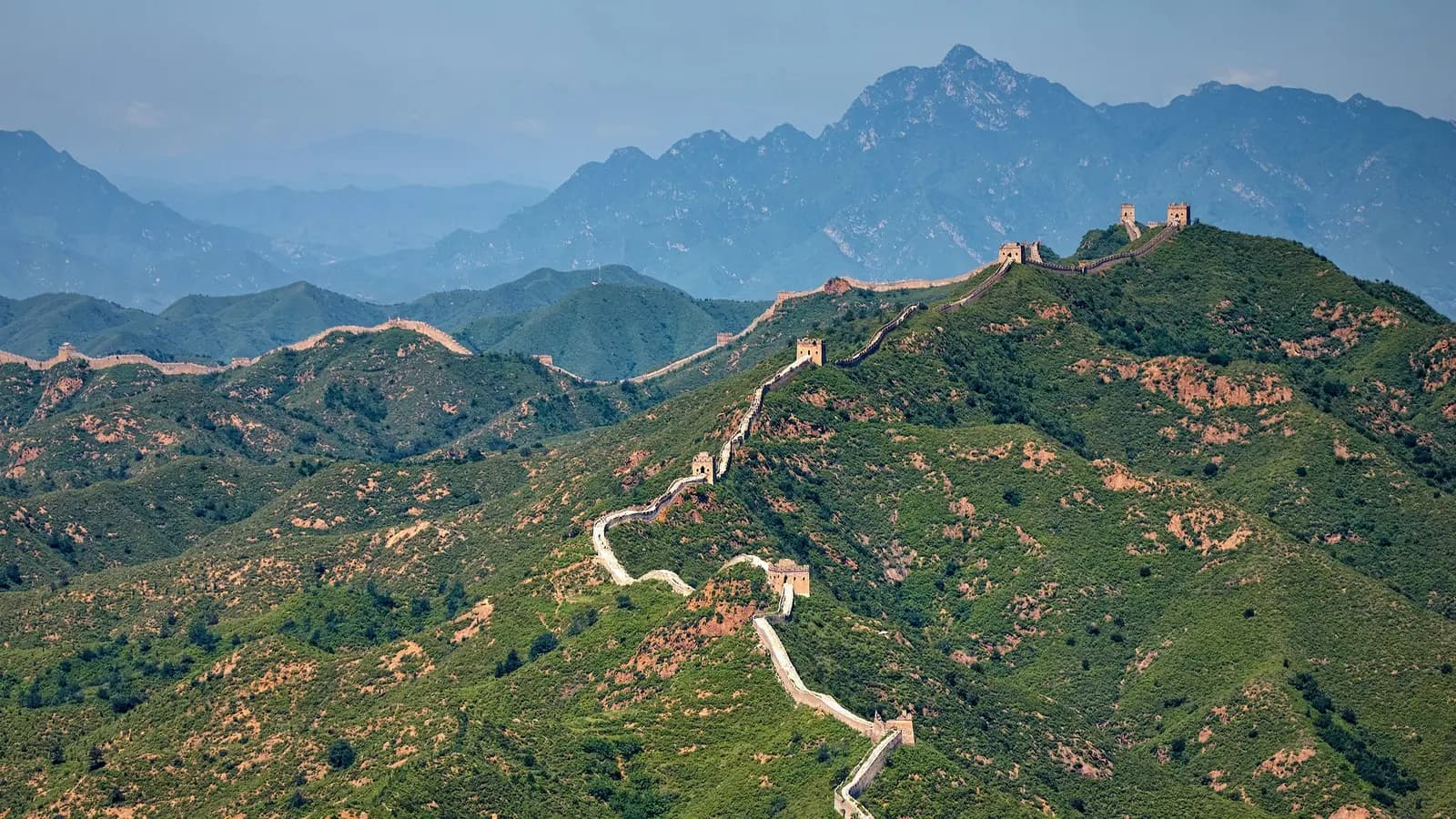
Dunhuang is now a modest, pleasant desert city, and getting there is still a journey: it lies well over a thousand kilometres north-west of Xi'an, beyond the end of the Great Wall's main line. What draws people is a cliff a short drive south-east of the town.
The Mogao caves
According to tradition, in 366 a monk named Lezun had a vision of a thousand Buddhas in the cliffs above a river valley near Dunhuang and carved a cave there for meditation. Over the next thousand years, monks, merchants, officials and pilgrims paid for hundreds more. They were cut into the soft conglomerate rock and decorated with clay statues and wall paintings, as acts of devotion and in thanks for safe journeys. Nearly five hundred decorated caves survive, in tiers along a cliff about a mile long, with murals covering their walls and ceilings. Together they record a thousand years of Buddhist art, from the fourth century to the fourteenth. They show the changing styles and fashions of China and Central Asia, and they offer glimpses of everyday life: farmers, musicians, merchants with camels, and the donors themselves in their finest clothes. The site is a World Heritage Site.
The caves have a famous twist. In 1900 a Taoist monk who looked after them, Wang Yuanlu, found a hidden chamber, now known as the Library Cave. It had been sealed around the eleventh century and was packed with tens of thousands of manuscripts, paintings and printed documents, in Chinese, Tibetan, Sanskrit and other languages. Within a few years, explorers from Britain, France, Japan, Russia and elsewhere had bought and carried off much of it. Among the documents taken by Aurel Stein in 1907 was a copy of the Diamond Sutra printed in 868, now in the British Library and often described as the earliest dated printed book in the world. Its fate remains a sensitive subject in China.
To protect the fragile paintings, visits are strictly controlled. Only a selection of caves is open at any time, entry is by timed ticket with a guide, and photography inside is not allowed. A visitor centre with films and replica caves prepares visitors before they go to the site. It is worth reading a little beforehand, because the light in the caves is low and the time in each is short.
The desert around
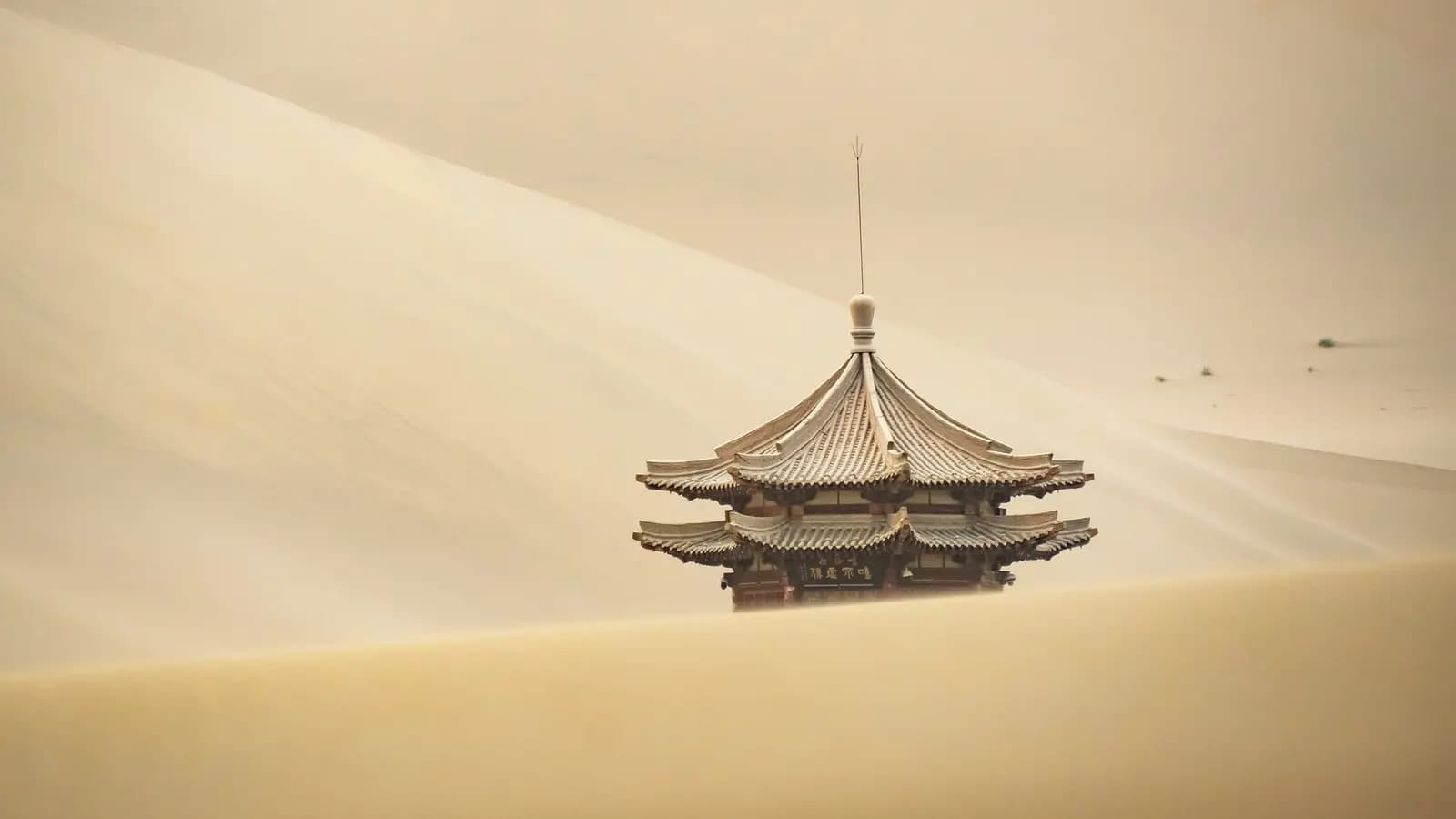
Dunhuang's other sights are natural. On the edge of town, Mingsha Shan, the Singing Sand Mountain, is a range of tall dunes, named for the low humming sound the sand can make when it slides. Tucked into a hollow among them is Crescent Spring, a crescent-shaped pool of water that has survived among the dunes for centuries. Climbing a dune at sunset to look over the desert and the oasis is a classic Dunhuang evening.
Further out, the Yumen Pass, the Jade Gate, was a Han-dynasty frontier post through which caravans passed on their way west. Its name comes from the jade brought in from Central Asia. Nearby are stretches of the Han-dynasty wall, built of layers of reeds and earth, and the Yadan National Geologic Park, a landscape of wind-carved rock formations rising from the desert like a fleet of ships.
The tours that go west
G Adventures' Signature: China's Great Wall, Xi'an and the Gobi Desert, nine nights from March to June, links Beijing and the Great Wall at Jinshanling with Dunhuang, Mingsha Mountain and Crescent Spring, the Yadan park and the Yumen Pass. It also visits Xi'an and Chengdu.
G Adventures' Signature: China from the Great Wall to Shangri-La, eighteen nights in the same season, combines Dunhuang with Beijing and Jinshanling, Xi'an, Chengdu and Dujiangyan, Yangshuo and Shangri-La.
Spring and autumn are the best seasons. Summer in the desert is very hot, and winter is bitterly cold. Whenever you go, Dunhuang is the place where the scale of China, and of the old journeys across it, becomes real.
By Walter Pellow, the name Atlas & Passage’s editorial team writes under. Prices and dates in the trips below come from the operators and can change.