Journeys
Lhasa and the road to Gyantse, on the roof of the world
The road west from Lhasa climbs over high passes, past a turquoise lake, to the monastery town of Gyantse. Beyond lie Shigatse and the Everest region. It is one of the great journeys of Asia, and one that has to be made with care, for the altitude and for the rules.
By Walter Pellow20 October 20264 min read
Lhasa stands at about 3,650 metres on the Tibetan plateau, the highest and largest plateau on earth, ringed by the Himalaya and other great ranges. For centuries it was the seat of the Dalai Lamas and the spiritual centre of Tibetan Buddhism, and for long periods it was all but closed to outsiders. Western travellers who reached it in the nineteenth and early twentieth centuries did so in disguise or with armies. Tibet became part of the People's Republic of China in the 1950s, and the fourteenth Dalai Lama went into exile in India in 1959. Its status remains politically contested. Today it is the Tibet Autonomous Region of China. Foreign visitors can travel there, but only with special permits arranged through an approved agency and on an organised itinerary with a licensed guide. Permits are occasionally suspended at short notice.
Lhasa
The Potala Palace dominates the city from its hill, a vast white and red fortress-palace of thirteen storeys and more than a thousand rooms. It was built in the seventeenth century under the fifth Dalai Lama, on the site of an earlier palace. It was the winter residence of the Dalai Lamas, and the seat of Tibet's government, until 1959. Climbing up through it, past chapels, tombs of earlier Dalai Lamas and private apartments, is a slow business at this altitude. Visits are timed and controlled.
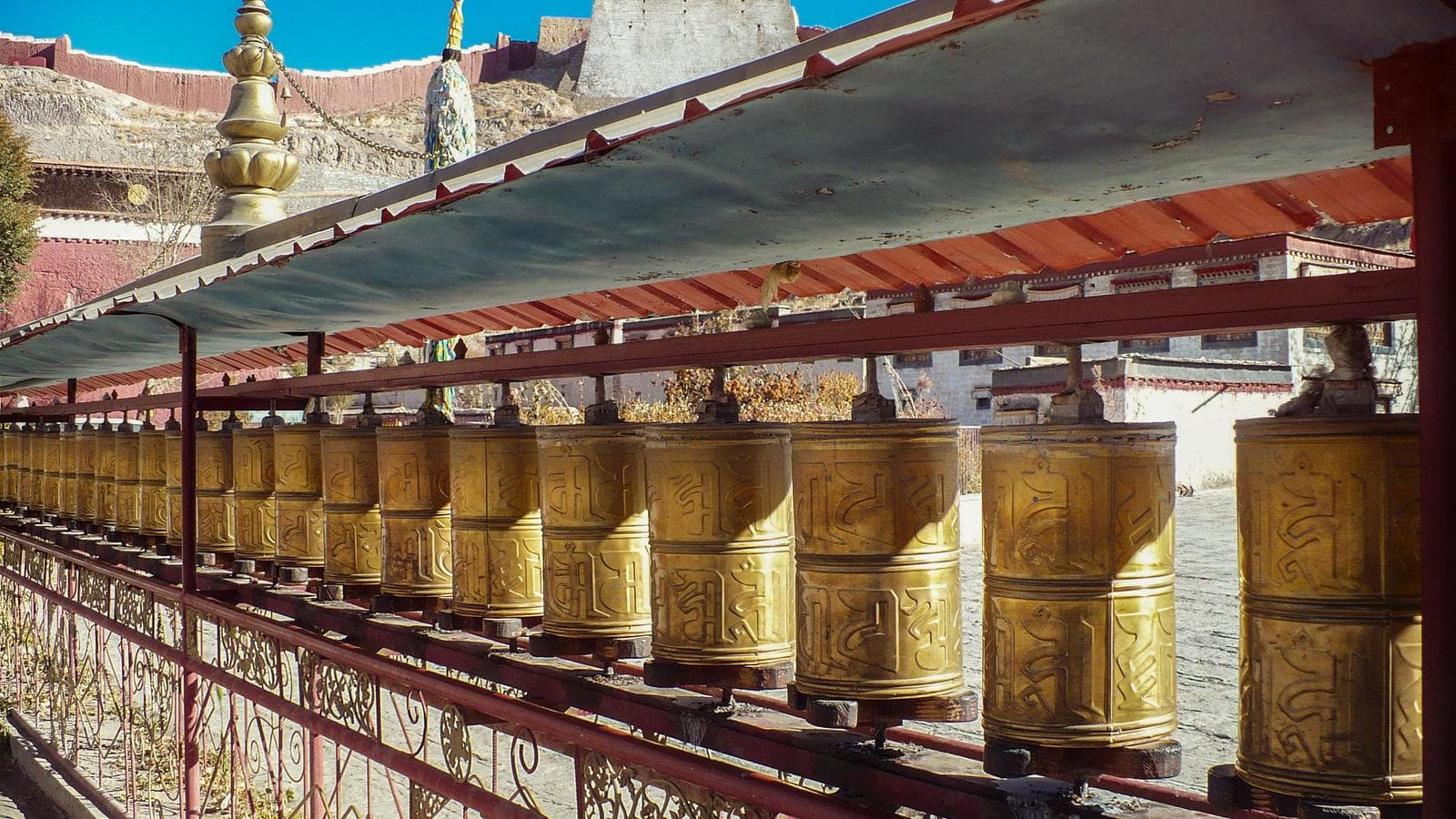
The Jokhang Temple, in the old city, is the most sacred temple in Tibet, founded in the seventh century to house a statue of the Buddha said to have been brought by a Chinese princess who married the Tibetan king. Pilgrims from all over the plateau prostrate themselves at its doors. Around it runs the Barkhor, a circuit of streets that pilgrims walk clockwise, spinning prayer wheels and fingering beads, past stalls selling butter lamps, incense and turquoise. Walking round it in the early morning, among the pilgrims, is the best introduction to Lhasa there is.
At Sera Monastery, north of the city, the monks gather in a courtyard most afternoons to debate points of Buddhist philosophy, with a theatrical clap of the hands to mark each point. It is fascinating to watch.
The road to Gyantse
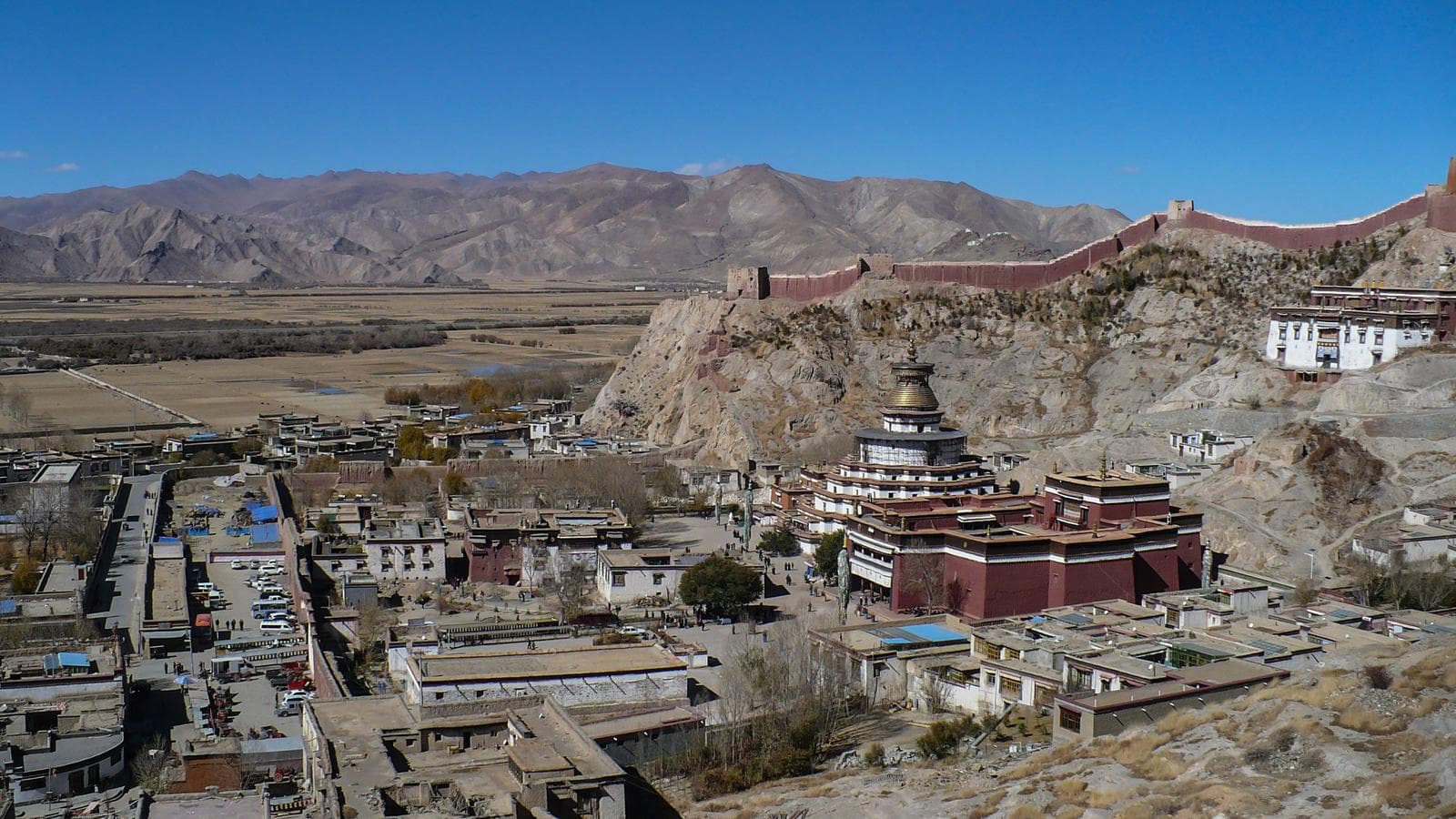
The road south-west from Lhasa climbs over a high pass and down to Yamdrok Tso, a long, turquoise lake that is one of the most sacred in Tibet. It then crosses another pass, with glaciers hanging close above the road, before descending to Gyantse. Gyantse is a small town, once a centre of trade between Tibet, India and Bhutan. Its fort, on a rock above the town, was stormed by a British military expedition in 1904. Its great monastery complex, Pelkor Chöde, contains the Kumbum. This is a huge, tiered stupa of the fifteenth century, with dozens of small chapels rising floor by floor, painted with murals that are among the finest in Tibet.
Beyond Gyantse, Shigatse is the seat of the Tashilhunpo Monastery, the traditional home of the Panchen Lamas. Further west, the monastery of Sakya is built in a distinctive grey with red and white stripes. Further still, at the end of the road, Rongbuk Monastery looks up the valley to the north face of Everest.
Altitude, and the tours that go
The altitude is the serious practical issue. Almost everyone feels it on arrival in Lhasa, and the passes on the road to Gyantse and beyond are higher still, approaching five thousand metres. Taking the first couple of days slowly, drinking plenty of water and avoiding alcohol are the usual advice, and anyone with heart or lung conditions should take medical advice before booking.
G Adventures' Essential Tibet, eleven nights in spring and summer, takes in Lhasa's Potala Palace, Jokhang, Barkhor and Sera Monastery. Its other places include Gyantse with Pelkor Chöde and the Kumbum, Tashilhunpo, Sakya and Rongbuk, and Durbar Square in Kathmandu, Nepal.
G Adventures' Best of China and Tibet, seventeen nights in April and May, combines Beijing, the Great Wall at Mutianyu and Xi'an with Lhasa, Gyantse, Everest Base Camp, and Kathmandu and Bhaktapur in Nepal.
Tibet is not an easy trip. But few journeys anywhere are so distinctive, or leave such a lasting impression.
By Walter Pellow, the name Atlas & Passage’s editorial team writes under. Prices and dates in the trips below come from the operators and can change.