Culture
Shanghai, the Bund and the water towns on its doorstep
Shanghai faces itself across a river: the stone banks and trading houses of the treaty port on one bank, the towers of the new financial district on the other. An hour away, canal towns of stone bridges and whitewashed houses show what the delta looked like before either.
By Walter Pellow20 October 20264 min read
Shanghai was a modest walled port on the Huangpu river, near the mouth of the Yangtze, until the First Opium War. The treaty that ended it in 1842 forced China to open Shanghai and four other ports to British trade and residence. Other Western powers followed, and over the next century foreign settlements grew up beside the old Chinese city, governed by their own councils and policed by their own forces. Shanghai became one of the largest and richest cities in Asia, a place of banks, opium fortunes, nightclubs, gangsters, refugees and revolutionaries. Its glamour and its injustices were equally famous.
By 1949 the foreign concessions had already gone, and for decades the city was run down. Then, from the 1990s, came a transformation that is still staggering to see.
The Bund and Pudong
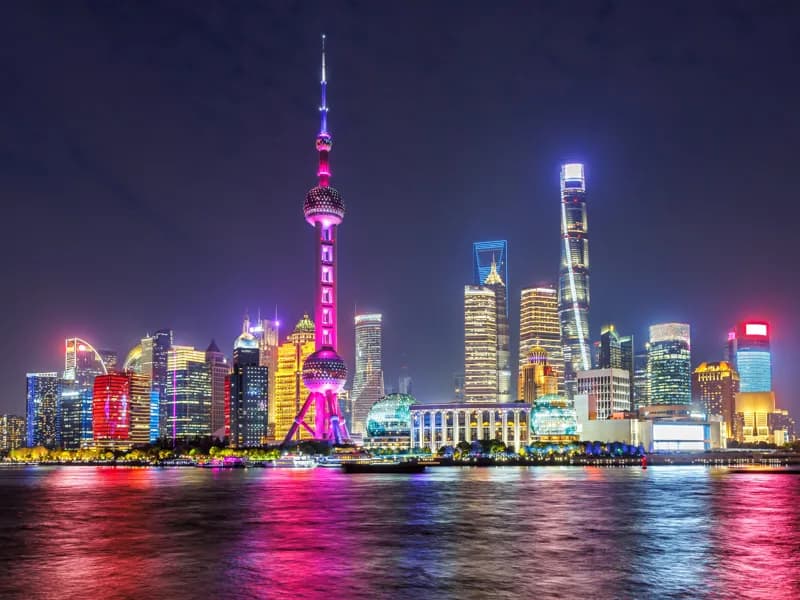
The Bund, the riverside promenade on the western bank of the Huangpu, was the waterfront of the foreign settlement and the showcase of its wealth. A line of grand stone buildings in neoclassical, Beaux-Arts and art deco styles stands along it: banks, trading houses, hotels and clubs. Among them are the domed former headquarters of the Hongkong and Shanghai Bank, completed in the 1920s, and the Customs House with its clock tower. Most are now restored as banks, hotels and restaurants. In the evening, when they are lit up, the Bund is one of the great waterfronts of the world.
Across the river is Pudong. Until the early 1990s it was mostly farmland, warehouses and docks. It was then designated a special economic zone and built up, in a generation, into one of the most dramatic skylines on earth. The pink-baubled Oriental Pearl TV Tower came first, followed by a succession of ever-taller towers, culminating in the twisting Shanghai Tower, the tallest building in China. Standing on the Bund at dusk, looking from the old banks to the new towers across the water, is the essential Shanghai experience: two versions of the city's ambition, a century apart.
Between the two, the old Chinese city survives in places. Its best-known corner is the Yu Garden, a classical Ming-dynasty garden of rockeries, ponds and pavilions, surrounded by a busy bazaar.
The former French Concession, west of the old city, is the other side of old Shanghai. It is a district of plane-tree-lined streets, villas and lane houses called shikumen, which mix Chinese courtyards with Western terraces. Many have been restored as shops, cafés and restaurants, and it is the most pleasant part of the city for a walk.
The water towns
The flat, wet country of the Yangtze delta around Shanghai has been crossed by canals for millennia, and its towns were built on them, with houses backing onto the water, stone bridges arching over it and boats carrying goods to the door. Several of these water towns survive. They are now popular with day trippers and can be very busy at weekends, but they are still beautiful early or late in the day.
Zhujiajiao, on the western edge of Shanghai, is one of the closest and best preserved, with canals, Ming- and Qing-dynasty houses and a great five-arched stone bridge. Suzhou, a city in its own right a short train ride to the west, is famous for its classical gardens, made by scholars and officials as private worlds of rocks, water, plants and pavilions. Several of them are inscribed together as a World Heritage Site. Yangzhou, further north on the Grand Canal, was one of the richest cities of imperial China, built on the salt trade, and it has gardens and a long, narrow lake of its own.
The tours that include Shanghai
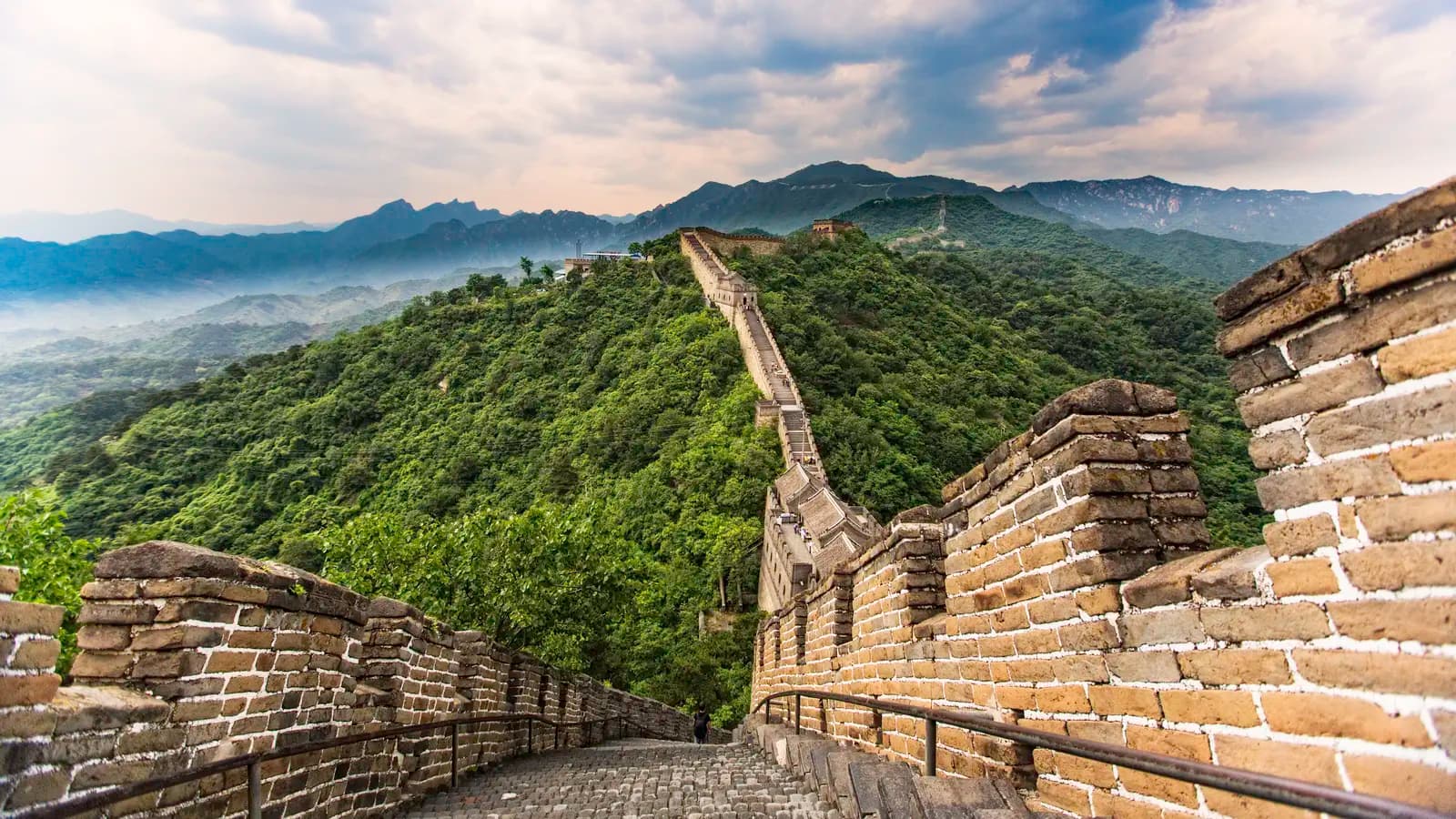
Explore Worldwide's Imperial China: Shanghai, Xi'an and Beijing, seven nights in spring and autumn, includes Shanghai and Suzhou with Xi'an, its Muslim Quarter, Beijing and the Great Wall at Mutianyu. G Adventures' China Express, seven nights in December, covers the same cities.
G Adventures' Solo-ish China, ten nights, is aimed at solo travellers. It includes Shanghai and the water town of Zhujiajiao, the Grand Canal city of Yangzhou, Xi'an, the reconstructed Luoyi Ancient Town and Beijing. It runs at several times of year.
Shanghai is often treated as a stopover between the historic sights of Beijing and Xi'an. It deserves more. It is China's most cosmopolitan city, and the place where its modern story makes most sense.
By Walter Pellow, the name Atlas & Passage’s editorial team writes under. Prices and dates in the trips below come from the operators and can change.