Walking
Leshan and Emei Shan, the giant Buddha and the holy mountain
South of Chengdu, a Buddha seventy metres tall sits carved into a riverside cliff, and a sacred mountain rises above the clouds a short distance away. Together they make one of the great pilgrimages of China, best taken on foot.
By Walter Pellow20 October 20264 min read
The province of Sichuan, in south-western China, is best known abroad for its pandas and its fiery food. Its capital, Chengdu, is one of the most relaxed big cities in the country. A couple of hours to the south lie two of its great sights. They were inscribed together as a single World Heritage Site in 1996: the Leshan Giant Buddha and Mount Emei, Emei Shan, one of the four sacred mountains of Chinese Buddhism.
The Giant Buddha
At Leshan, three rivers, the Min, the Dadu and the Qingyi, meet beneath a red sandstone cliff. In the early eighth century, a monk named Haitong began carving a Buddha into the cliff face. The story goes that he hoped its presence would calm the dangerous waters at the confluence, where boats were often wrecked. The work took around ninety years, carried on by others after his death, and was completed in the early ninth century. The result is the largest stone Buddha in the world, about seventy-one metres high: a seated figure of Maitreya, the Buddha of the future, with hands resting on his knees, looking out across the rivers to the hills opposite. His ears alone are several metres long. A system of drains hidden in his hair and clothing has helped protect him from erosion for over a thousand years.
There are two ways to see him. From the water, a boat passes in front of the cliff, giving the full view of the figure from below, with the small guardian figures on either side. On land, a narrow stairway cut into the cliff beside him zigzags from his head down to his feet, giving a sense of his scale up close, though it can be very crowded at weekends and in holidays.
Emei Shan
Mount Emei rises to just over three thousand metres, a wooded mountain of steep ravines, waterfalls and forest. It has been a place of Buddhist pilgrimage for nearly two thousand years and is dedicated to Samantabhadra, Puxian in Chinese, the bodhisattva of practice and action, who is shown riding a white elephant. Dozens of monasteries and temples are scattered across its slopes, linked by long flights of stone steps, and pilgrims have climbed it on foot for centuries.
Today most visitors take a bus most of the way up and a cable car to the Golden Summit, Jinding. There, a huge golden statue of Samantabhadra on his elephants looks out over a sea of clouds. On clear days the view stretches to the snow peaks of the Tibetan plateau in the west. In the right conditions, with the sun behind you and cloud below, you may see the "Buddha's light", a rainbow halo around your own shadow cast on the clouds, long taken by pilgrims as a sign of grace.
Walking at least part of the mountain on foot is the best way to understand it: through the forest, past monasteries such as Baoguo at the foot and Wannian on the slopes. Beware the monkeys. Tibetan macaques live on the mountain and have learned that visitors carry food. They are bold, and they snatch bags. Keep food out of sight and don't feed them.
The weather on the mountain changes quickly. The summit is far colder than the plain below and can be icy and snowy from late autumn into spring, so warm layers and good footwear are essential at any time of year.
Emei is also famous for tea. The bamboo-leaf green tea of the mountain, grown on its lower slopes, is sold in the monasteries and the shops around the foot of the mountain. A cup of it, drunk in a monastery courtyard, is a fitting way to end a day of walking.
The tours that go
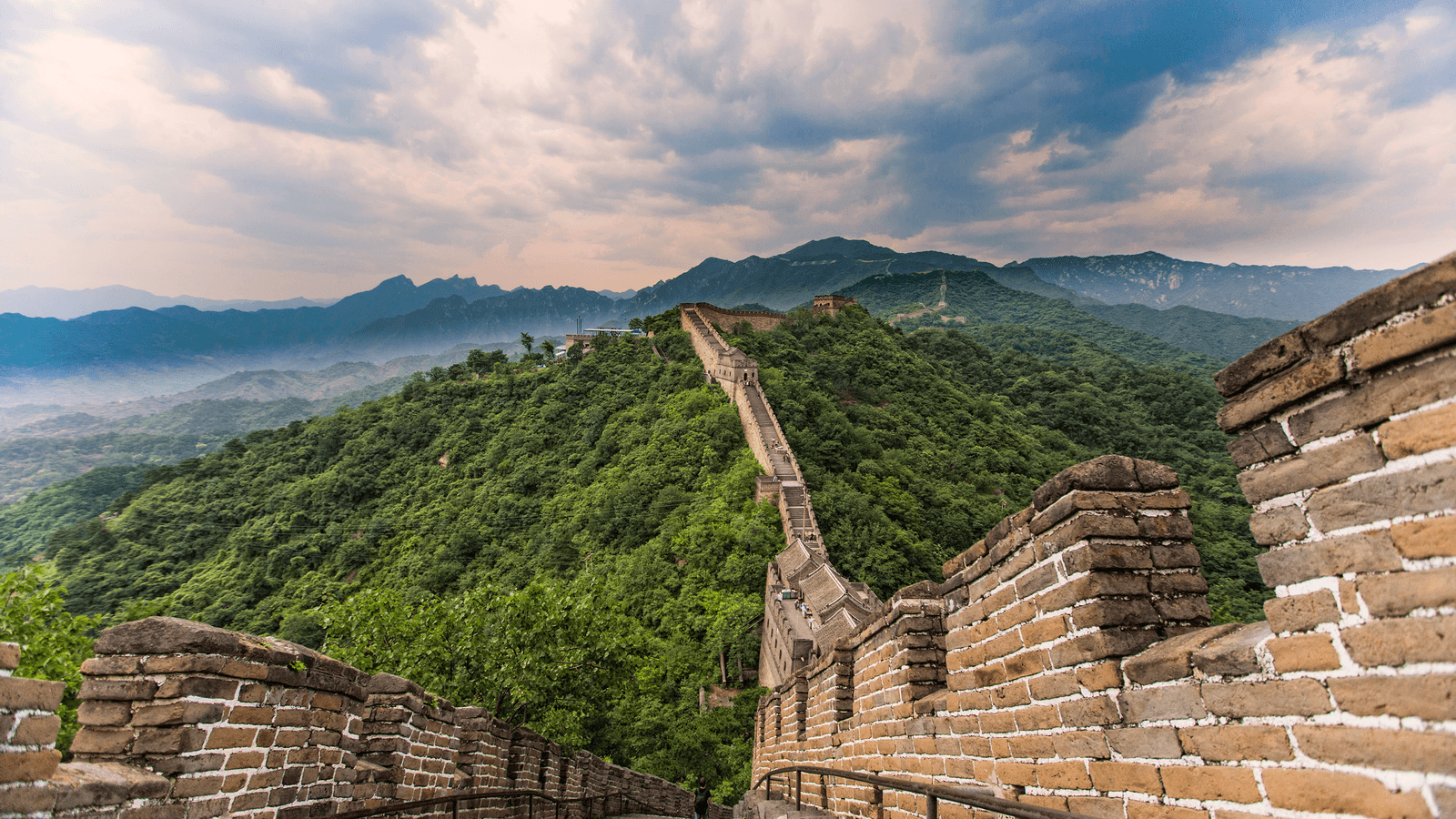
G Adventures' Highlights of China, fourteen nights in December, includes Leshan and Emei Shan on a route through Beijing and the Great Wall at Mutianyu, Xi'an, Chengdu, the karst of Yangshuo and Shanghai. A December visit means the summit in winter conditions, often with snow.
G Adventures' China Uncovered, eight nights from October to December, is a shorter trip that takes in Leshan and Mount Emei, Yangshuo and Shanghai.
Pair the two sights with a day in Chengdu, with its teahouses, its pandas and its peppery food, and the region makes one of the most rewarding stretches of any trip to China.
By Walter Pellow, the name Atlas & Passage’s editorial team writes under. Prices and dates in the trips below come from the operators and can change.