History
Bhaktapur, and the kingdom that outlasted its own walls
Bhaktapur was a capital in its own right before it was absorbed into a unified Nepal, and its Durbar Square still carries the marks of both that independence and a more recent earthquake.
By Arthur Penhallow26 September 20263 min read
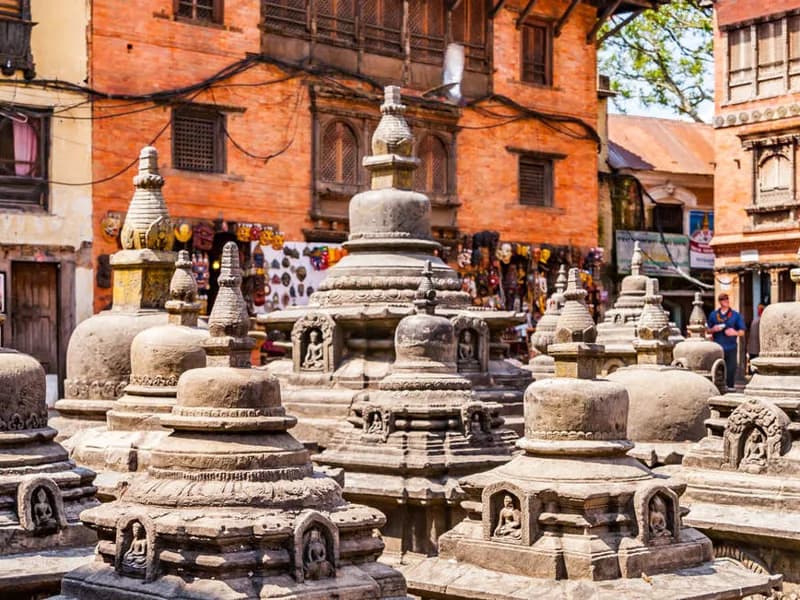
Until 1769, the Kathmandu Valley held three separate kingdoms rather than one, each centred on a Durbar Square of temples and royal palaces: Kathmandu, Patan and, to the east, Bhaktapur, which was, for periods of its history, the most powerful of the three. That independence ended when Prithvi Narayan Shah, the ruler of the small hill kingdom of Gorkha, conquered all three cities and unified them under a single Nepali crown, laying the foundation for the modern nation state. The physical evidence of that earlier independence survives clearly in Bhaktapur's old town, built and rebuilt by Newar kings and craftsmen with a distinctive architectural language of carved wood, brick and pagoda-style temple roofs largely intact today.
The rivalry between the three kingdoms shaped their architecture as much as any single ruler's taste. Each court commissioned increasingly ambitious temples and palace buildings partly to outdo its neighbours a few miles away, a competitive energy visible today in the density and craftsmanship packed into each Durbar Square. Bhaktapur's 55-Window Palace, so named for a carved wooden gallery on its upper storey, dates from this period of rivalry and remains one of the more celebrated examples of Newar woodcarving anywhere in the valley.
A city that kept its shape
Compared with Kathmandu's own Durbar Square, absorbed more fully into a modern, sprawling capital, Bhaktapur has retained a good deal more of its medieval street plan and building stock, helped by being bypassed, much like Bandipur further west, by some of the twentieth century's major development. The Nyatapola Temple, a five-tiered pagoda completed in the early eighteenth century and among the tallest of its kind in the valley, has a reputation for structural resilience that has been tested more than once by the region's earthquakes.
Newar craft, still practised
Bhaktapur remains a working centre for Newar pottery and woodcarving rather than a museum piece, with potters' squares where clay is still thrown and dried in the open air much as it has been for generations, and workshops producing carved window frames and struts in styles that directly continue the techniques visible on the surrounding temples. Dattatreya Square and Pottery Square, both a short walk from the main Durbar Square, remain working spaces rather than curated exhibits, with drying pots stacked in open courtyards and woodcarvers taking on commissions for restoration projects as well as for the tourist trade. The town's curd, served in small clay pots known locally as juju dhau, or "king curd," is a genuinely well-established local speciality, thickened and set using techniques particular to Bhaktapur's dairies, and it is worth trying from one of the town's long-established sellers rather than a stall aimed purely at passing visitors. That continuity, craft still practised rather than only displayed, is one of the clearer ways to see how the Kathmandu Valley's Newar culture persists alongside its more obviously historic buildings.
The 2015 earthquake, honestly
In April 2015, a magnitude 7.8 earthquake struck central Nepal, killing close to nine thousand people and causing extensive damage across the Kathmandu Valley, including the partial or total collapse of a number of historic temples and monuments. Bhaktapur was significantly affected, with several structures damaged or destroyed, though a considerable amount of the old town's fabric survived. Restoration work, involving both international heritage organisations and local Newar craftsmen using traditional techniques, has continued in the years since, and much of what a visitor sees today reflects that ongoing rebuilding rather than an unbroken record stretching back centuries.
Seeing it properly
Bhaktapur is compact enough to explore thoroughly in a single day, and the clear light and dry conditions of October, November, March and April are the most reliable months for the kind of unhurried walking its narrow lanes and courtyards reward. Visiting outside the main tourist hours of late morning to early afternoon, when day-trippers from Kathmandu tend to arrive in greatest numbers, gives a genuinely quieter sense of a town that still functions as a living community rather than only as a historic set piece.
By Arthur Penhallow, the name Atlas & Passage’s editorial team writes under. Prices and dates in the trips below come from the operators and can change.