Journeys
India, Nepal and Bhutan in one journey, from the Taj to the Himalaya
Three neighbouring countries, and three quite different worlds: the Mughal monuments and crowded cities of northern India, the temples and jungles of Nepal, and the fortress-monasteries of Bhutan. A three-week journey through all three is one of the great trips of Asia.
By Walter Pellow20 October 20264 min read
The Himalaya divide the Indian subcontinent from the Tibetan plateau, and along their southern flanks lie some of the most varied countries in the world. A journey from the plains of northern India into the mountains of Nepal and Bhutan climbs, in a few weeks, from some of the most densely populated and historic land on earth to some of its highest and most remote. It crosses cultures as well as altitudes. Mughal and Rajput India, Hindu and Buddhist Nepal and Buddhist Bhutan share much, but each is unmistakably its own.
India: the Taj and the triangle
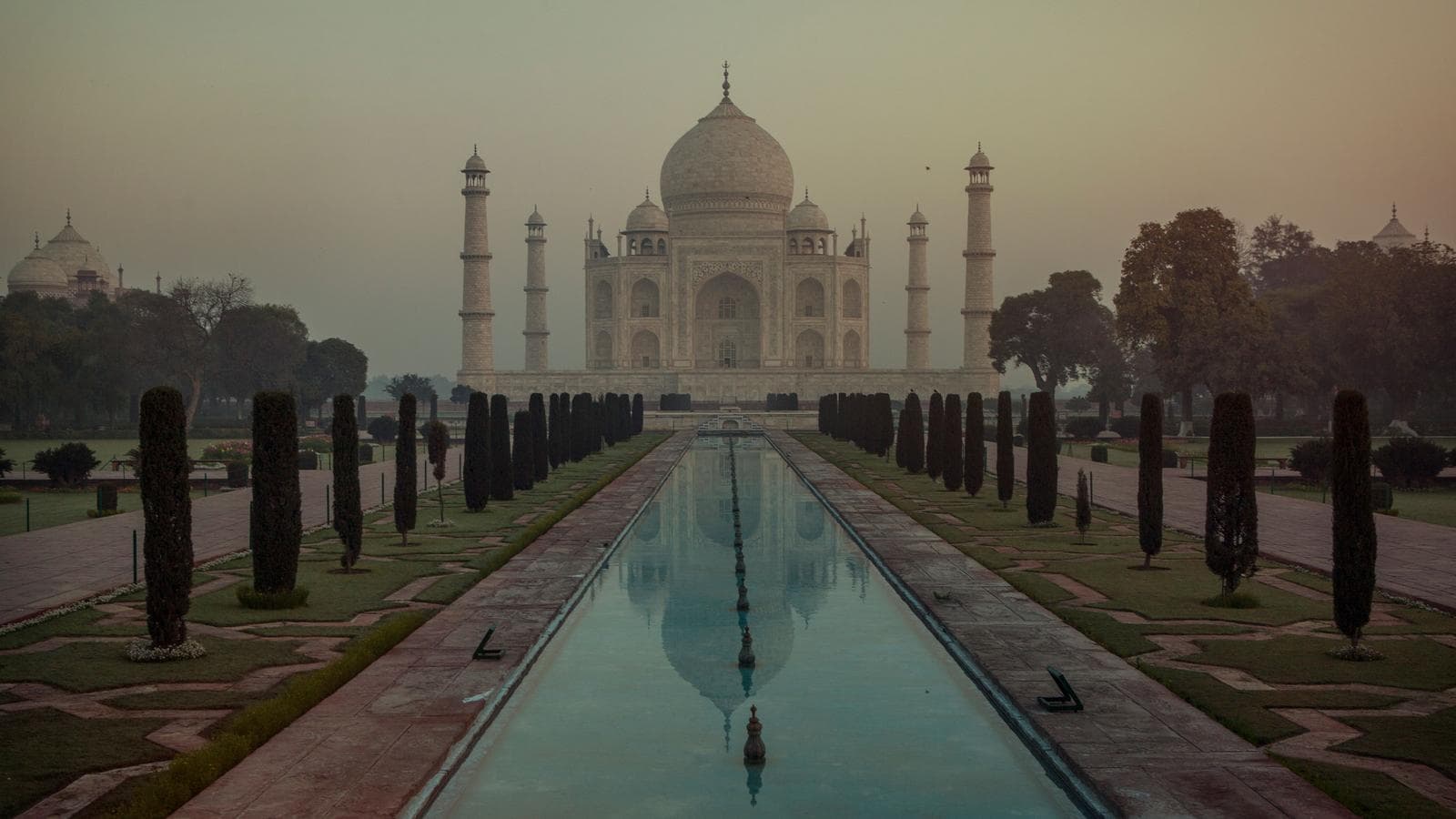
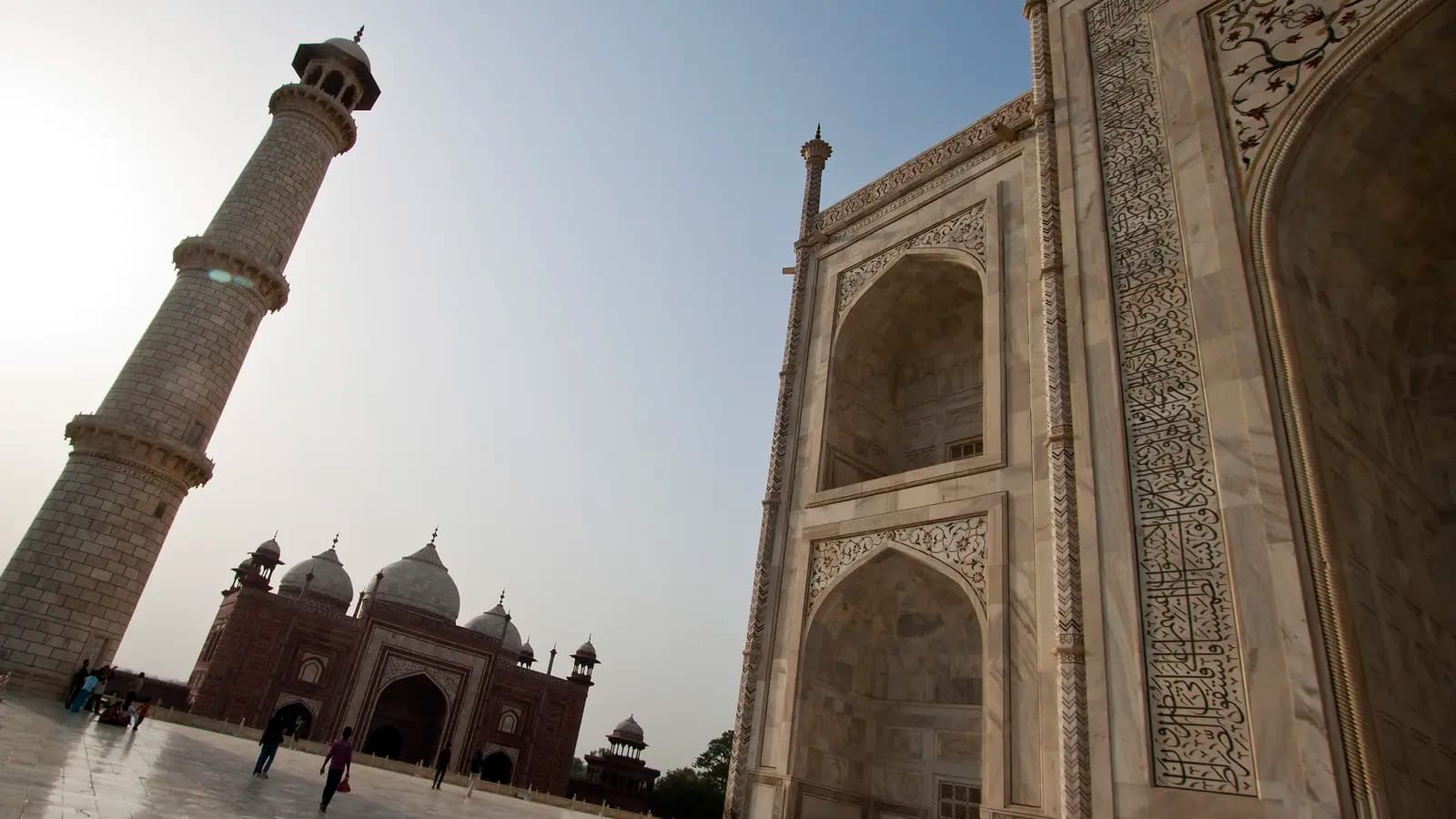
Most journeys begin in northern India with the classic route of the Golden Triangle. In Delhi there is the Red Fort, the great mosque and the planned avenues of New Delhi. Agra has the Taj Mahal, the marble mausoleum built by Shah Jahan, best seen early in the morning. Jaipur, the pink city of Rajasthan, has its palaces and its hilltop fortress at Amber. Some routes add Varanasi, the holy city on the Ganges, where pilgrims bathe at dawn from the stone steps of the ghats.
Nepal: Kathmandu, the jungle and the mountains
A short flight north brings you to Kathmandu, in a broad valley ringed by hills, with the snow peaks of the Himalaya visible on a clear day. The valley has an extraordinary concentration of temples, palaces and shrines. The old royal squares of Kathmandu, Patan and Bhaktapur are full of tiered pagoda temples built by the Newar people, though many buildings were damaged in the earthquake of 2015 and some are still being restored. Bhaktapur, the best preserved of the three, is a town of brick lanes, potters' squares and wood carving. Smaller Newar towns such as Panauti and hill towns such as Dhulikhel, with its views of the mountains, give a quieter picture of the valley.
South of the hills, in the lowland Terai, Chitwan National Park protects grassland and forest where one-horned rhinoceros, deer, crocodiles and, more elusively, tigers live. The Tharu people of the area have their own culture and villages. Pokhara, west of Kathmandu, is a lakeside town beneath the Annapurna range, one of the finest mountain views in the world.
Bhutan: dzongs and the Tiger's Nest
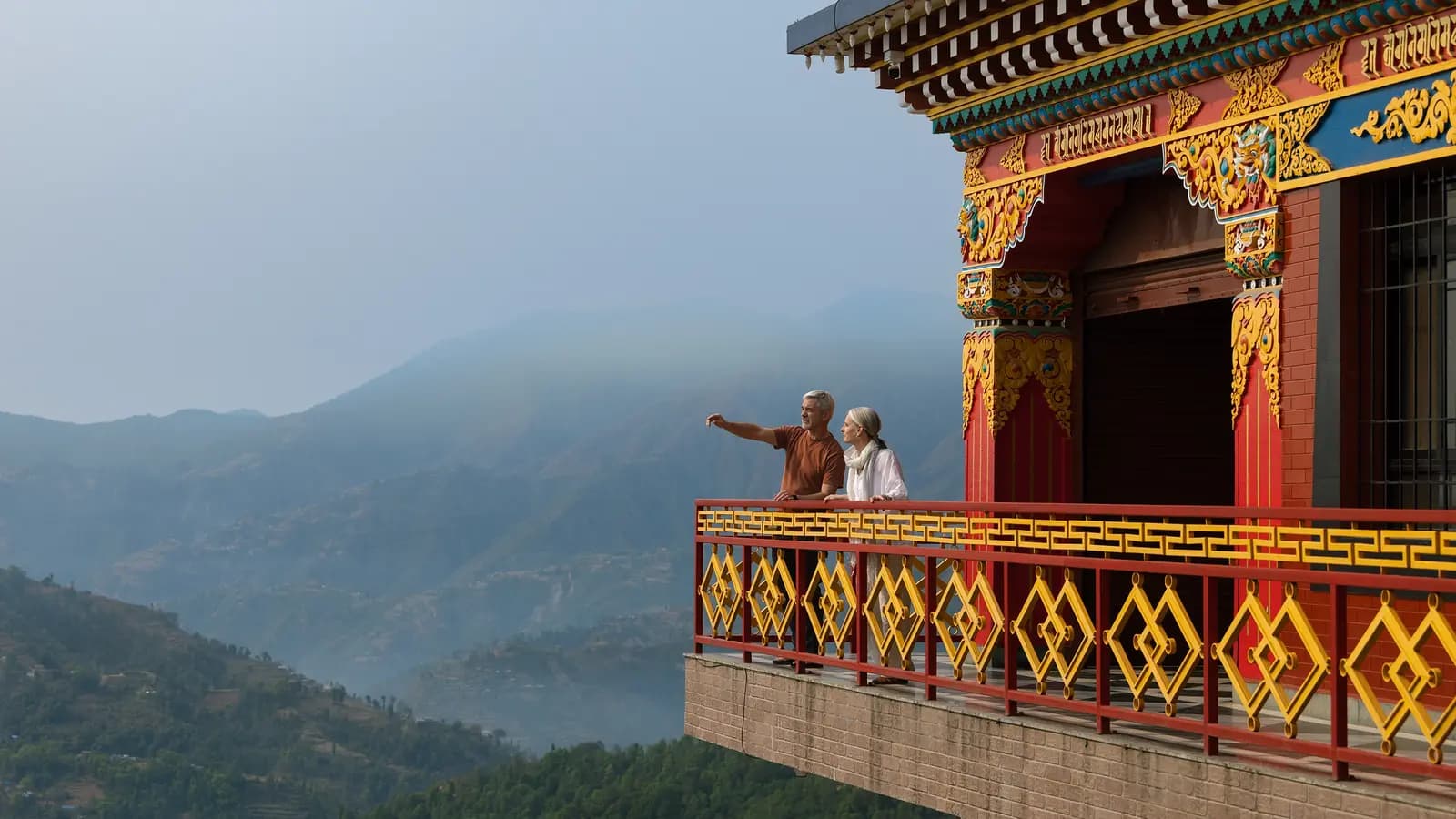
The flight from Kathmandu to Paro, in Bhutan, is one of the great flights of the world, passing along the Himalaya, and on a clear day Everest can be seen from the aircraft. Bhutan is a world apart: a small Buddhist kingdom of steep valleys, fortress-monasteries, prayer flags and traditional dress, which deliberately limits tourism. Thimphu, the capital, the Dochula Pass with its view of the high peaks, the dzong at Punakha and the Haa Valley are the highlights, along with the climb to the Tiger's Nest monastery on its cliff above Paro.
A journey through three countries means some practicalities. Each has its own visa or entry requirements, and Bhutan requires most visitors to pay a daily development fee and travel with a licensed guide. The internal flights, between Delhi and Kathmandu and between Kathmandu and Paro, are subject to weather, especially in the mountains, and a day of slack in the itinerary is useful. And the food, the languages and the customs change completely at each border, which is half the pleasure. Pack for heat in the plains and cold in the mountains.
G Adventures' India, Nepal and Bhutan: Taj Mahal to Tiger's Nest, twenty-one nights, includes Agra, Ramathra Fort and Jaipur, then Kathmandu, Pokhara, Chitwan, Bhaktapur and a Tharu village, then Thimphu, the Dochula Pass, Punakha and the Haa Valley.
G Adventures' Signature: India, Nepal and Bhutan, twenty-two nights in September, includes Jaipur, Agra, Varanasi and Delhi, then Kathmandu, Chitwan, Bhaktapur, Dhulikhel and Panauti, then Thimphu, the Dochula Pass and Punakha. G Adventures' Himalayan Adventure: India, Nepal and Bhutan, nineteen nights in November, includes Delhi and Jaipur, Kathmandu and Chitwan, and Paro.
The best times for a journey through all three are autumn, from about October to November, when the monsoon has passed and the mountain views are clearest, and spring, from March to April. September departures come at the end of the monsoon, when the landscape is green but the mountains may still be in cloud.
By Walter Pellow, the name Atlas & Passage’s editorial team writes under. Prices and dates in the trips below come from the operators and can change.