First time
Bhutan for the first time, and how its visitor fee shapes the trip
Bhutan has decided that it would rather have fewer visitors who each contribute more than crowds of them. Most travellers pay a substantial daily fee and travel with a licensed guide. It is worth understanding how that works, and what it means for a first trip.
By Walter Pellow20 October 20264 min read
Bhutan opened to foreign tourists only in 1974, and from the start it took a different path from its neighbours. Rather than encouraging mass tourism, it set out to limit the number of visitors and make sure that those who came contributed to the country, under a policy usually summed up as "high value, low volume". The aim was to protect Bhutan's culture and environment, and to make tourism pay for the country's development rather than overwhelm it. The policy sits within a broader philosophy famously expressed by the fourth king in the 1970s: that the measure of a nation's progress should be Gross National Happiness rather than Gross National Product.
The fee, and the guide
The policy is enforced chiefly through a daily fee. Most visitors pay a Sustainable Development Fee for every night they spend in the country, set by the government and used to fund education, healthcare, conservation and infrastructure. The level of the fee has changed several times in recent years, and visitors from India, Bangladesh and the Maldives pay different terms from other nationalities. Its current level should be checked when planning a trip. It is a substantial sum, and with accommodation, transport and a guide on top, Bhutan is one of the more expensive countries in Asia to visit.
Most international visitors must also book through a licensed Bhutanese tour operator and travel with a licensed Bhutanese guide, who stays with them throughout. In practice, that means that most visitors see Bhutan on an organised tour, often in a small group or with a private guide and driver.
Bhutan has decided that it would rather have fewer visitors who each contribute more than crowds of them.
What it means for the trip
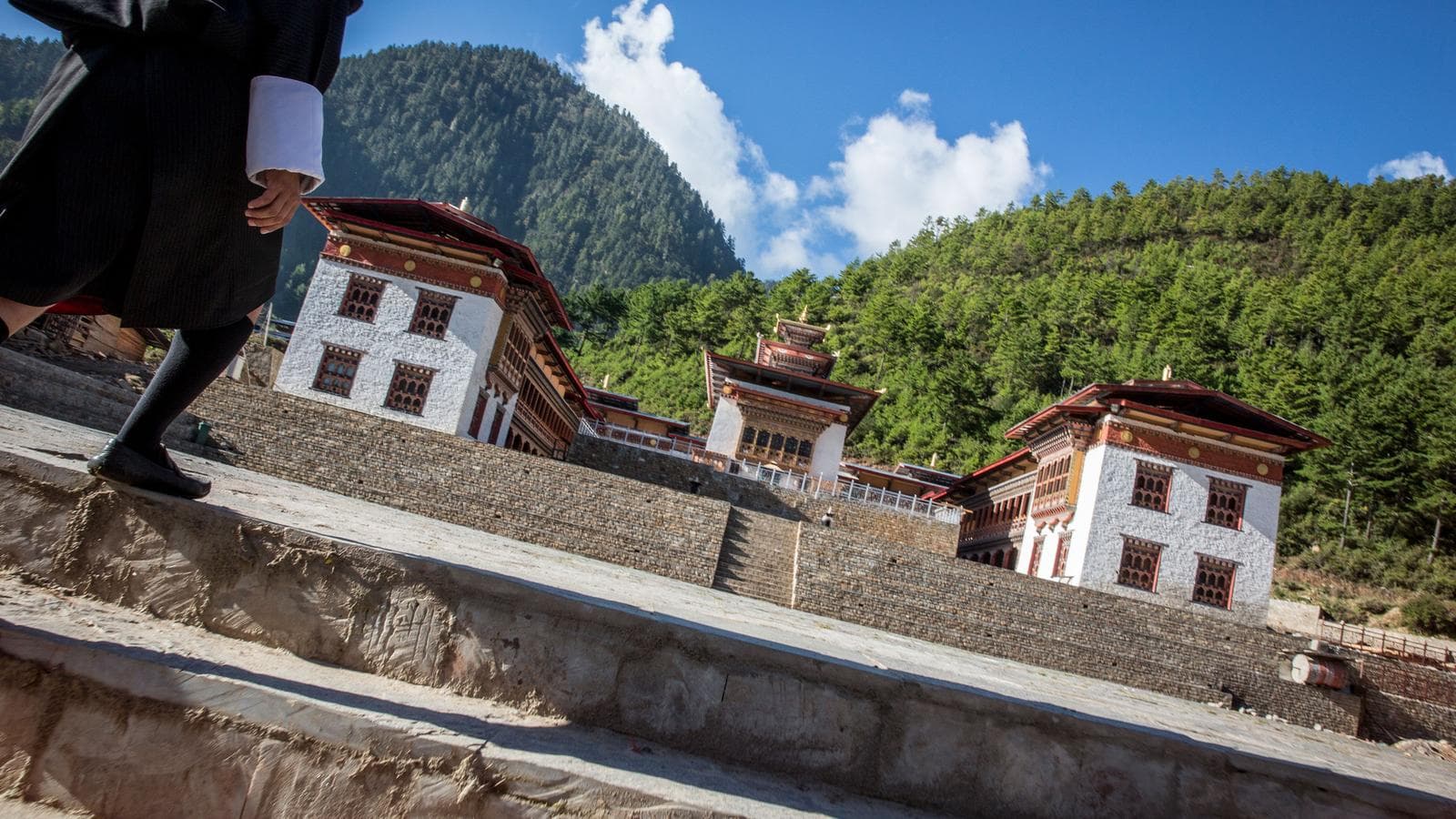
The result is a country that feels quite unlike its neighbours. There are no crowds at most sights, few souvenir stalls, no high-rise hotels and little of the commercial pressure found elsewhere in the region. Traditional architecture is required for new buildings. National dress is worn by many Bhutanese, and is required in government offices and in the dzongs. Thimphu, the capital, famously has no traffic lights: at its busiest junction, a policeman directs the traffic from a decorated pavilion.
For the visitor, the guide is a great asset rather than a constraint, explaining the religion, history and customs and making it possible to meet local people. The cost makes many people plan a shorter, more focused trip.
Bhutanese food is an experience of its own. The national dish is ema datshi, chillies cooked in a cheese sauce, and chillies are treated as a vegetable rather than a seasoning in many dishes. Red rice, grown in the high valleys, is eaten with most meals. Momos, steamed dumplings, are found everywhere, and butter tea, salty and rich, is offered in homes and temples. Visitors are often served milder versions, but it is worth trying the real thing at least once.
A first week
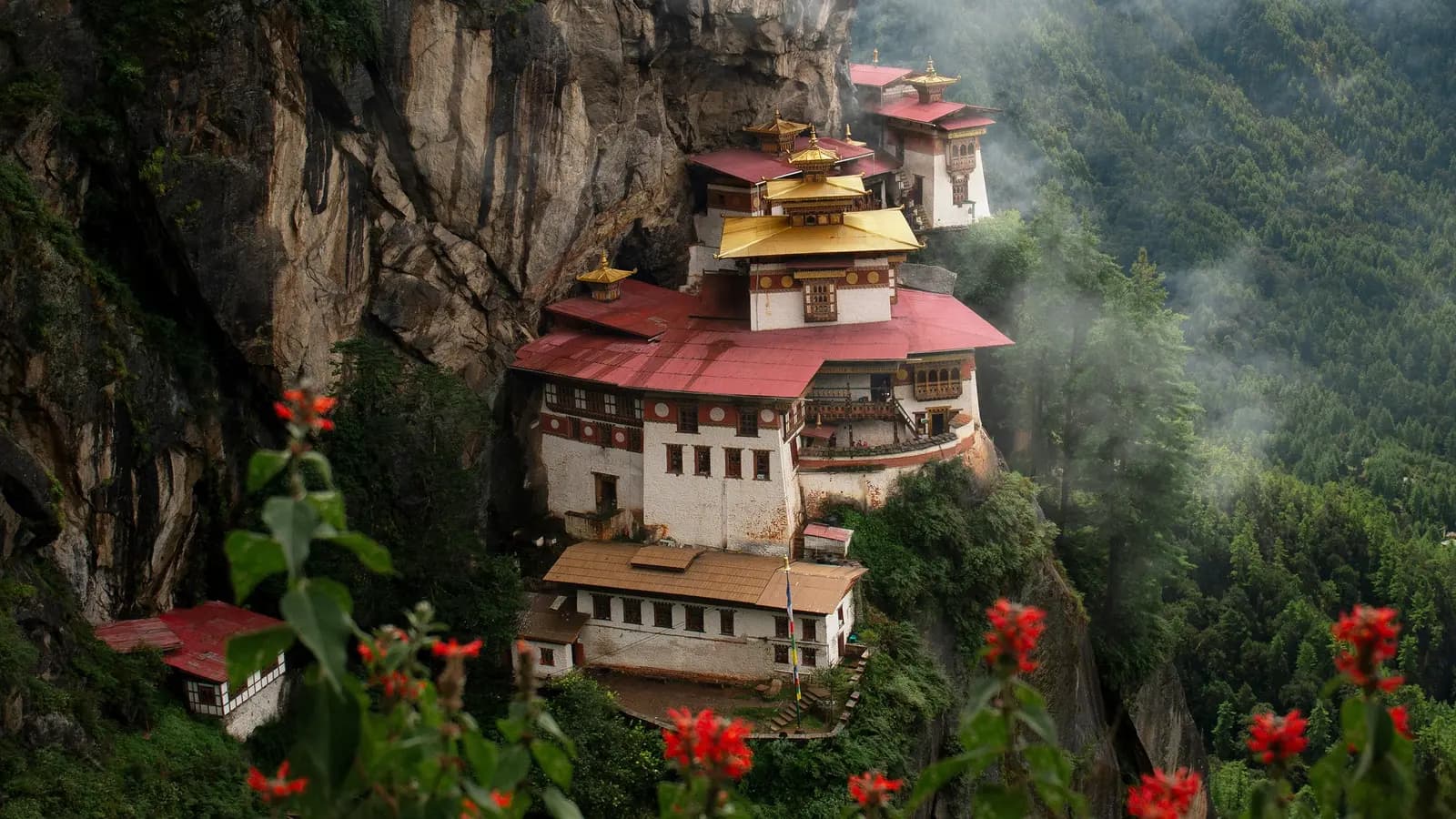
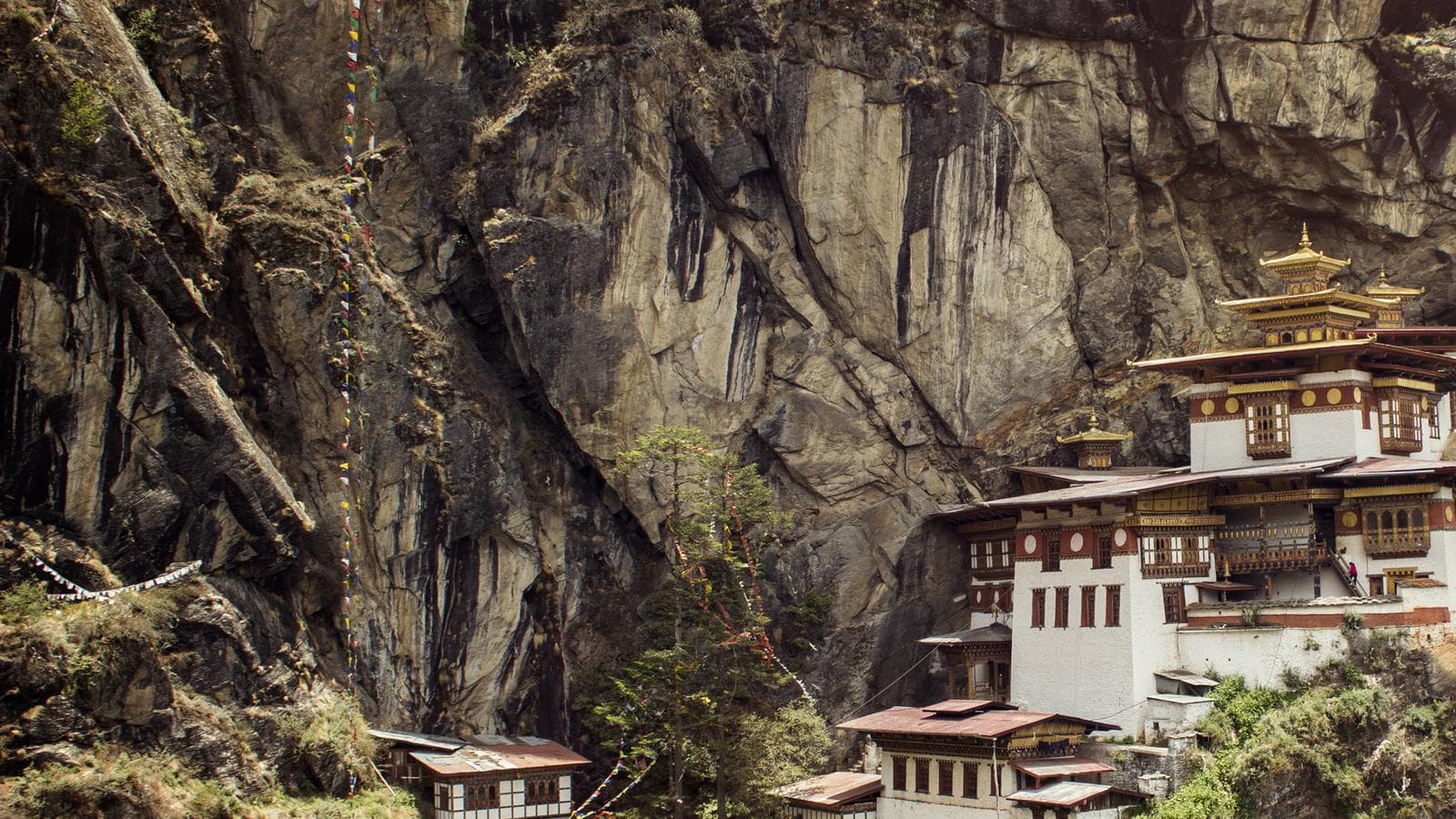
Most visitors fly into Paro, whose airport, in a narrow valley among high mountains, has one of the most dramatic approaches in the world. A first trip usually includes Thimphu, the capital, with its great dzong, its giant seated Buddha above the valley and its preserve for takin, the curious national animal. It continues over the Dochula Pass, with its views of the Himalaya and its 108 memorial stupas, to Punakha, whose dzong at the meeting of two rivers is one of the most beautiful in the country. The trip ends with the climb to the Tiger's Nest above Paro.
G Adventures' Spirit of Bhutan, five nights in November, is a short introduction to Paro, Thimphu, Punakha and Motithang, where the takin preserve is.
G Adventures' Signature: Bhutan and the High Himalayan Valleys, seven nights in May and September, adds the Phobjikha and Gangtey valleys to Thimphu, the Dochula Pass, Punakha and Paro. G Adventures' Journeys: Wonders of Bhutan, nine nights in September and October, adds the Haa Valley, Wangdue and the Tiger's Nest.
Spring and autumn are the best seasons, with clear mountain views in autumn and rhododendrons in flower in spring. Whatever the season, a first visit to Bhutan is not a cheap trip, but it is unlike anywhere else.
By Walter Pellow, the name Atlas & Passage’s editorial team writes under. Prices and dates in the trips below come from the operators and can change.