Culture
Bhutan's festivals, and the masked dances in the dzong courtyards
Several times a year, the courtyards of Bhutan's great fortress-monasteries fill with masked dancers, clowns and crowds in their finest clothes. The tsechu festivals are religious occasions first and spectacles second, and seeing one is a rare privilege.
By Walter Pellow20 October 20264 min read
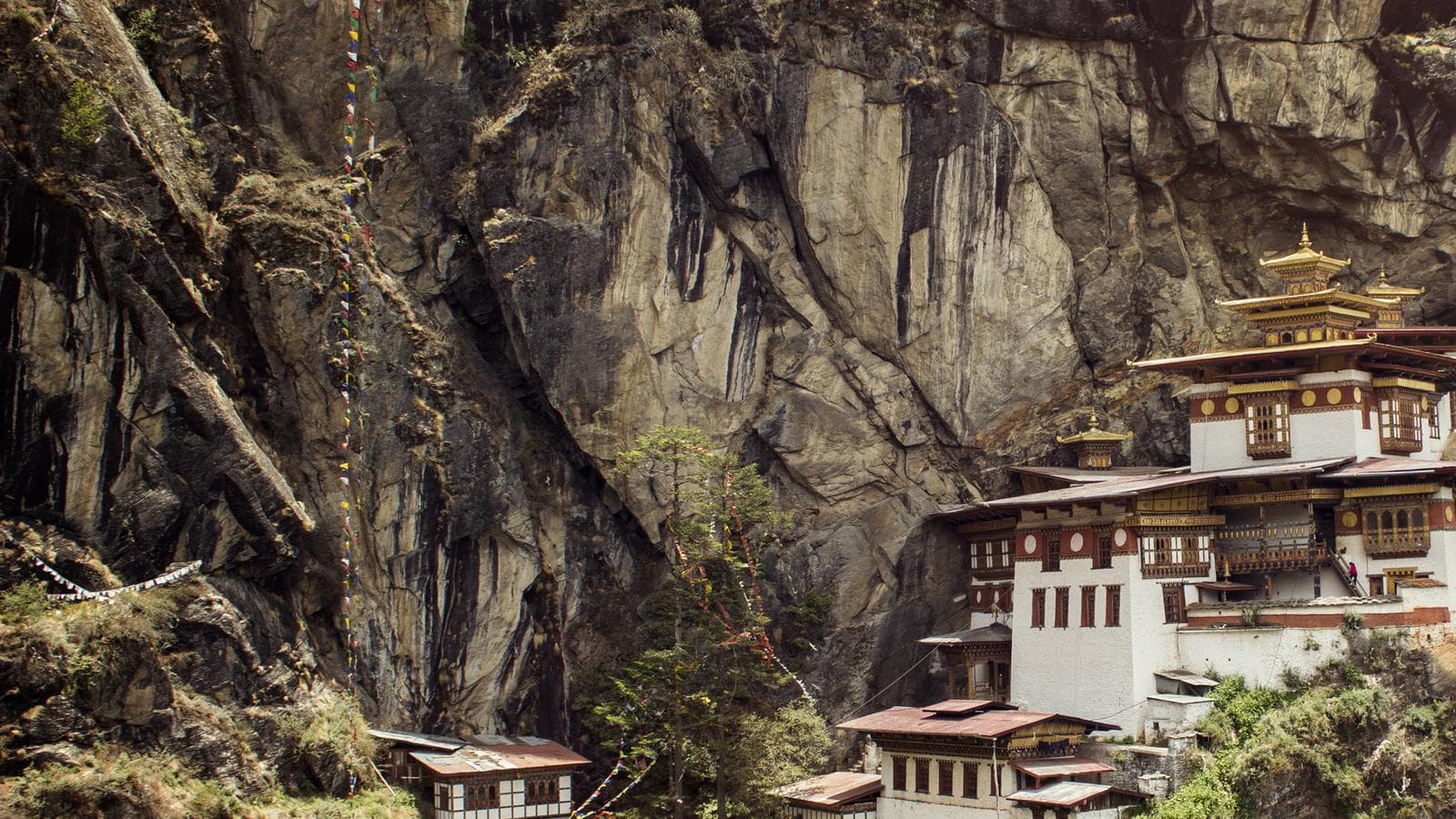
The dzongs of Bhutan are among the most striking buildings in the Himalaya: massive whitewashed fortress-monasteries with sloping walls, red-painted wooden galleries and golden roofs, built at strategic points in each valley. They house both the monastic community and the offices of the local government, and their great stone courtyards are the setting, several times a year, for the country's most important festivals.
The tsechu
The word tsechu means "tenth day". The festivals are held on or around the tenth day of a month in the Bhutanese lunar calendar to honour Guru Rinpoche, the eighth-century teacher who brought Buddhism to Bhutan and Tibet. Each district has its own tsechu, lasting several days, at a time of year fixed by local tradition. The dates follow the lunar calendar and so change from year to year in the Western calendar. Two of the best known are the Paro Tsechu, usually in spring, and the Thimphu Tsechu, usually in autumn.
For Bhutanese, a tsechu is above all a religious occasion. Attending is believed to bring blessings and merit, and people travel from all over the district to be there. It is also a great social event. Families come in their finest clothes, the men in the knee-length robes called gho and the women in the ankle-length kira, often in rich silk, bringing picnics and spending the day in the courtyard.
The masked dances
At the heart of the festival are the cham, the masked dances, performed by monks and lay dancers in the courtyard to the sound of long horns, drums and cymbals. Each dance has a meaning, telling a story from Buddhist teaching or the life of Guru Rinpoche, or acting out the victory of good over evil. The dancers wear elaborate silk costumes and carved, painted wooden masks of deities, animals, demons and skeletons. In the Dance of the Black Hats, dancers in broad-brimmed hats whirl and stamp to purify the ground. In the Dance of the Lords of the Cremation Grounds, skeleton-masked dancers act out the transience of life. In the dance of the judgement of the dead, the souls of the deceased are weighed for their good and bad deeds.
Between the dances, atsaras, clowns in red masks with long noses, roam the crowd, playing tricks, making jokes and teasing the audience, often with surprising irreverence. They are believed to be a form of religious teacher too, puncturing pride and reminding people not to take themselves too seriously.
The thongdrel
On the last day of many tsechus, before dawn, a great thongdrel is unrolled down the wall of the dzong. It is an enormous religious painting on cloth, sometimes several storeys high, usually depicting Guru Rinpoche. It is displayed only for a few hours in the early morning, to protect it from the sun, and seeing it is believed to bring great blessings. The crowds gather in the dark to be there when it is unveiled.
Festivals are also when Bhutan dresses up. Men wear their finest gho, the knee-length robe tied at the waist, with a long white scarf. Women wear the kira, a long, wrapped dress, often of rich silk woven in intricate patterns, with a short jacket. Families bring picnics of rice, chillies and cheese, and the courtyards and surrounding fields become a sea of colour.
Seeing a festival
Visitors are welcome at tsechus, but it is important to remember that they are religious occasions. Dress modestly and respectfully, as the Bhutanese do. Don't block the view of local people or walk across the dance ground. Ask before photographing people, and follow any restrictions on photography.
Explore Worldwide's Festivals of Bhutan, eleven nights in March, October and November, is timed around festival seasons. Its places in Bhutan include Paro, the Dochu La pass, the Punakha valley, the Phobjikha valley and Gangtey Monastery, Thimphu, the Tiger's Nest and Kyichu Lhakhang. In Kathmandu, Nepal, they include Asan Bazaar, Bhaktapur and Swayambhunath.
G Adventures' Journeys: Wonders of Bhutan, nine nights in September and October, includes Thimphu, Gangtey, the Phobjikha valley, Punakha Dzong, Wangdue, the Haa Valley, Paro, the Tiger's Nest and Kyichu Lhakhang.
Because festival dates move each year, check the dates for the year you plan to travel before booking. Festival times are also popular, so book well ahead.
By Walter Pellow, the name Atlas & Passage’s editorial team writes under. Prices and dates in the trips below come from the operators and can change.