Walking
The Trans Bhutan Trail, the old road across the kingdom, walked again
For centuries, a footpath ran across Bhutan from west to east, linking its fortress-monasteries over high passes. When the road came, the path was forgotten. It has now been restored, and walking it is a way to see the country as its messengers and pilgrims once did.
By Walter Pellow20 October 20264 min read
Until the 1960s, Bhutan had almost no roads. People, goods and news moved across the kingdom on foot or on horseback, along a network of paths linking the dzongs, the great fortress-monasteries that served as the centres of religious and civil administration in each valley. The most important of these paths ran from west to east, from Haa near the Tibetan border to Trashigang in the far east, crossing the grain of the country over a succession of high passes and deep valleys. Messengers carried the king's orders along it, pilgrims walked it to the great temples, and traders drove their animals along it.
When Bhutan's first national highway was built, the old path fell out of use. Over the following decades, it was overgrown, washed away in places and largely forgotten except by the villagers who still used short stretches of it.
Restoring the trail
In the late 2010s, a project began to restore the route as a long-distance walking trail, the Trans Bhutan Trail. Much of the work was done by volunteers from De-suung, a national service programme, who rebuilt bridges, steps and paths, cleared undergrowth and waymarked the route, which runs for around four hundred kilometres. The trail opened to walkers in 2022. It passes through farming villages, forests of rhododendron, oak and pine, temples and dzongs, and over passes hung with prayer flags. Its aim is to share the benefits of tourism with rural communities along the way, as well as to offer a new way of seeing the country.
The heart of the kingdom
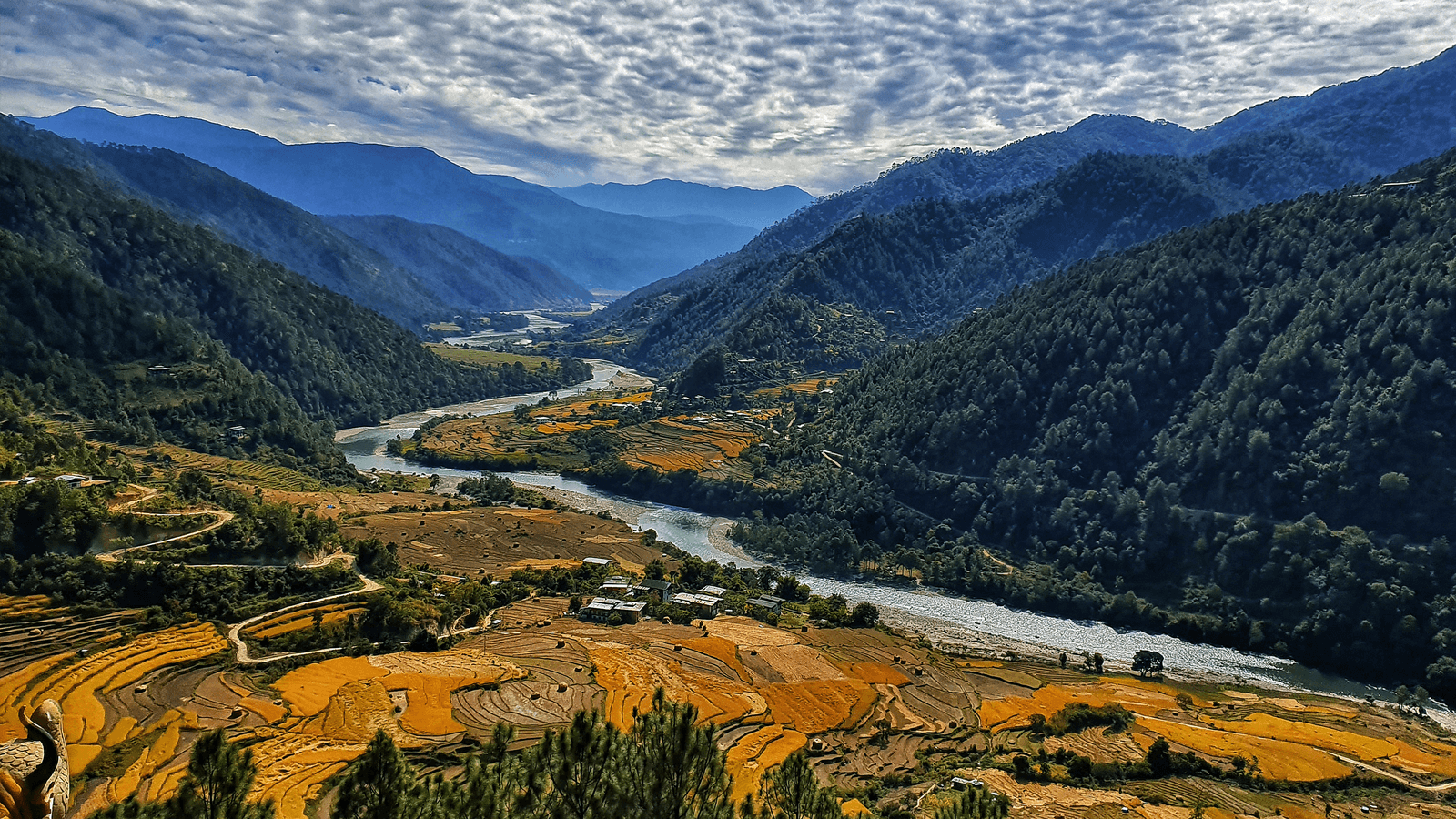
The best-known sections of the trail run through the centre of Bhutan. From Punakha, with its magnificent dzong at the meeting of two rivers, the route climbs eastward over the Pele La, a pass of more than three thousand metres that divides western and central Bhutan, through forests of dwarf bamboo and rhododendron. Beyond, it descends past Chendebji, where a large white stupa built in the Nepali style stands beside the river.
Trongsa Dzong, perched on a ridge above a deep gorge, is the largest dzong in Bhutan and the ancestral seat of the royal family. The first two kings ruled from here, and the heir to the throne still traditionally holds the title of governor of Trongsa before becoming king. East of Trongsa lie the valleys of Bumthang, the spiritual heartland of Bhutan. They hold some of the oldest and most sacred temples in the kingdom, including Jambay Lhakhang, by tradition founded in the seventh century, and Kurje Lhakhang, where Guru Rinpoche is said to have left the imprint of his body in the rock. Jakar, the main town, has its own dzong above the valley.
Messengers carried the king's orders along it, pilgrims walked it to the great temples, and traders drove their animals along it.
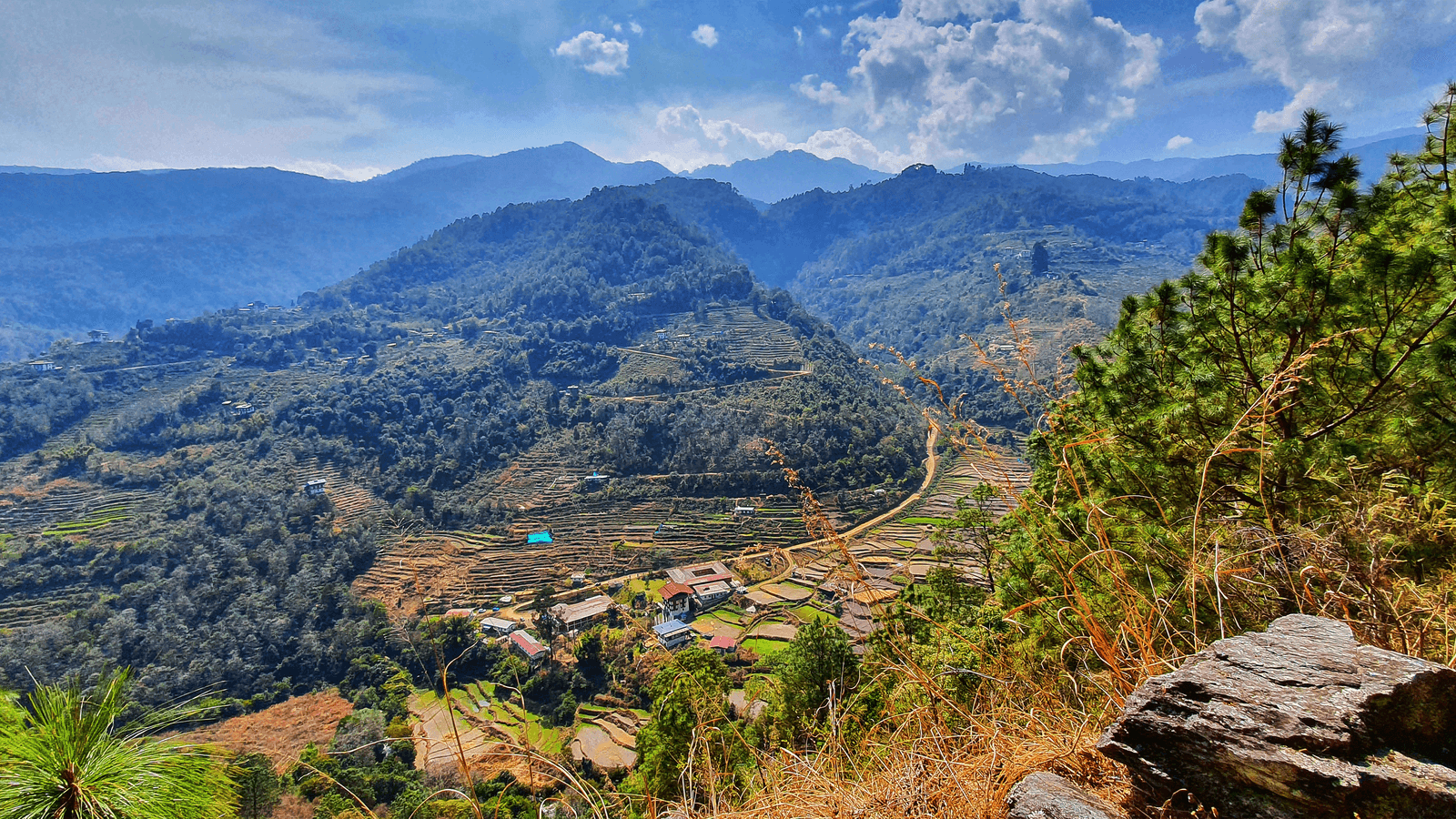
Along the trail, the walker passes through the daily life of rural Bhutan. Farmhouses of rammed earth and timber, with painted window frames, stand among fields of rice, buckwheat and chillies laid out on the roofs to dry. Chortens, prayer wheels turned by streams and walls of carved prayer stones mark the path. In the villages, people stop work to greet passers-by and offer butter tea or a cup of ara, the local spirit. Many households along the route now offer homestays, a chance to share a meal by the fire.
Walking it
The walking is varied, with long climbs to the passes and steep descents into the valleys, at altitudes that make even fit walkers breathe hard. Accommodation along the trail ranges from farmhouse homestays to camps. Spring, when the rhododendrons are in flower, and autumn, with its clear skies and harvest, are the best seasons.
G Adventures' Highlights of the Trans Bhutan Trail, eleven nights in April, includes Thimphu, Punakha, Trongsa, Jakar and Bumthang, and Paro.
G Adventures' Camp the Trans Bhutan Trail, ten nights in April, May and August, camps along the trail. Its places include the Pele La, Chendebji, Tsangkha, Trongsa, Gyetsa, Bumthang and Jakar, as well as Punakha and Paro.
Bhutan requires most visitors to travel with a licensed guide and to pay a daily sustainable development fee, which shapes the cost of any trip there. But the trail has opened up a slower, quieter way to see the country, walking from valley to valley as the Bhutanese did for centuries.
By Walter Pellow, the name Atlas & Passage’s editorial team writes under. Prices and dates in the trips below come from the operators and can change.