Seasons
Cherry blossom in Japan, and how it moves north through the spring
Japan's cherry blossom doesn't open all at once. It travels up the country like a slow wave, from the southern islands in late winter to Hokkaido in May, and the whole nation follows its progress on the evening news.
By Walter Pellow20 October 20264 min read
Each spring, Japan watches a weather front that has nothing to do with rain. The sakura zensen, the cherry blossom front, is the line on the map where the trees have just come into flower, and it moves steadily north and uphill through the spring. Forecasters publish predictions of the opening and full-bloom dates for cities across the country, and the television news reports the first flowers on the official sample trees in each city. Few countries take a flower so seriously, and once you have seen it, the reason is obvious.
The wave up the country
The front begins in the far south. In Okinawa, a different, deep-pink variety flowers as early as January. On the main islands, the season starts in Kyushu and the south-west in late March. It usually reaches Tokyo and Kyoto in the last week of March or the first days of April, though the date shifts by a week or more from year to year, depending on the warmth of the late winter. From there it moves on through central Honshu into April. It climbs into the mountains, where towns such as Takayama and Matsumoto flower a little later than the coast. It reaches the north of Honshu in mid to late April and Hokkaido, the northern island, in late April and early May.
The tree that defines the season for most people is the Somei Yoshino, a pale pink, almost white variety developed in Tokyo in the late Edo period. It was planted in vast numbers in the late nineteenth and twentieth centuries. Because so many are grafted from the same stock, the trees in one area tend to flower at almost the same moment. That is what makes the full bloom so sudden and so overwhelming, and why it is over so quickly. A week after full bloom, the petals are falling like snow and the green leaves are coming through.
Hanami, and what it means
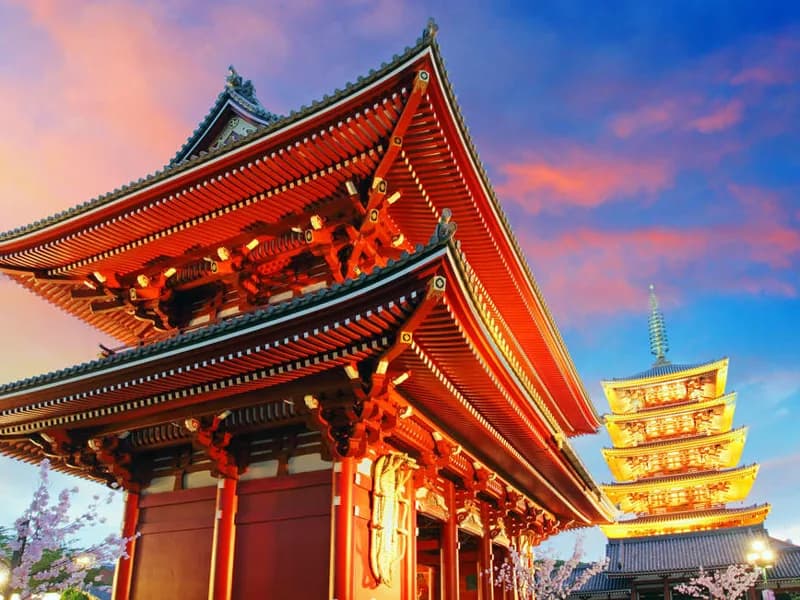
Hanami, flower-viewing, is an old custom. It began with the aristocracy of the Heian court more than a thousand years ago, when plum blossom was admired before cherry took its place. Today it is a mass outdoor party. In parks across the country, companies, families and groups of friends spread blue plastic sheets under the trees and settle in for an afternoon or evening of food, drink and conversation. Places are sometimes reserved from early morning by the most junior member of an office. In the evening, some parks hang lanterns in the trees, and the blossom glows against the dark.
Beneath the parties is something more reflective. The blossom has long stood in Japanese poetry and art for the beauty of things that do not last, mono no aware, a gentle sadness at the passing of things. The brevity is the point.
Where to see it
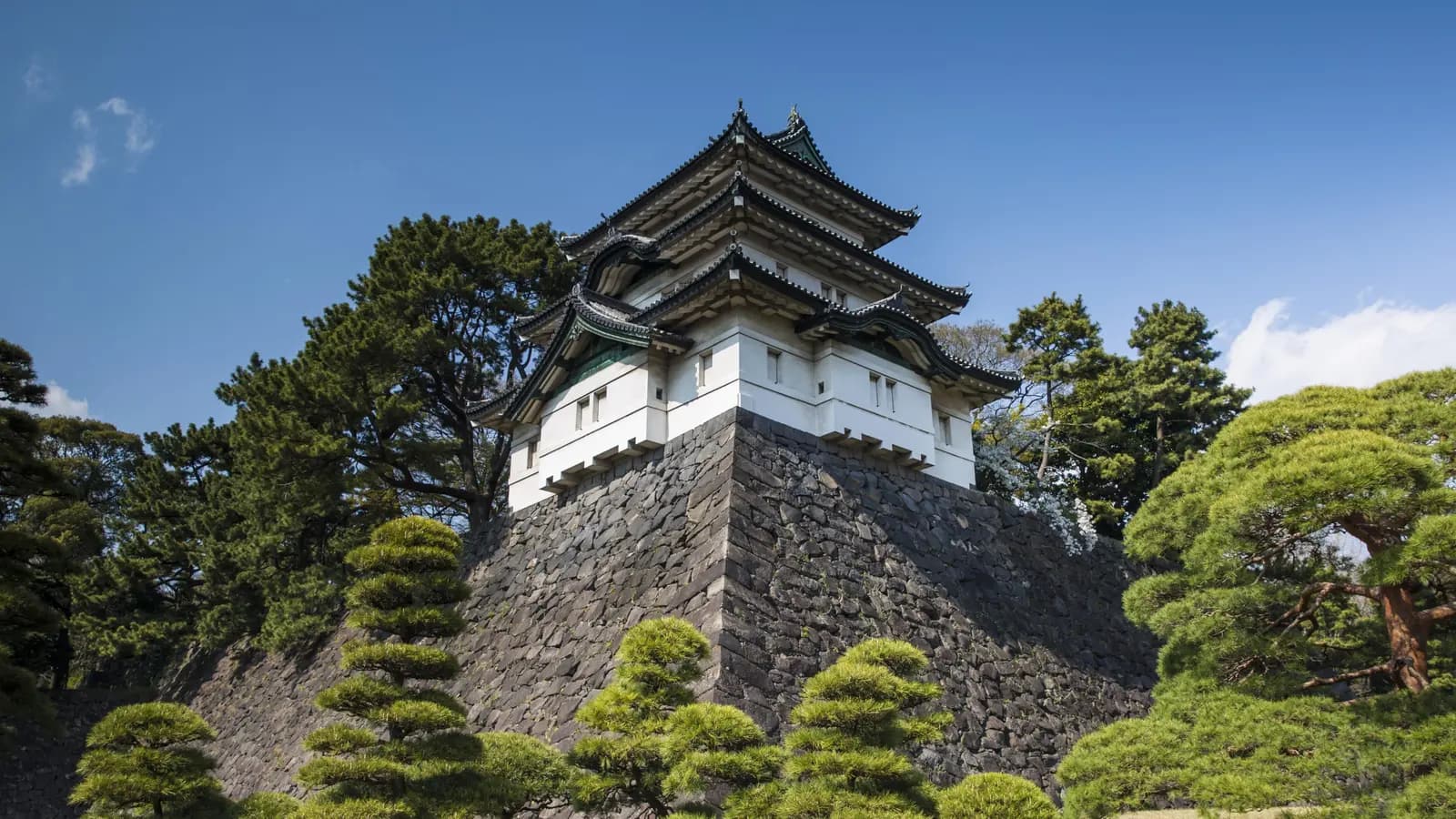
In Tokyo, Ueno Park is the classic and the busiest, and the moat of Chidorigafuchi by the Imperial Palace, lined with trees overhanging the water, is one of the loveliest. In Kyoto, the Philosopher's Path, a canal-side walk under the trees, and Maruyama Park, with its great weeping cherry lit at night, are the best known, and Arashiyama has blossom on its hills above the river. Matsumoto Castle, the black-walled fortress in the Japanese Alps, framed in pink, is one of the great sights of the season. Miyajima and Hiroshima have their own fine displays.
The honest note is about crowds. Japan's blossom season coincides with the start of the Japanese school and business year and is the busiest time of year for domestic travel. The famous spots are packed, accommodation books up early, and the dates can't be guaranteed months in advance. Booking a trip that spans a couple of weeks in late March and April gives the best chance of being in the right place.
The tours that run in spring
Explore Worldwide's Simply Japan, thirteen nights, runs all year round, including the blossom season. Its route goes from Tokyo through Matsumoto, the snow monkeys of Jigokudani and Nagano, then Kanazawa and Takayama, Hiroshima and Miyajima, and Kyoto with Arashiyama.
Travelsphere's Japan, Land of the Rising Sun, twelve nights, covers Tokyo, Hakone and Mount Fuji, Takayama and Matsumoto. It also visits the Daio wasabi farm and the thatched village of Shirakawa-go, then Nagoya, Kyoto, Nara, Hiroshima and Miyajima Island.
G Adventures' Discover Japan, thirteen nights, runs in October, November and December. It is a trip for the other great colour of the Japanese year, the autumn maples, which travel south through the country as the blossom travels north.
By Walter Pellow, the name Atlas & Passage’s editorial team writes under. Prices and dates in the trips below come from the operators and can change.