Walking
Hokkaido in summer: lakes, volcanoes and the Ainu
When the rest of Japan swelters, its northern island is cool, green and good for walking. There are caldera lakes, smoking volcanoes, a wild peninsula where bears fish the rivers, and the living culture of the Ainu.
By Walter Pellow20 October 20264 min read
A Japanese summer on the main island of Honshu is hot and sticky. The rainy season of June and early July is followed by weeks of heat and humidity that make sightseeing in Tokyo or Kyoto hard work. Hokkaido, the northern island, escapes most of it. It largely misses the rainy season, and its summers are warm rather than hot, with cool evenings and clear air. For Japanese city dwellers, it is the obvious place to go in July and August. For visitors who like walking, it is the best part of Japan in summer.
Shiretoko, at the end of the land
Shiretoko, a long, mountainous peninsula on the north-east coast, takes its name from an Ainu word usually translated as "the end of the earth". It is a World Heritage Site, one of the wildest places in Japan, with volcanic mountains rising straight from the sea, dense forest, and no road along much of its length. It has one of the highest densities of brown bears in the world, and seeing one, from a safe distance, is a real possibility.
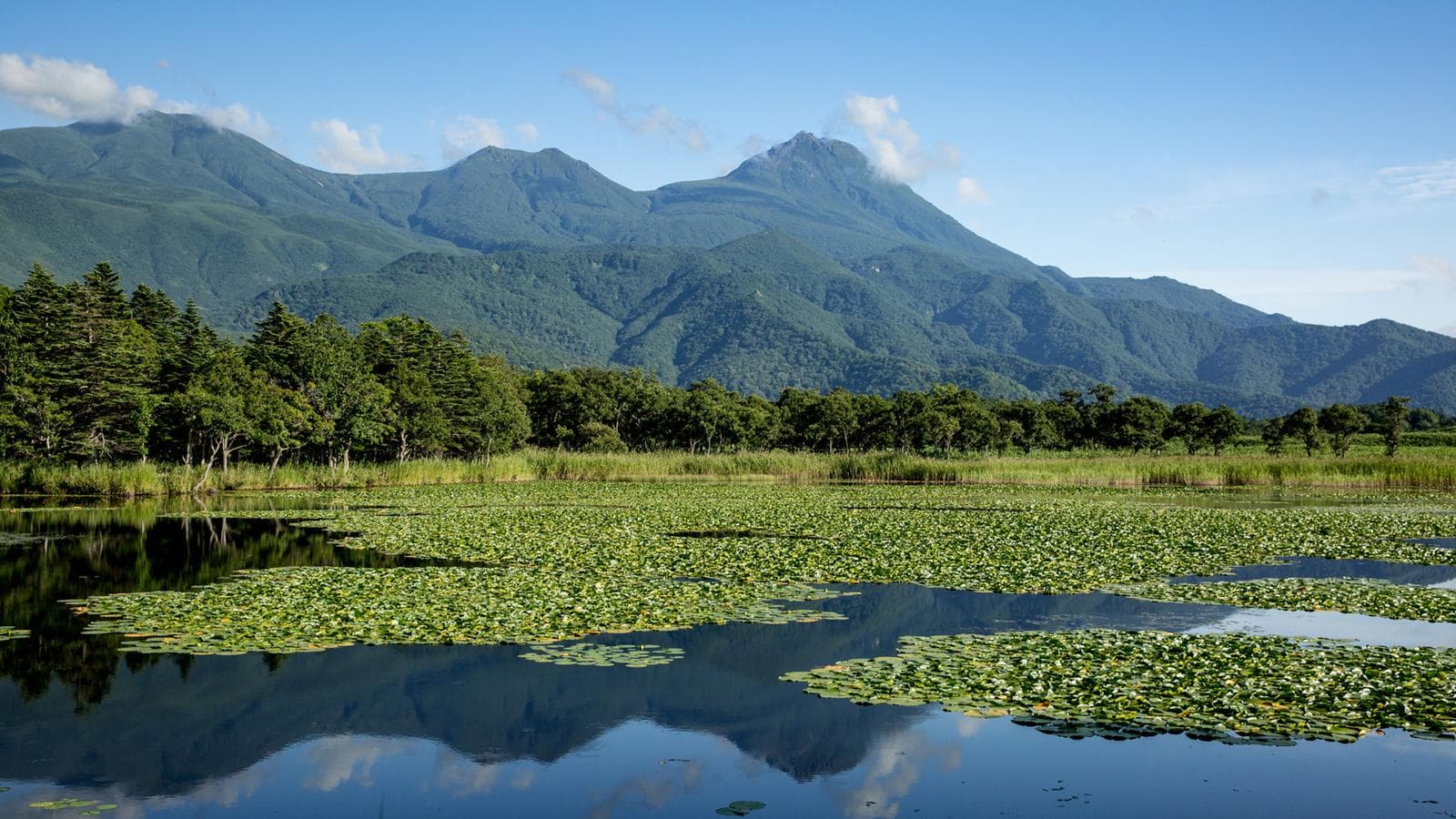
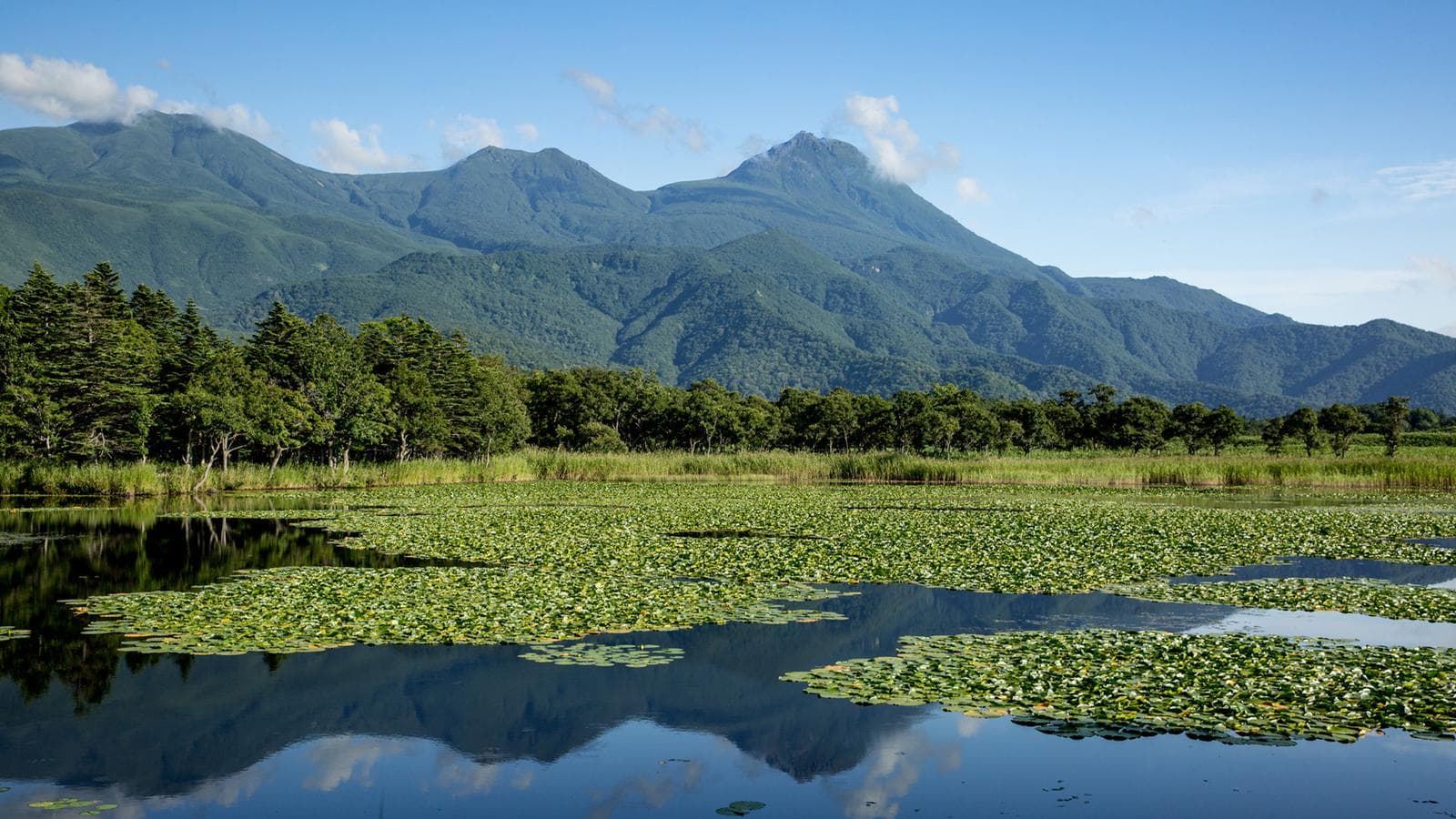
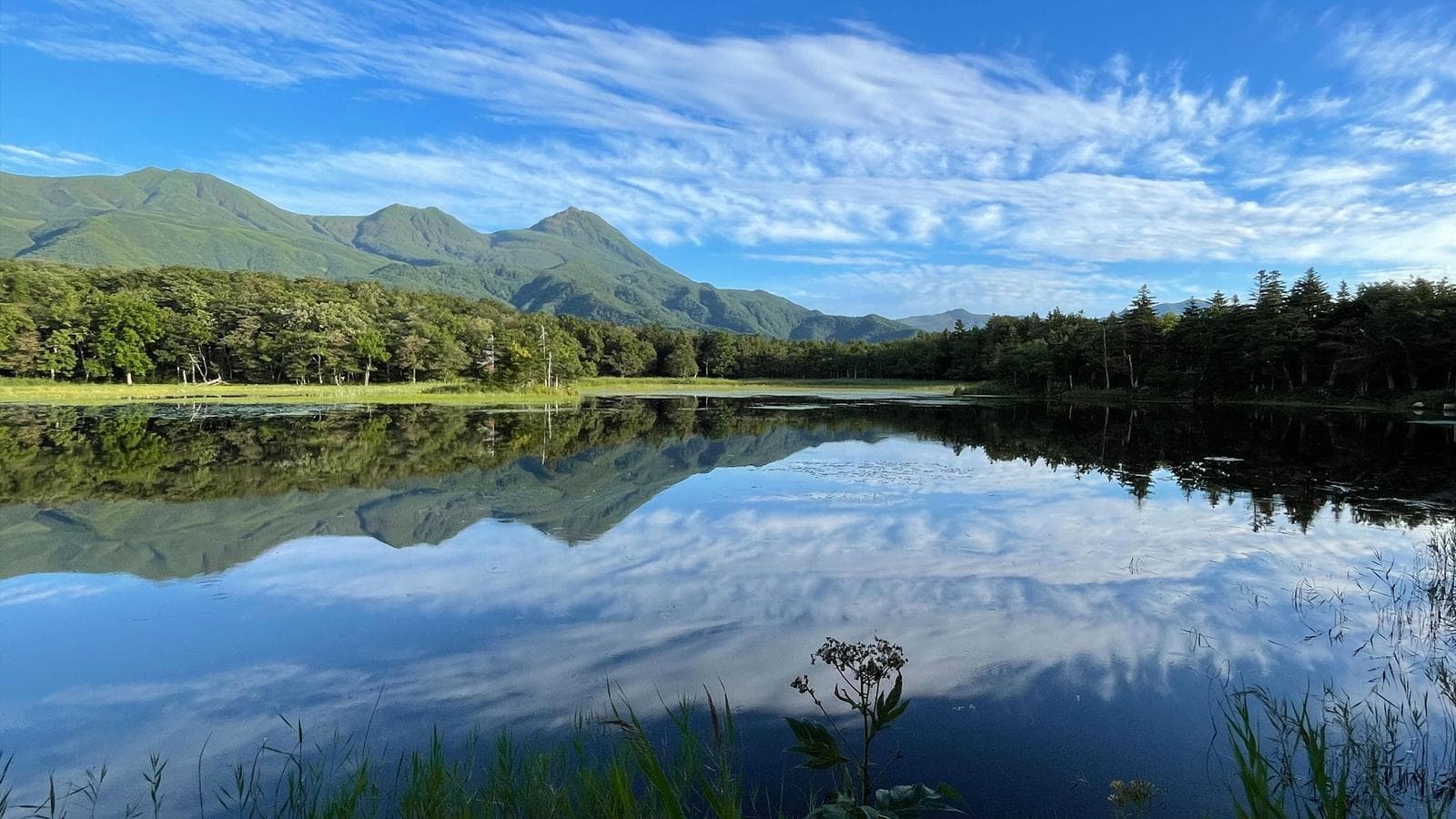
The Shiretoko Five Lakes are small forest lakes on a plateau near the coast, with the mountains reflected in them on still days. An elevated boardwalk, fenced against bears, leads to the first lake and can be walked freely. The ground trails to the other lakes are subject to rules in the bear season, including a short safety lecture or a guided walk at certain times. Nearby, the Furepe waterfall falls from the cliffs into the sea. It is fed by groundwater seeping out of the rock face rather than by a river, and it is known locally as the Maiden's Tears.
Lakes and volcanoes
Akan-Mashu National Park, in the east, is a landscape of volcanoes and caldera lakes. Lake Mashu, ringed by steep crater walls, has some of the clearest water in the world, when it isn't hidden by the fog that rolls in from the Pacific. Lake Kussharo, the largest caldera lake in Japan, has hot springs along its shore where you can dig your own bath in the warm sand. Near it, the volcano of Iozan steams with yellow sulphur vents. Lake Akan is famous for marimo, rare balls of green algae that grow on the lake bed, protected as a special natural monument.
In the middle of the island, Daisetsuzan is Japan's largest national park, a range of volcanic peaks, high plateaus and alpine meadows often called the roof of Hokkaido. In July the alpine flowers are out on its slopes, and in September it has the earliest autumn colours in Japan. It is also often the first place in the country to see snow. A ropeway climbs towards the summit of Asahidake, the highest mountain in Hokkaido, and the walking among the steam vents and snow patches above it is spectacular.
The Ainu
The Ainu are the indigenous people of Hokkaido, with their own language, religion and traditions of hunting, fishing and embroidery. For a long time they were pushed to the margins by Japanese settlement and assimilation policies. They were formally recognised as an indigenous people by Japanese law only in 2019, and there has been a real revival of their culture since. On the shore of Lake Akan, Ainu Kotan is the largest Ainu settlement in Hokkaido, a street of craft shops selling carvings and embroidery, with a theatre where traditional dance and music are performed.
The summer tours
G Adventures' Active Japan: Hokkaido's Wild Trails and Volcanic Onsens, eight nights from May to September, covers Abashiri, Shiretoko, Lake Mashu, Lake Akan and Ainu Kotan, Asahikawa and Daisetsuzan, and Sapporo.
G Adventures' Active Northern Japan: Tokyo and Hokkaido, ten nights in May and June, pairs Tokyo with Shiretoko National Park, Akan-ko, Asahikawa and Sapporo. G Adventures' Active Japan: Hokkaido Adventure, eight nights in October, comes later in the season, with the first autumn colour. It includes the Shiretoko Five Lakes, the Furepe waterfall and the primeval forest, Lakes Kussharo and Mashu, Akan and Daisetsuzan National Park.
Pack for changeable mountain weather, bring insect repellent for the forests, and be ready to make a noise on the trails to warn the bears. Hokkaido in summer is Japan at its most open.
By Walter Pellow, the name Atlas & Passage’s editorial team writes under. Prices and dates in the trips below come from the operators and can change.