Food & drink
Jeonju, where Koreans go to eat bibimbap
Bibimbap is eaten all over Korea, but Koreans will tell you it is best in Jeonju. The city takes its food seriously, and it has an old town of tiled houses to walk off lunch.
By Walter Pellow20 October 20264 min read
Every country has a region that the rest of the country believes eats better than anywhere else. In Korea it is Jeolla, the fertile south-west, with its rice plains, its long coastline and its reputation for generous tables. Within Jeolla, the city that carries the reputation furthest is Jeonju. It was recognised by UNESCO as a City of Gastronomy in 2012. Ask a Korean where to eat bibimbap, and the answer is likely to be Jeonju.
What makes it Jeonju bibimbap
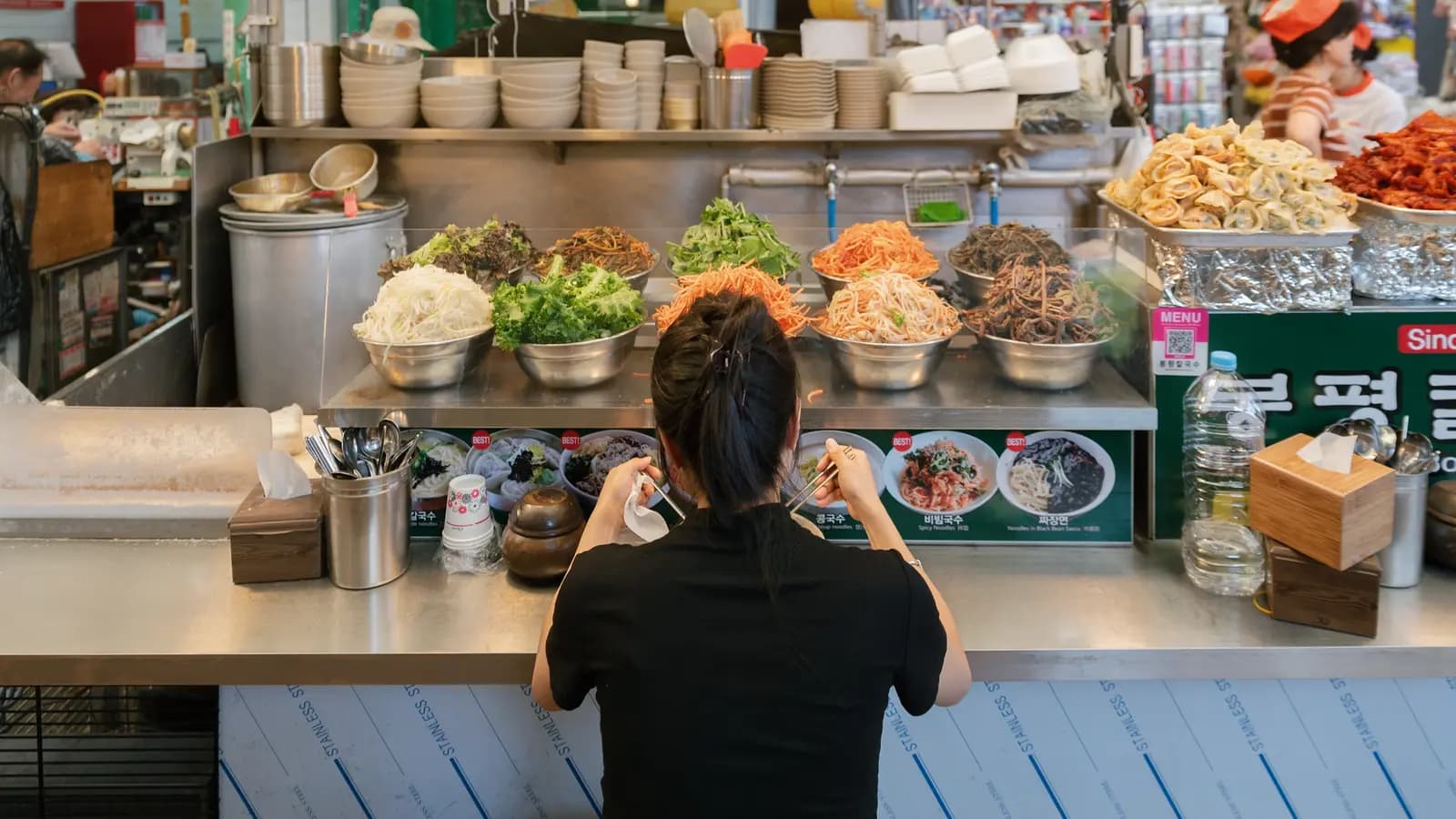
Bibimbap means, quite simply, "mixed rice": a bowl of rice topped with vegetables, meat, an egg and a dollop of red pepper paste, gochujang, which you stir together just before eating. It is found everywhere in Korea, from motorway service stations to the best restaurants. The Jeonju version is the grand one. The rice is traditionally cooked in beef broth, and the toppings are many and carefully arranged: seasoned bean sprouts, for which the region is known, spinach, bracken, mushrooms, carrots, ginkgo nuts and pine nuts. There may be seasoned raw beef, with a raw egg yolk in the middle. It is often served in a heavy brass bowl, with a row of side dishes and a bowl of soup.
The side dishes, banchan, are the other half of a Korean meal. In Jeolla they are famously plentiful, and in Jeonju a table can fill with small plates before the main dish arrives. They are refilled for free, and it is perfectly polite to ask.
Jeonju is also known for kongnamul gukbap, a soup of bean sprouts and rice, often eaten for breakfast and reputed to be good for the morning after. That leads to the city's other great habit: makgeolli, the milky, lightly sparkling rice wine. In Jeonju it is traditionally served by the kettle in makgeolli houses, and each round brings another wave of side dishes to the table.
A few points of Korean table manners are worth knowing. At a shared meal, it is polite to wait for the eldest person at the table to start. Chopsticks should never be stuck upright in a bowl of rice, which recalls the offerings made at funerals. Bowls are usually left on the table rather than lifted to the mouth, as they would be in Japan, and the spoon does much of the work, including for the rice. Nobody minds if a visitor gets something wrong, but trying is noticed.
The hanok village and the royal shrine
Between meals, Jeonju has one of the largest groups of traditional Korean houses in the country. The Jeonju Hanok Village holds several hundred hanok, tiled-roofed wooden houses, in the old centre. Many are now guesthouses, tea rooms, craft shops and restaurants, and it is a lively place to stay a night. The town also has a special place in Korean royal history. It was the ancestral home of the Yi clan, the family that founded the Joseon dynasty, and the shrine of Gyeonggijeon keeps a portrait of the dynasty's founder, King Taejo. Across the road, Jeondong Cathedral, a Romanesque red-brick church completed in the early twentieth century, marks the place where some of Korea's first Catholic martyrs died.
Jeonju is also known for hanji, traditional paper made from mulberry bark, which is used for everything from windows to lanterns. It is worth looking at in the craft shops.
The tours that stop to eat
G Adventures' Korea to Japan: Epic Eats and Bright City Lights, fourteen nights in January, is built around food. It travels from Seoul to Jeonju, Jeju and Busan, including the Dongmun market on Jeju, before crossing to Japan for Tokyo, Takayama, Kyoto and Nara.
G Adventures' South Korea Explorer, eight nights from October to December, goes from Seoul to Jeonju. It then heads south through the bamboo groves of Damyang, the tea fields of Boseong and the coastal city of Yeosu, before crossing to Jeju and its volcanic coast. G Adventures' Uncover Korea: K-Pop and Hanok Villages, nine nights, pairs Jeonju with Seoul, Busan and Jeju.
The right way to see Jeonju is slowly and hungrily. Arrive in time for lunch, walk the hanok lanes in the afternoon, and finish the day with a kettle of makgeolli and a table full of small plates.
By Walter Pellow, the name Atlas & Passage’s editorial team writes under. Prices and dates in the trips below come from the operators and can change.