Journeys
Korea and Japan in one trip, and how differently they do things
Korea and Japan are neighbours across a narrow strait, with shared roots in Chinese writing and Buddhism, and a long, difficult history. Seeing them in one trip shows how differently two close cultures can turn out.
By Walter Pellow20 October 20264 min read
At its narrowest, the strait between the southern tip of Korea and the Japanese island of Kyushu is about two hundred kilometres across. Busan and Fukuoka face each other across it, and for most of history it has been a channel rather than a barrier. Buddhism reached Japan from the Korean kingdom of Baekje in the sixth century, along with scholars, craftsmen and the Chinese script. Potters, scholars and envoys crossed in both directions for centuries. So did armies. The Japanese invasions of Korea in the 1590s and Japan's colonial rule of the peninsula from 1910 to 1945 left wounds that still shape relations between the two countries today.
Travelling through both in one trip is a lesson in how two cultures with so much in common can grow so distinct. Visitors from Europe tend to arrive expecting them to be similar. They leave noticing the differences everywhere.
At the table
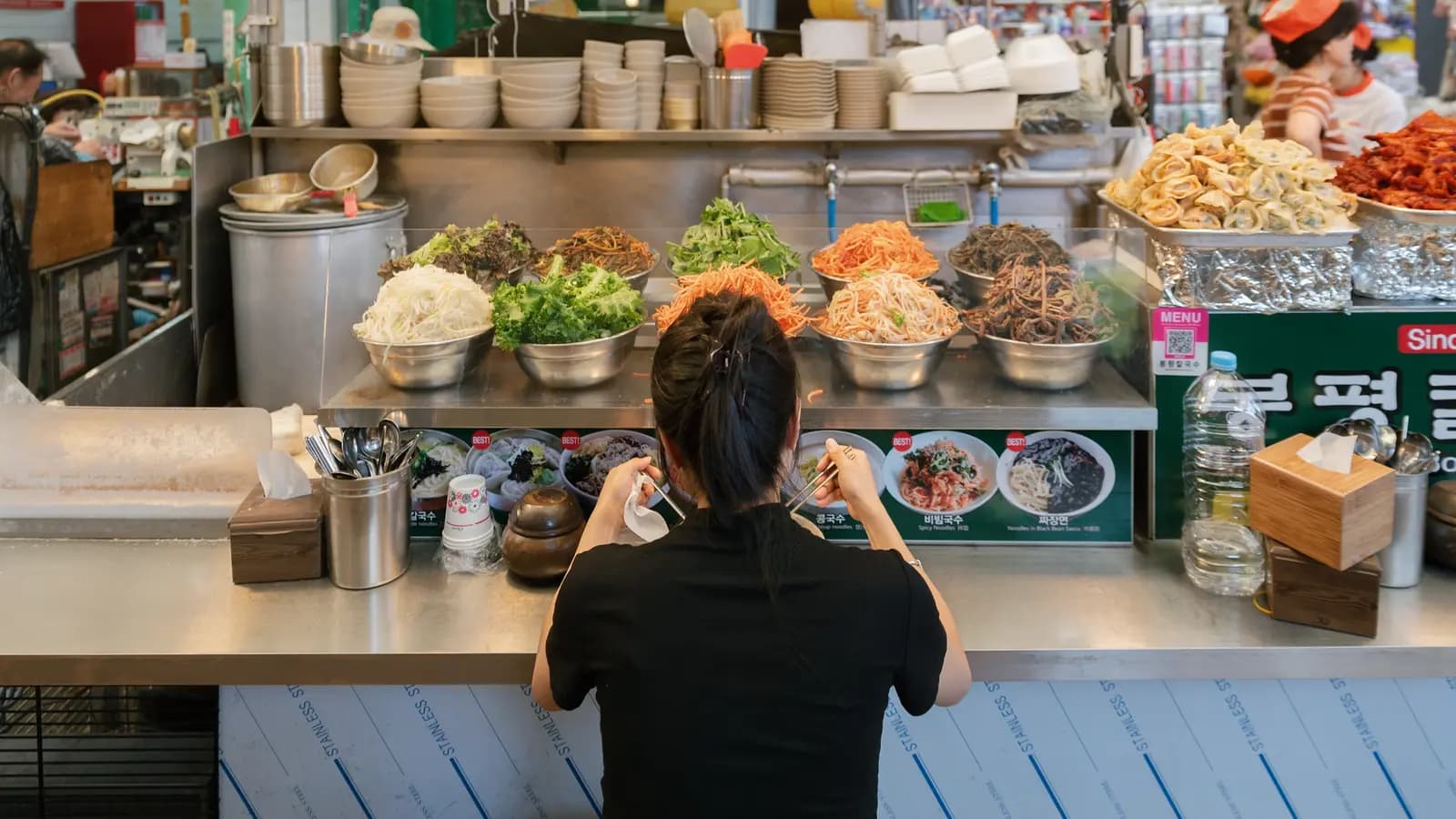
The differences start with lunch. A Korean meal arrives all at once. The rice and soup come with a spread of small side dishes, banchan, shared by the table and refilled when empty, and the flavours run to garlic, red pepper, fermentation and heat. Koreans eat with a spoon as well as chopsticks, which are usually flat and made of metal. A Japanese meal, by contrast, tends to come in courses or as an individual set, carefully arranged and balanced, with lighter seasoning, an emphasis on the freshness of fish and vegetables, and slim wooden chopsticks. Both countries pickle vegetables, but kimchi and tsukemono are very different things.
Temples and houses
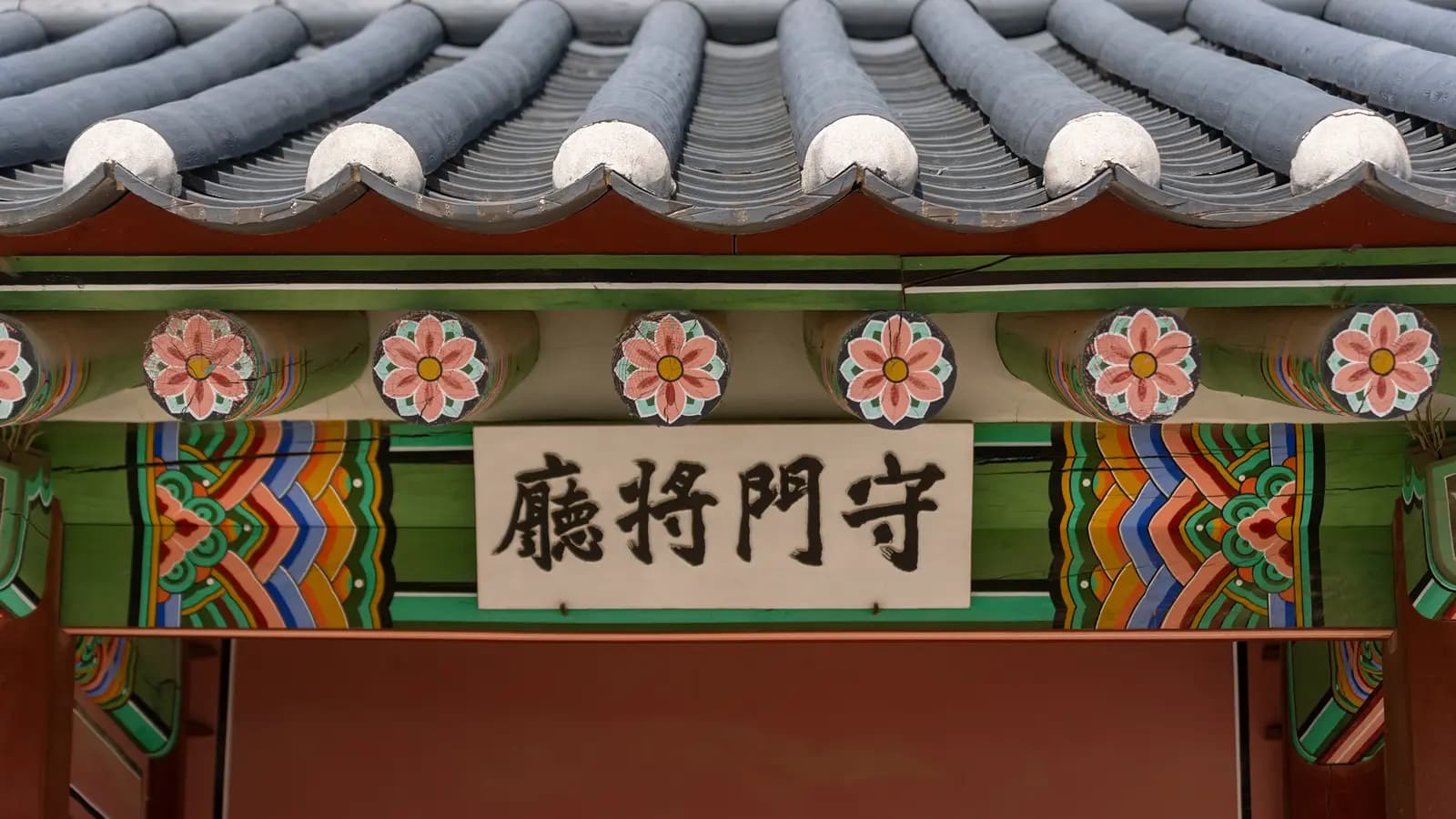
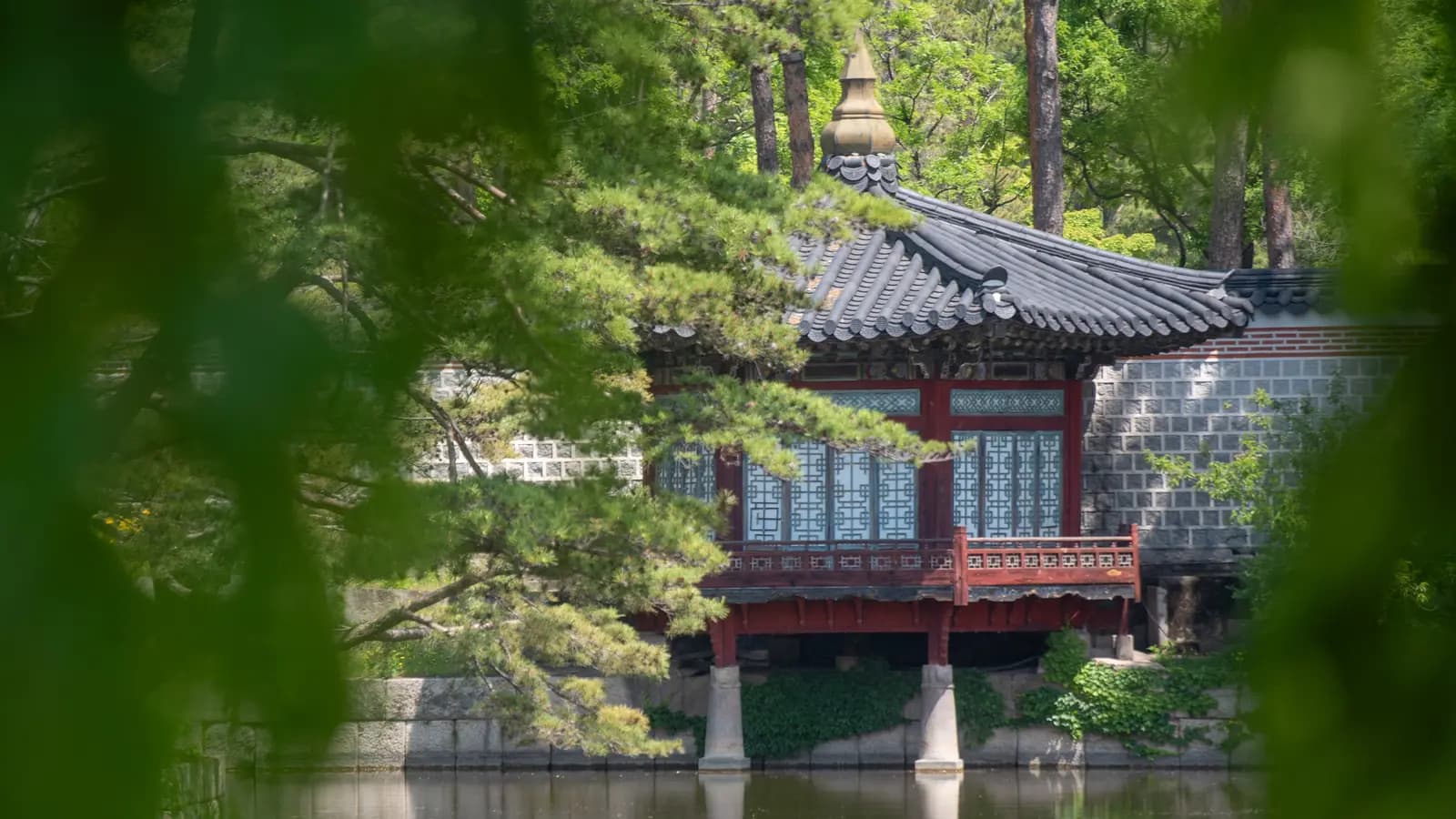
Both countries are full of Buddhist temples, and both draw on Chinese models. But a Korean temple is usually set in the mountains and painted. Its eaves and brackets are covered in dancheong, intricate patterns in green, blue, red and white. Classic Japanese temples are often left in plain, weathered wood, set in raked gravel and moss gardens, with a restraint that is quite deliberate.
The same goes for the home. Traditional Korean houses, hanok, are heated through the floor by the ondol system, so people sat and slept on warm floors on thin mattresses. Traditional Japanese houses use tatami mats and sliding paper screens, and were built for hot, humid summers rather than cold winters.
Even the writing looks different. Korea uses Hangul, an alphabet invented in the fifteenth century under King Sejong, whose letters are grouped into neat syllable blocks. Japan mixes Chinese characters with two syllabaries of its own.
Even bathing is different. Japan's onsen culture centres on natural hot springs, often in quiet country inns, with a strict etiquette of washing first and soaking in silence. Korea's equivalent is the jjimjilbang, a large, often round-the-clock bathhouse with hot and cold pools, heated rooms and sleeping areas, where families spend an evening in matching cotton outfits, eating boiled eggs and watching television. Both are worth trying, and the contrast says a great deal about each country.
Practically, the two countries make an easy pair. The flight between Seoul and Tokyo takes around two hours, and ferries also cross the strait between Busan and Fukuoka. Both countries have fast, reliable railways and rechargeable transport cards, and both are among the safest places in the world to travel.
Seeing both
G Adventures' Korea and Japan Encompassed, fifteen nights, runs from Seoul through Gyeongju and Busan in Korea to Hiroshima, Miyajima, Kyoto and Tokyo in Japan. It also includes Mount Kōya, the mountain-top monastery town of Shingon Buddhism, with its temples and its vast forest cemetery of moss-covered tombs. It runs in October, November and January.
G Adventures' Korea to Japan: Epic Eats and Bright City Lights, fourteen nights in January, makes the comparison through food. On the Korean side it covers Seoul, Jeonju, Jeju and Busan, and in Japan it continues to Tokyo, Takayama, Kyoto and Nara.
G Adventures' Seoul to Tokyo: Korea and Japan Highlights, fourteen nights, spends its Korean days in Seoul and Jeonju and in the south: the tea fields of Boseong, the bamboo of Damyang, the port of Yeosu and the island of Jeju. It then finishes in Japan, at Tokyo.
The pleasure of the trip is in the comparison. It is worth being sensitive to the history, and wary of comparing either country to the other in front of its people. But noticing what is shared and what is not makes each country clearer than it would be on its own.
By Walter Pellow, the name Atlas & Passage’s editorial team writes under. Prices and dates in the trips below come from the operators and can change.