First time
Kathmandu, Pokhara and a first week in the Himalaya
Nepal without a multi-week trek is still Nepal, and a first visit built around two cities and a lowland park makes a perfectly honest introduction to the country.
By Arthur Penhallow26 September 20264 min read
Nepal's reputation runs so heavily toward trekking that it is easy to assume a visit without three weeks and a pair of walking boots is a lesser one. It isn't. A week or two moving between Kathmandu, the lakeside town of Pokhara and the lowland jungle of Chitwan covers medieval temple architecture, mountain views from a comfortable altitude, and wildlife that has nothing to do with the high peaks at all, without a single night spent above two thousand metres.
Kathmandu's layered valley
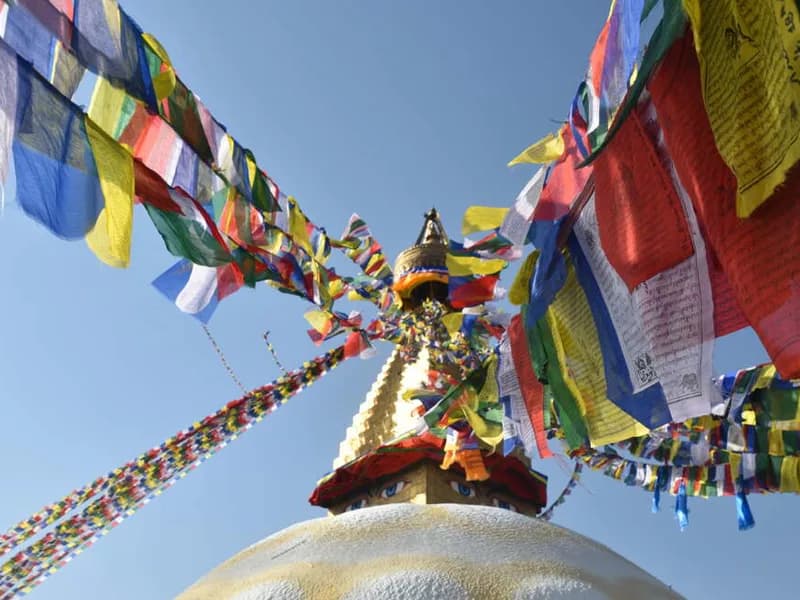
The Kathmandu Valley was, until the late eighteenth century, home to three separate kingdoms, Kathmandu, Patan and Bhaktapur, each centred on its own Durbar, or palace square, and each still recognisably distinct despite the urban sprawl that now connects them. Kathmandu's own Durbar Square, along with the Buddhist stupas of Swayambhunath and Boudhanath, gives a first-time visitor a dense, walkable introduction to Newar architecture and to a religious landscape where Hinduism and Buddhism have coexisted, and frequently overlapped, for centuries.
Much of what a visitor sees today reflects rebuilding as well as original construction. A powerful earthquake struck central Nepal in April 2015, damaging or destroying a considerable number of temples and monuments across the valley, including structures within Kathmandu's own Durbar Square. Restoration has continued steadily in the years since, using traditional Newar carpentry and masonry techniques wherever records and materials allow, work that is worth noticing rather than treating the squares as untouched relics of an unbroken past.
Nagarkot and Bandipur, the valley's edges
Beyond the valley floor, hill towns such as Nagarkot offer sunrise views across a long stretch of Himalayan range without requiring a trek to reach them, a genuine mountain panorama available after a short drive and a modest walk rather than days of climbing. On a clear morning the view from Nagarkot's ridge can extend from Annapurna in the west to Everest itself in the east, a spread of the Himalaya that few single viewpoints anywhere else in the world can claim to match without a considerable climb of their own. Early risers who make the short walk to the ridge's main tower before sunrise are generally rewarded with the clearest conditions of the day, before any afternoon haze has had the chance to build. Bandipur, a former trading post on the old trade route between India and Tibet, has kept much of its Newar-style architecture largely intact, having been bypassed by the modern highway that redirected traffic, and with it a good deal of change, elsewhere. Its main street, closed to vehicles and lined with wooden-balconied trading houses built by Newar merchant families, gives a clearer sense of what a working Himalayan trade town once looked like than almost anywhere else within easy reach of Kathmandu.
Pokhara, and the mountains without the climb
Pokhara sits beside Phewa Lake with a close, largely unobstructed view of the Annapurna range, including Machapuchare, the distinctively fishtail-shaped peak that remains formally unclimbed, its summit considered sacred and off-limits under Nepali law. It is possible to see genuinely dramatic Himalayan scenery from a lakeside café here, which makes Pokhara the natural stop for travellers who want the mountains in view without the multi-day approach a full trek requires.
Chitwan, a change of landscape entirely
The lowlands around Chitwan National Park, in Nepal's southern Terai belt, look and feel like a different country from the mountain towns further north: subtropical jungle, tall elephant grass and a warm, humid climate closer to neighbouring northern India than to the Himalayan foothills. It rounds out a first trip with a genuinely different kind of landscape and wildlife, discussed properly elsewhere, and reinforces just how much vertical range a small country like Nepal actually contains.
The right season for it
March, April, October and November offer the clearest skies for mountain views from Pokhara and Nagarkot, and comfortable temperatures throughout the valley and the lowlands. December through February brings cold mornings in the hills but remains a workable season for this lower-altitude circuit, while the monsoon months of June to September are best avoided for reasons that apply as much to city sightseeing, under persistent rain, as to any trekking further afield.
By Arthur Penhallow, the name Atlas & Passage’s editorial team writes under. Prices and dates in the trips below come from the operators and can change.