First time
South Korea for the first time, Seoul to Busan in a week
South Korea is a little smaller than England, with a fast railway down the middle and six centuries of history at one end. A week runs from the capital to the southern port, with an old kingdom on the way.
By Walter Pellow20 October 20264 min read
The usual first impression of South Korea is speed: the trains, the broadband, the pace at which Seoul has rebuilt itself in a lifetime. Seventy-odd years ago the country was one of the poorest in the world, at the end of a war that had swept up and down the peninsula more than once. What makes it rewarding to visit is that the speed sits on top of something much older. The capital has been the capital since the end of the fourteenth century. Further south, the kingdom that came before that lasted for the best part of a thousand years.
A week is enough to see the shape of it. The classic route runs south-east across the country, from Seoul in the north-west to Busan on the south coast, with Gyeongju, the old Silla capital, on the way.
Seoul, old and very new
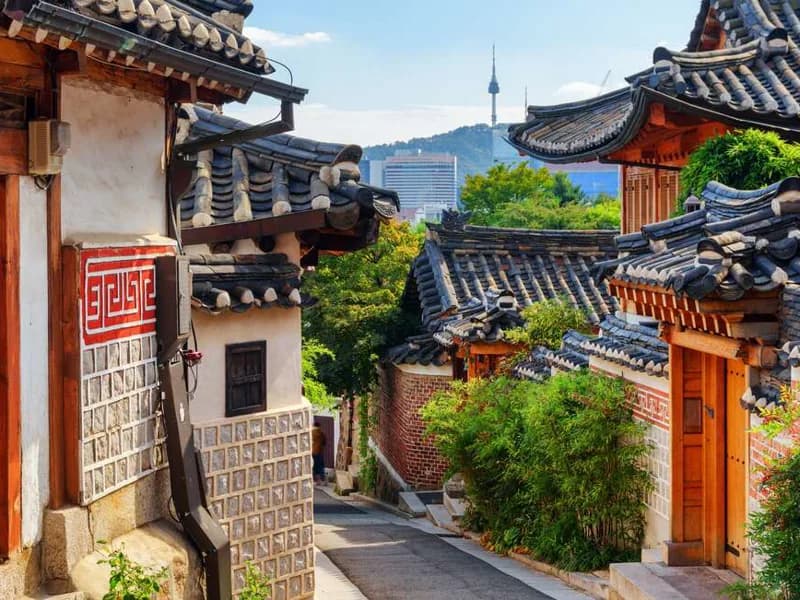
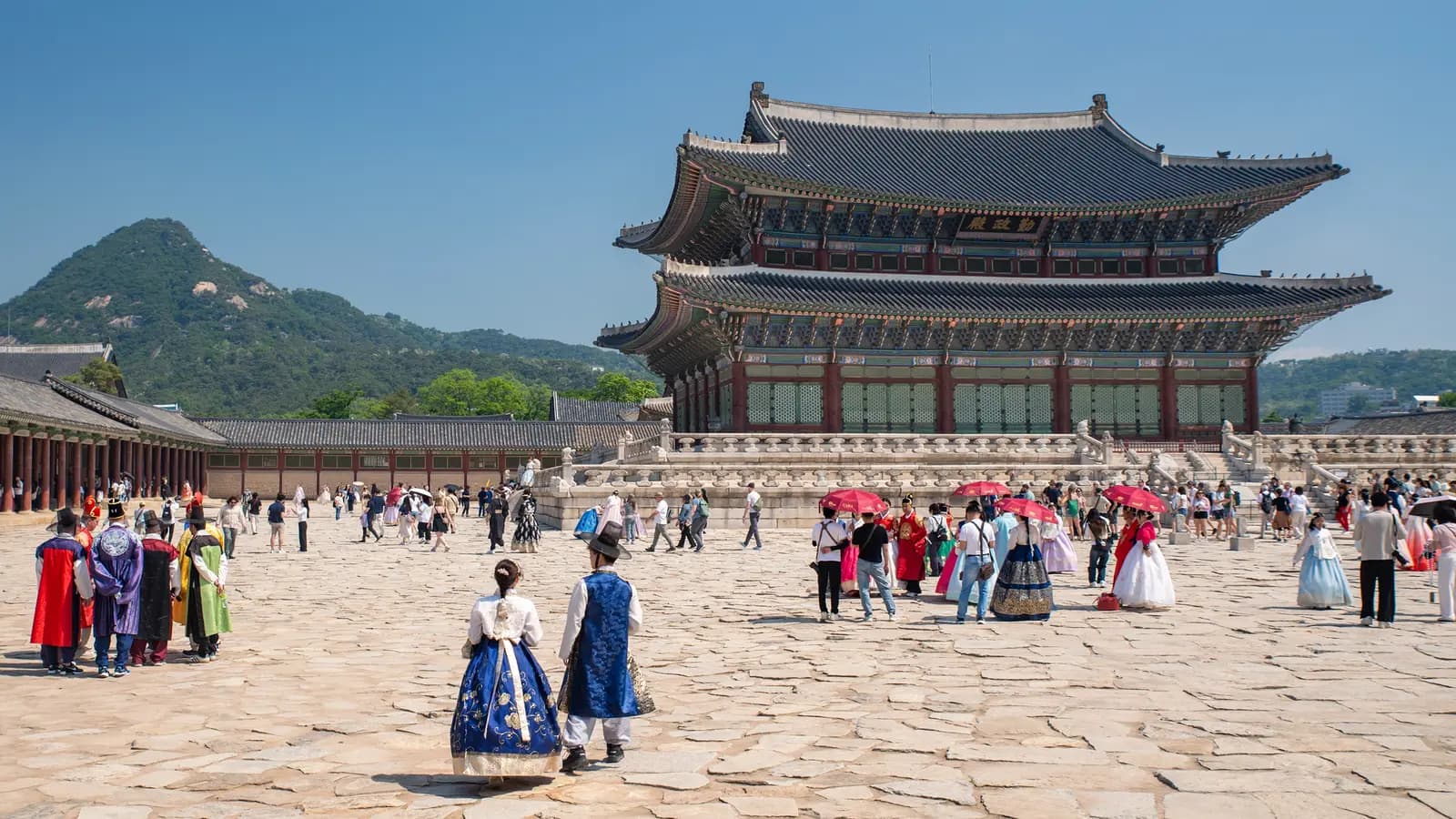
Seoul became the capital of the Joseon dynasty in 1394, and the kings who followed built their palaces in the shadow of the mountains to the north. Gyeongbokgung, the first and grandest, has been burned and rebuilt more than once, most recently after the Japanese occupation of the first half of the twentieth century. It is now restored to something like its old extent, with a changing of the guard at its main gate in Joseon costume. The palaces are surrounded by one of the world's great modern cities, and the contrast is the point: tiled roofs and painted eaves in the foreground, glass towers behind.
There's plenty of the modern city to fill a few days. There are the markets, of which Namdaemun, by the old south gate, is the oldest and most chaotic. N Seoul Tower, on its wooded hill in the middle of town, gives the best overview. The food runs from street stalls to long tables of barbecue, with small side dishes that keep arriving. On a first visit, the excursion many people add is the day trip north to the Demilitarized Zone, the strip of land that has divided the peninsula since the armistice of 1953. It is a sombre and genuinely strange place to visit, watched from both sides, and it puts the rest of the country in perspective.
Gyeongju, the kingdom before
Before Seoul, before Joseon and the Goryeo dynasty before that, much of the peninsula was ruled from Gyeongju. It was the capital of Silla, a kingdom whose traditional dates run from the first century BC to the tenth century AD. The centre of the modern town is low-rise, and its oddest feature is the grassy burial mounds that rise among the streets and parks like a cluster of green hills. They are the tombs of Silla kings and nobles, some of which were excavated to reveal gold crowns and other grave goods now in the town's museum.
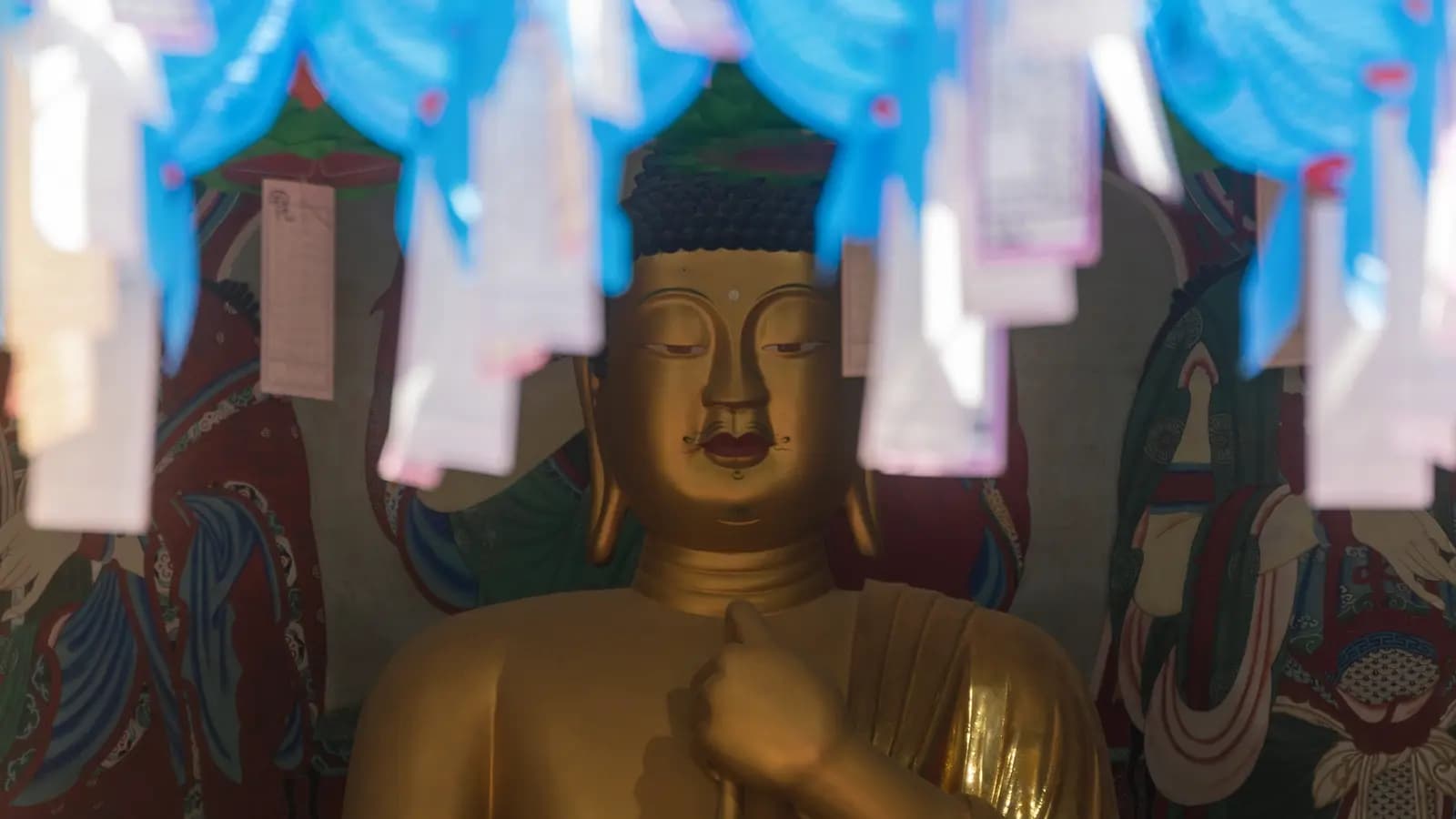
In the hills outside town are the Buddhist temple of Bulguksa and the granite Buddha of the Seokguram grotto above it, both from the eighth century. They are listed together as a World Heritage Site and are the reason many people come. Nearby, the folk villages of Yangdong and, further north, Hahoe near Andong keep their tiled and thatched houses of the Joseon gentry, still lived in, among rice fields and hills.
Busan, and the way the trip ends
Busan is South Korea's second city and its great port, strung along a coast of hills, bays and bridges. It has the country's best-known beach at Haeundae, the forested headland of Dongbaek Island beside it, and a fish market by the harbour that is one of the city's best sights. Haedong Yonggungsa, a temple built on the rocks above the sea, is a fitting last stop: Buddhist temples are normally built in the mountains, and this one is not.
Travel between the cities is easy. The KTX high-speed railway runs from Seoul to Busan in roughly two and a half hours, and the roads are good. The question is how much to fit in. G Adventures' Best of South Korea covers the classic route in seven nights, from Seoul with a visit to the DMZ, through Gyeongju and the folk village of Yangdong, to Busan. It runs in October and November, when the maples are turning.
Explore Worldwide's Discover South Korea takes eleven nights and adds Andong and Hahoe, the city of Gwangju and Mudeungsan National Park in the south-west, and Jeonju, known for its food. G Adventures' Essential Korea, twelve nights, goes further still, to the southern coast at Yeosu, the green tea plantations of Boseong and the bamboo forests of Damyang, and across to the volcanic island of Jeju.
Spring and autumn are the seasons to aim for. Summer brings heat, humidity and the monsoon rains, usually from late June into July, and winter is properly cold, especially in Seoul. A week in October, with clear skies and the leaves turning on the hills, shows the country at its best.
By Walter Pellow, the name Atlas & Passage’s editorial team writes under. Prices and dates in the trips below come from the operators and can change.