Slow travel
The Annapurna foothills, a gentler kind of trekking
Not every walk into the Himalaya needs three weeks and an oxygen debt. The foothills below Annapurna offer villages, terraced fields and genuine mountain views at a pace that leaves room to actually notice them.
By Arthur Penhallow26 September 20264 min read
The word "trekking" in a Nepal context tends to conjure images of high passes, thin air and multi-week itineraries, and a good deal of the country's trekking industry is built around exactly that. Lower down, in the foothills beneath the Annapurna range, a gentler kind of walking is on offer: trails between Gurung villages at altitudes rarely above two thousand metres, through terraced rice and millet fields, forest and open ridgeline, with mountain views that lose remarkably little for being seen from a lower vantage point.
The terraces themselves are worth pausing over. Carved into slopes that would otherwise be too steep to farm, and maintained by hand across generations, they grow rice in the lower, wetter reaches and millet, maize and vegetables further up, a system of cultivation that has shaped the foothills' appearance as thoroughly as any single building might shape a town. Walking through harvest season, when families work the terraces together and grain is laid out to dry on flat stone roofs, gives a clearer sense of how the landscape actually functions than any viewpoint alone can.
Villages built into the terrain
The foothill trails pass through settlements such as Ghandruk and the smaller hamlets around it, home to Gurung communities whose stone-and-slate architecture is shaped as much by the steep terrain as by tradition, houses stacked into hillsides too steep for almost anything else. Many Gurung men have historically served in Gurkha regiments of the British and Indian armies, a connection that has left a visible mark on some villages in the form of pensions, remittances and a degree of familiarity with British visitors that goes back generations, a relationship that dates to the Anglo-Nepalese War of the early nineteenth century and the recruitment agreements that followed it. Whatever view one takes of that long military relationship, it has left a genuinely distinct mark on villages like Ghandruk, visible in retired soldiers' homes and regimental memorabilia alongside the more expected signs of a working farming community. Walking through these villages at a modest pace, rather than pushing on toward a higher objective, gives more room to notice the daily rhythm of a working agricultural hillside: terraces ploughed by hand or buffalo, washing set out to dry, children walking to school along the same paths used for trekking.
The Panchase ridge and its views
Away from the busier main trails toward Annapurna Base Camp, routes across the Panchase ridge offer a quieter alternative with views that take in Annapurna, Machapuchare and the Dhaulagiri range from a comparatively gentle walking gradient, along with rhododendron forest that, in season, turns sections of the trail red and pink for days at a stretch. A Japanese-built peace pagoda on one of the ridgelines here has become a customary stopping point, offering a wide panorama for relatively little climbing effort compared with routes higher into the range. Teahouses along these foothill trails are simpler and more family-run than the larger lodges built to serve the main Everest and Annapurna Base Camp routes, and meals tend to follow whatever the household is already cooking rather than a menu pitched at trekkers, which suits the slower pace of the walking itself. Dal bhat, a set meal of lentils, rice and vegetable curry refilled on request, remains the reliable standard along these routes, and it is worth trusting the local staple over a more elaborate menu at altitude.
Mountain views that lose remarkably little for being seen from a lower vantage point.
Bhaktapur and the valley, folded in afterwards
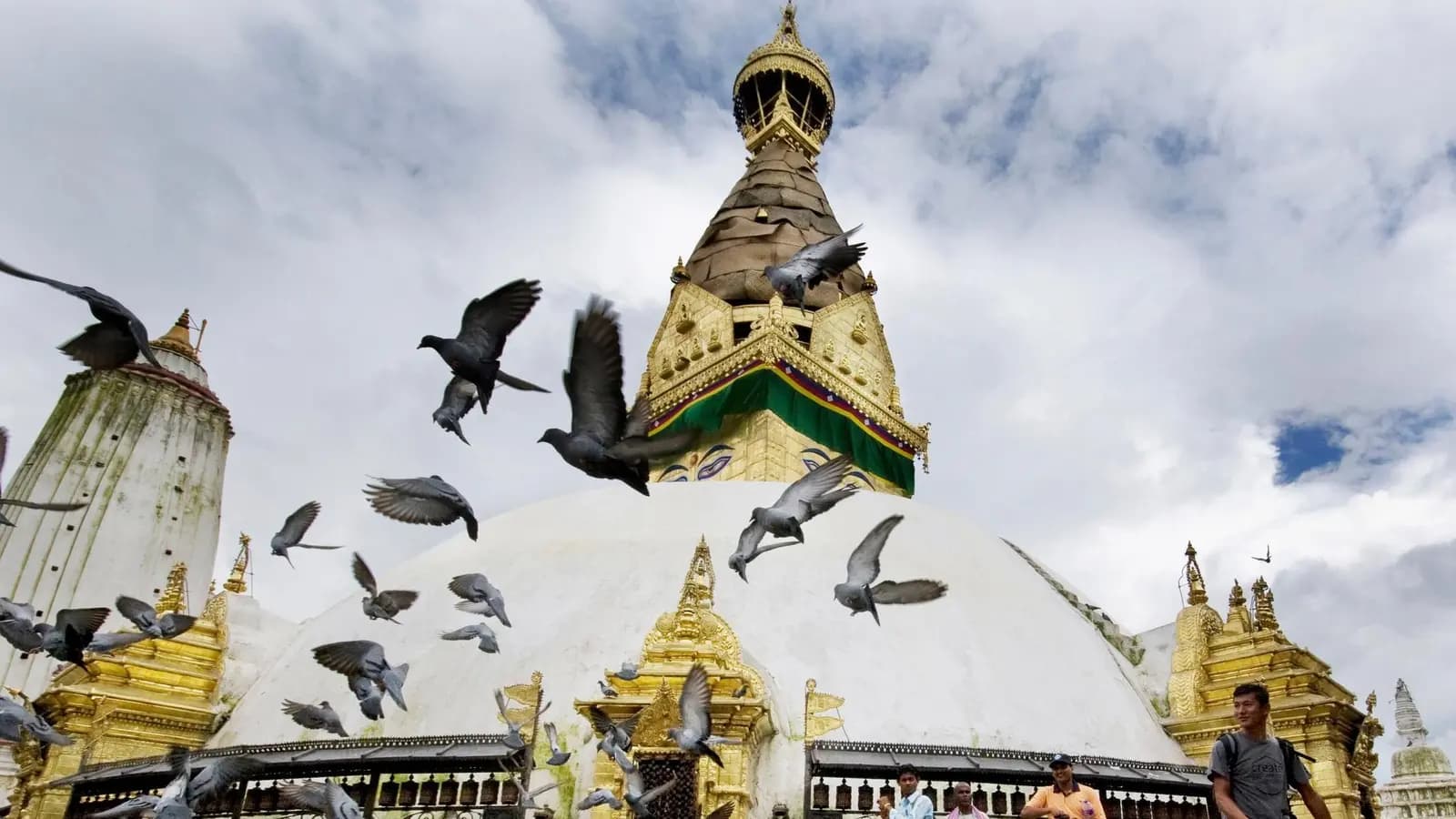
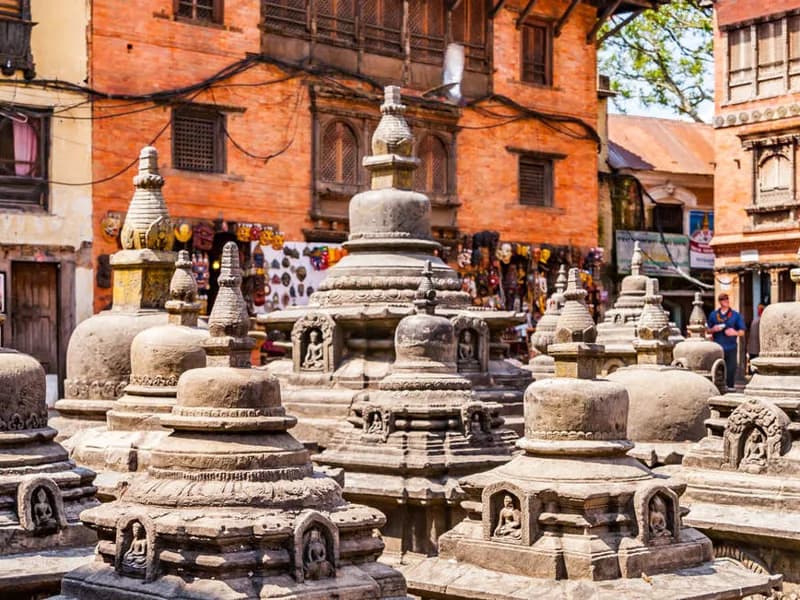
Several itineraries built around these gentler foothill routes end with a return to the Kathmandu Valley, taking in Bhaktapur, Swayambhunath and Patan's Durbar Square as a change of pace from several days of village-to-village walking, trading terraced fields for carved temple courtyards without a long transition between the two.
When to walk it
The same broad windows apply here as to trekking elsewhere in Nepal: October and November for the clearest post-monsoon skies, and March and April for spring flowering and a second reliable stretch of stable weather, though the lower altitude of these foothill routes makes them a workable option slightly later into May than higher trekking would allow, and a notably milder one through the winter months of December and January than anything approaching Annapurna's higher reaches.
By Arthur Penhallow, the name Atlas & Passage’s editorial team writes under. Prices and dates in the trips below come from the operators and can change.