Walking
The narrow strait where Asia stops being Asia
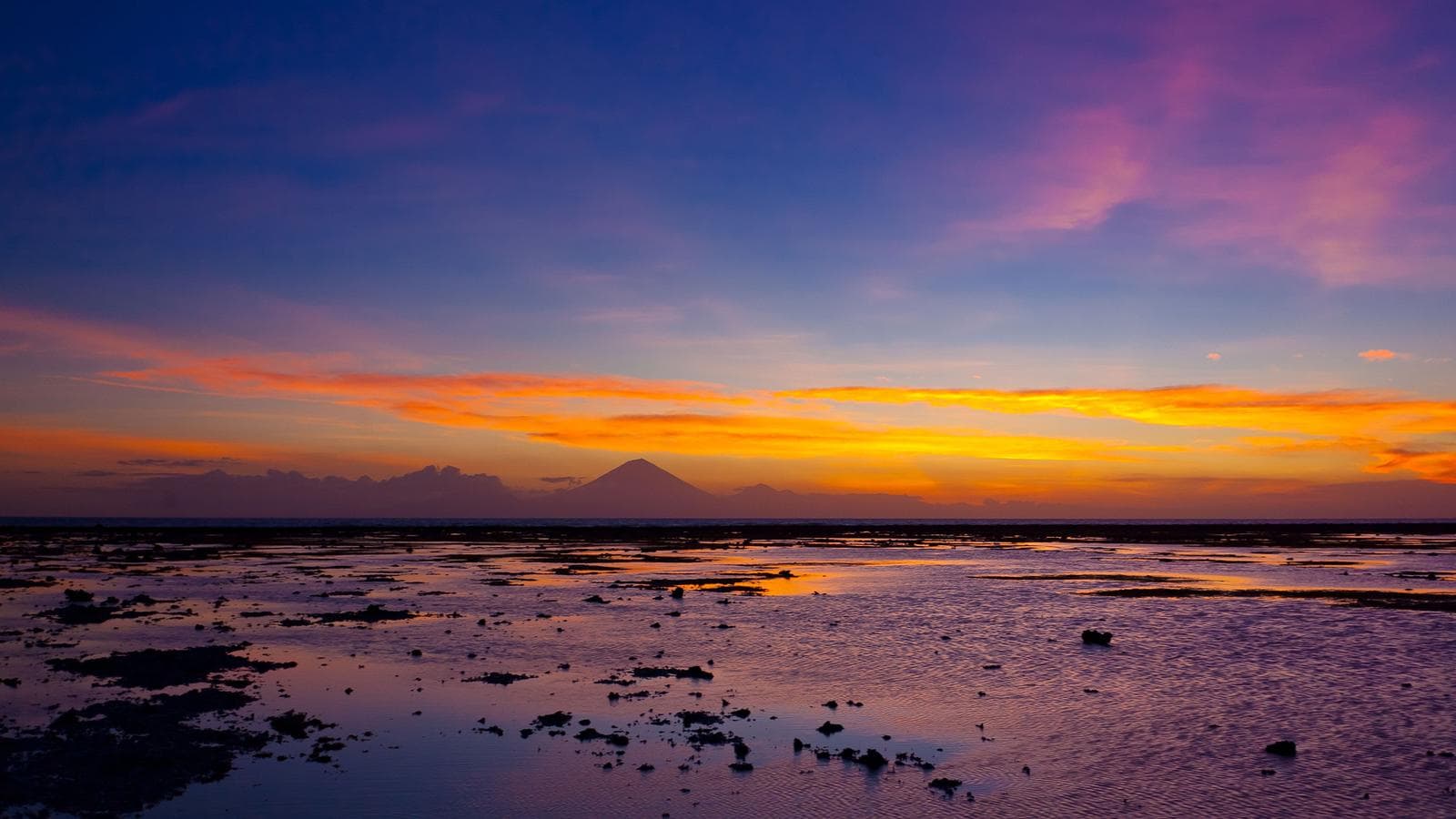
The sea between Bali and Lombok is barely twenty-five miles wide, and yet it marks one of the sharpest boundaries in the natural world, walked here on foot rather than simply crossed by ferry.
By Arthur Penhallow26 September 20264 min read
Bali and Lombok look, from a map, like siblings: two similarly sized islands, a short ferry ride apart, both part of the same volcanic chain running east from Java. Biologically, they are closer to strangers. The strait between them, narrow enough to see across on a clear day, marks one of the most abrupt transitions in animal distribution anywhere on Earth, a line named after the Victorian naturalist who first worked out it was there.
A line drawn by a man on a boat
Alfred Russel Wallace spent the better part of a decade travelling through the Malay Archipelago in the mid-nineteenth century, collecting specimens and, independently of Charles Darwin, arriving at his own theory of evolution by natural selection. In the course of that work he noticed something odd about the animals either side of the Lombok Strait: west of it, Bali and the islands beyond shared broadly Asian wildlife, tigers, elephants and a range of primates among them; east of it, Lombok and the islands beyond had a noticeably different, more Australasian character, with cockatoos, marsupials and a general absence of the large Asian mammals so common just across the water. He published the observation in 1859, and the boundary has been known as the Wallace Line ever since.
Why such a narrow gap matters so much
The explanation lies not in the strait's width but in its depth. Even during the ice ages, when sea levels fell far enough to join Bali to the Asian mainland by dry land, via Java and Sumatra, the Lombok Strait stayed deep enough to remain open water throughout. Animals that could walk from the Asian mainland to Bali simply could not cross to Lombok, while species arriving from the Australasian side faced the same barrier in reverse. Twenty-five miles of sea, held open for hundreds of thousands of years, did what a much wider ocean does elsewhere: it kept two biological worlds apart.
Twenty-five miles of sea did what a much wider ocean does elsewhere.
Walking across the difference
A walking itinerary that crosses from Bali to Lombok on foot, rather than flying between the two, is one of the more direct ways to notice the change, even without any particular expertise in birdwatching or biogeography. Bali's landscape, temples and terraced rice country give way, on Lombok, to Sasak villages, a drier climate in places, and the slopes of Mount Rinjani, an active volcano and Indonesia's second highest, rising over the island's northern half. The wildlife difference is harder to spot casually than the cultural one, since neither island's famous large mammals wander conveniently across a trekking route, but the birdlife shifts noticeably, and it is one of the few places where knowing the science changes what an ordinary walk feels like.
Beyond Lombok
The Wallace Line's real story continues well past Lombok, through Sulawesi and the Moluccas towards New Guinea, where the transition becomes even stranger and less tidy than Wallace's original single line suggested; later naturalists have argued for revised boundaries running through slightly different channels. None of that complexity is necessary to enjoy crossing the strait on foot. It is enough to know that the ferry crossing most visitors barely notice is, geologically and biologically, one of the more significant short journeys available anywhere in the archipelago.
An idea that outgrew its own line
Wallace's original boundary was drawn from what he could observe of birds and mammals; later biologists, working with plants, insects and reptiles, found the transition was messier than a single clean line implied, and proposed alternative boundaries a little further east, through the strait between Sulawesi and the Moluccas, that better fit those groups. The zone between the competing lines, an area including Sulawesi, Lombok, Sumbawa, Flores and Timor, is now generally referred to as Wallacea, a transitional region with its own mix of Asian and Australasian species rather than a clean handover from one to the other. Lombok, in other words, sits right at the edge of a debate biologists have never entirely settled, which is a reasonable thing to be thinking about while eating breakfast on a beach that, from the sand, looks much like the one left behind on Bali the day before.
By Arthur Penhallow, the name Atlas & Passage’s editorial team writes under. Prices and dates in the trips below come from the operators and can change.