Wildlife
The tiger you may not see, and the forest that's worth it anyway
India's tiger reserves are built on a conservation programme now more than fifty years old. Nobody can promise a sighting, and any guide who does is telling you what you want to hear rather than the truth.
By Arthur Penhallow26 September 20264 min read
The honest starting point for any piece about tiger safaris in India is this: nobody can guarantee a sighting, and the parks themselves make no such promise. What they can offer is a very good chance, built on decades of protection, a landscape genuinely worth driving through even on the mornings the tiger stays hidden, and a growing population that would not exist without a deliberate act of government policy.
The programme behind the population
In 1973, with wild tiger numbers in India estimated to have fallen sharply over the preceding decades, the Indian government launched Project Tiger, a network of protected reserves designed to halt the decline. Ranthambore, in eastern Rajasthan, was one of the original reserves; it had previously been the private hunting ground of the maharajas of Jaipur, which is part of why its forest survived largely intact into the conservation era. Kanha and Bandhavgarh, further east in Madhya Pradesh, joined the network in the years that followed and are now regarded as among the more reliable parks for sightings, precisely because their tiger densities are higher than in many other reserves. None of this converts a safari into a certainty. It does mean the odds are better than they were, and considerably better than in most of the tiger's remaining range worldwide.
What a safari actually involves
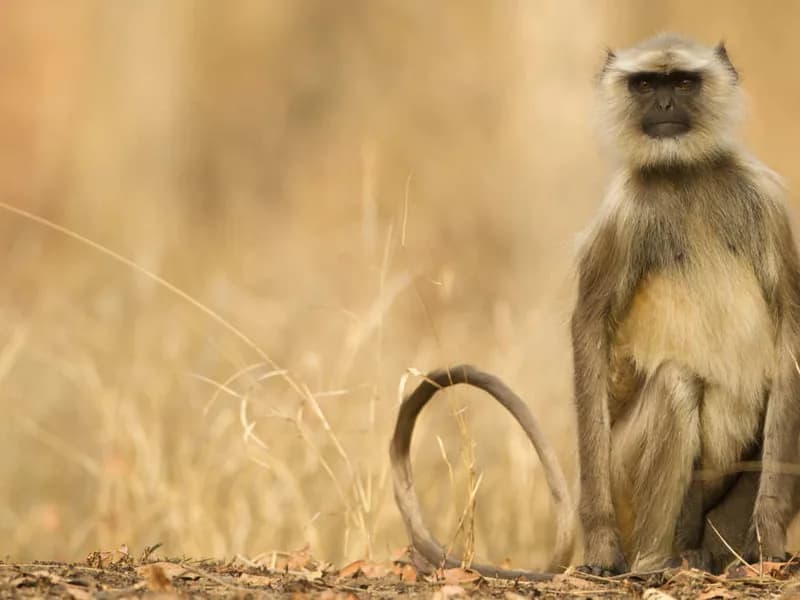
Sightings happen from open-topped jeeps or, in some parks, canter buses, moving slowly along fixed tracks at dawn and dusk, when tigers are most likely to be active. Guides read pug marks, alarm calls from deer and langurs, and the behaviour of other guides' vehicles as much as they look for the animal itself. A good morning might mean a tiger crossing the track ahead, unhurried and entirely uninterested in the vehicles; a quiet one means a very pleasant few hours in dry deciduous forest, watching spotted deer, langurs, and, with some luck, sloth bears or leopards instead. Both mornings are part of the same trip, and neither is a failure. The parks are worth the visit on their own terms, which is a useful thing to know before the sun comes up on the first game drive.
Numbers here are worth treating carefully. India's most recent tiger census work, carried out periodically using camera traps across the reserve network, has recorded a rising national population over the past couple of decades, credited widely to the protection Project Tiger affords and to better monitoring methods rather than a single simple cause. Individual parks vary a good deal in density and in how habituated their tigers are to vehicles, which is one reason experienced operators tend to weight an itinerary toward the reserves with the strongest recent record rather than the best-known name alone.
What a good morning offers is not a guarantee but a considerably better chance than the tiger has had for most of the last century.
Khajuraho, folded into the same route
Several itineraries that cover the central Indian reserves also take in Khajuraho, a group of temples built by the Chandela dynasty between roughly 950 and 1050, famous for detailed stone carving that includes, among a great deal else, scenes of everyday and courtly life. It sits an awkward distance from any single tiger reserve to visit on its own, which is exactly why it tends to appear on tours already built around Kanha and Bandhavgarh, as a change of subject rather than an afterthought. Orchha, a smaller Bundela-dynasty town of sandstone palaces and cenotaphs on the banks of the Betwa river, often features on the same route, and is quiet enough to explore on foot in a way that the busier temple towns rarely allow.
Timing it properly
Most parks close for part of the monsoon, generally July to September, when tracks become impassable and the forest is too dense for reliable viewing in any case. The safari season proper runs from October to June, but the better months sit at the cooler end of that range: November to March gives comfortable daytime temperatures for long hours in an open jeep, while April and May, though often cited as good for sightings because animals gather at dwindling waterholes, mean tracking a tiger through forest in temperatures that can exceed forty degrees. Comfort and probability pull in opposite directions here, and it is worth deciding in advance which one matters more to you.
By Arthur Penhallow, the name Atlas & Passage’s editorial team writes under. Prices and dates in the trips below come from the operators and can change.