Wildlife
Bukit Lawang, and the orangutans who came back to the trees
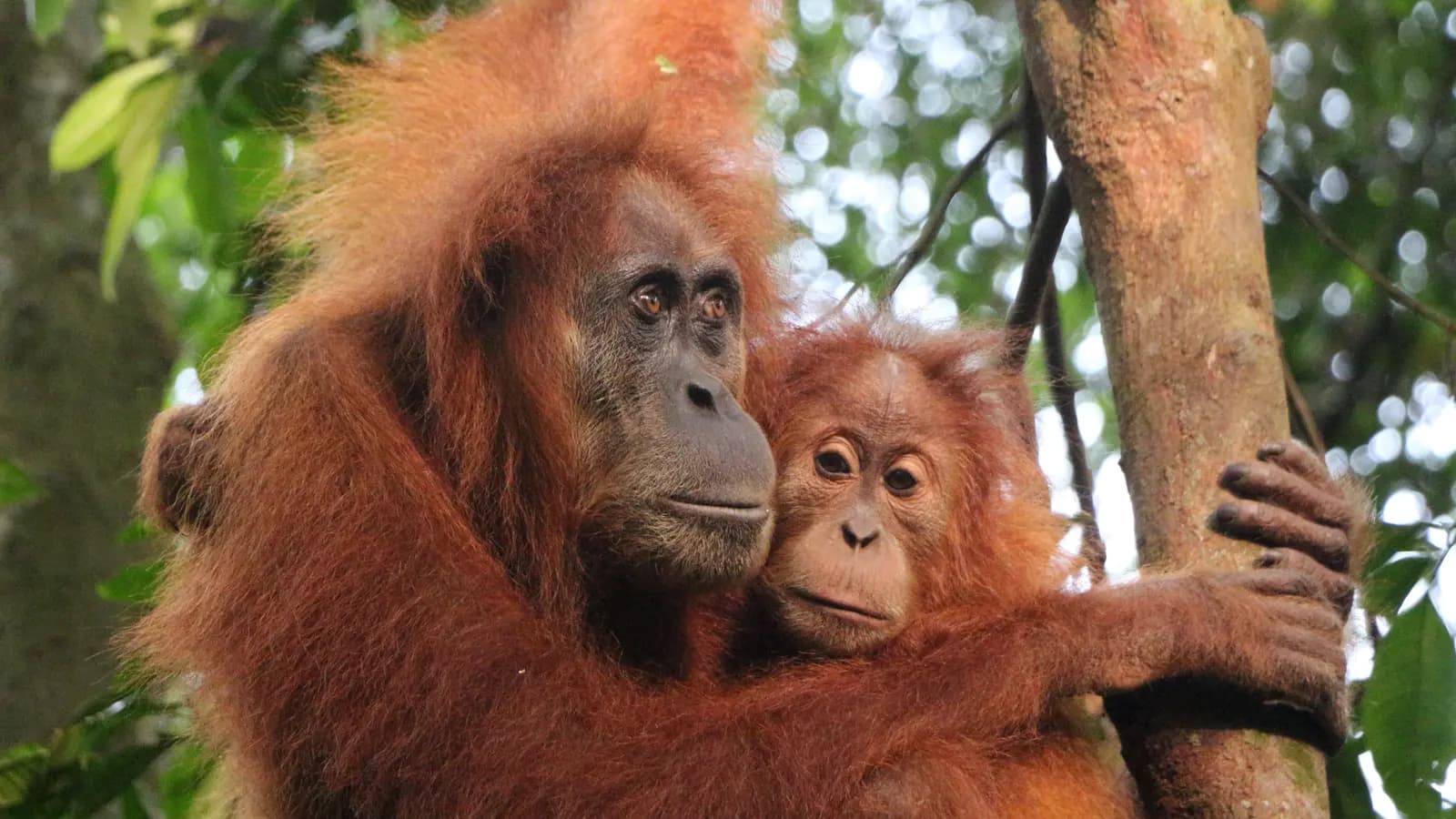
A rehabilitation programme that started in the 1970s left a river village in northern Sumatra with a semi-wild orangutan population, and a forest still large enough to hold tigers, rhinos and elephants in the same square kilometres.
By Arthur Penhallow26 September 20263 min read
Bukit Lawang is a small settlement on the Bohorok River in northern Sumatra, reached by a rough road from Medan, and it exists in something like its current form because of a rehabilitation programme that began there in 1973. Orangutans that had been kept illegally as pets, or displaced by logging, were brought to a centre on the forest edge, taught to forage again, and released gradually back into the surrounding national park. The population that resulted is not, strictly, wild in the way a never-captive animal is wild, but it is also not captive: the orangutans live in the forest, breed there, and come to feeding platforms or the village fringe by choice rather than confinement.
A forest big enough for everything
Bukit Lawang sits on the edge of Gunung Leuser National Park, part of a wider protected area known as the Leuser Ecosystem, and Leuser is usually described, accurately, as the last place on Earth where Sumatran orangutans, tigers, rhinoceroses and elephants all still occur in the same landscape. That is a narrower distinction than it sounds: each of those species has been reduced across most of its former range by logging, plantation conversion and hunting, and Sumatra itself has lost a large share of its lowland forest over the past half-century. Leuser's higher, steeper terrain has made it harder to clear than the flatter forest around it, which is part of why it has held on.
What a visit actually involves
Trips here are built around guided walks into the park rather than a zoo-style enclosure. Orangutans are the headline animal, spotted from the trail or occasionally at closer range near the old feeding platforms, but the forest also holds Thomas's leaf monkeys, gibbons whose calls carry a long way through the canopy, and a long list of birds. None of it is guaranteed on any given walk, which is the honest difference between wildlife-watching and a wildlife show: the animals are not there for the visitor's benefit.
Beyond Bukit Lawang
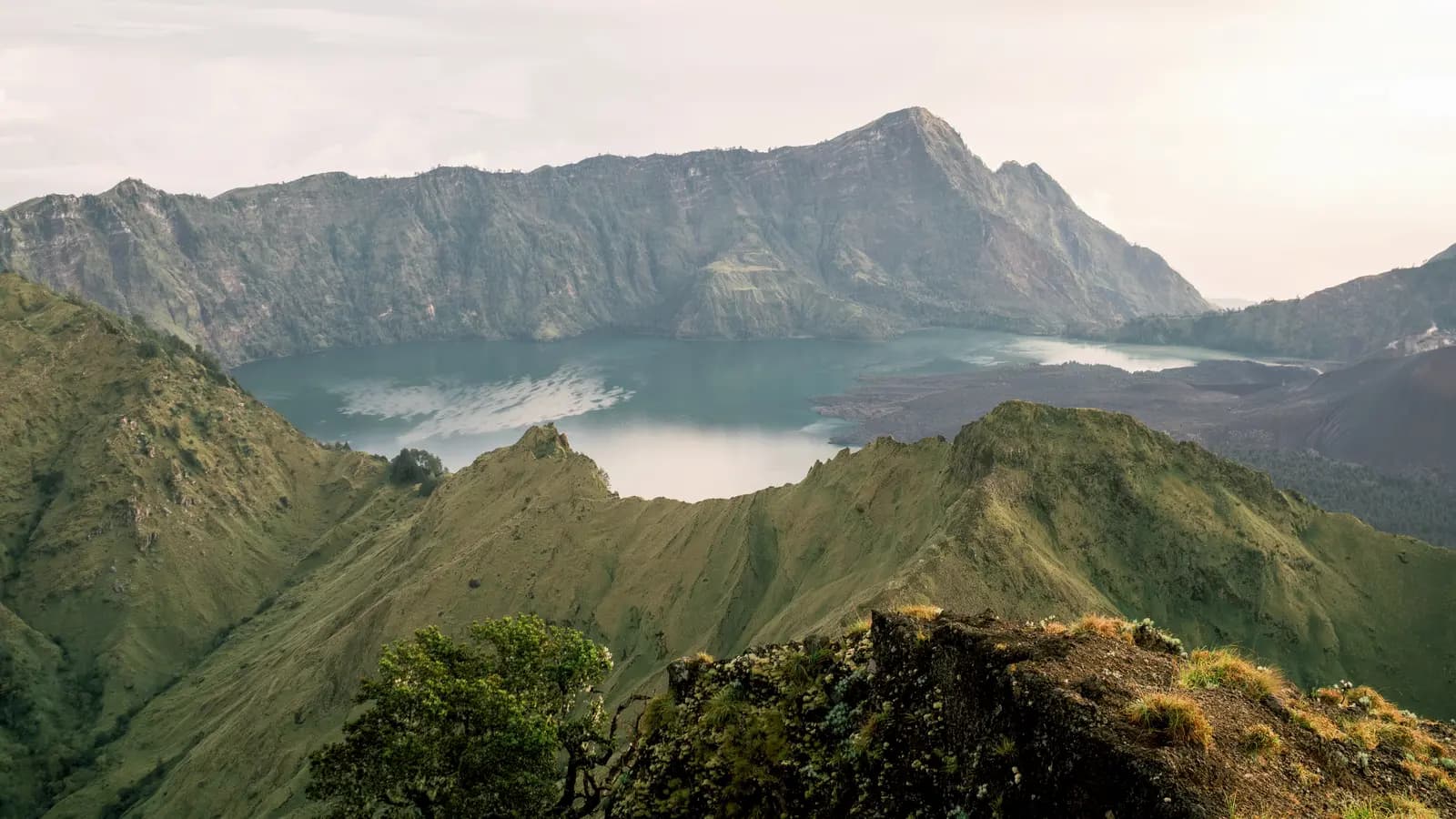
Further south, near Lake Toba, an enormous crater lake formed by a volcanic eruption tens of thousands of years ago, Sumatra's Batak highland culture offers a different kind of interest: traditional carved houses, a lake so large it holds its own island within it, and a slower pace than the orangutan trek requires. Some longer itineraries combine both regions with a final stretch in Bali, treating Sumatra as the wilder, less-visited counterpart to an island most travellers already have some picture of.
A slow-breeding species in a fast-changing landscape
Female Sumatran orangutans typically have their first offspring only in their mid-teens, and wait seven or eight years between births, one of the slowest reproductive cycles of any land mammal, a trait that suited a stable forest with few natural predators but leaves the species poorly equipped to recover quickly from sudden habitat loss. The Sumatran orangutan is classified as critically endangered, and the population within the wider Leuser Ecosystem, while not the whole of the species, represents a significant share of what remains in the wild. That slow biology is part of why places like Bukit Lawang matter beyond the value of a single sighting: a population this slow to recover cannot simply rebuild itself once a forest is cleared, which makes protecting what is left considerably more urgent than it might for a faster-breeding species.
Going gently
Orangutans are slow-breeding, long-lived animals, and the guides working Bukit Lawang's trails generally keep groups at a respectful distance and avoid feeding or touching the animals directly, both for visitor safety and because close contact carries a real disease risk between humans and a species that shares so much of its genetics with us. It is worth going into the forest with that understanding rather than an expectation of a close encounter; the encounters that happen tend to matter more for being on the animal's terms rather than the itinerary's.
By Arthur Penhallow, the name Atlas & Passage’s editorial team writes under. Prices and dates in the trips below come from the operators and can change.