Wildlife
Chengdu, and the bears bred back from the brink
Sichuan's capital is a stopover on most China itineraries, a city of teahouses and hotpot between the mountains and the plain. It is also where a serious, decades-long effort to save the giant panda is based.
By Arthur Penhallow26 September 20264 min read
The giant panda's decline was, for most of the twentieth century, a story with an obvious ending. Habitat loss across the bamboo forests of Sichuan, Shaanxi and Gansu fragmented the wild population into isolated pockets too small to breed reliably, and captive breeding programmes, for decades, struggled to get pandas to breed at all: a species whose females are fertile for only a few days a year, and whose newborn cubs are famously tiny and fragile relative to the mother, does not make the work easy. The Chengdu Research Base of Giant Panda Breeding was established in 1987 with six pandas rescued from the wild, at a point when the odds looked genuinely poor.
They are considerably better now. Sustained investment in breeding science, habitat protection and captive-to-wild reintroduction programmes turned the population curve around over several decades, and in 2016 the International Union for Conservation of Nature reclassified the giant panda from endangered to vulnerable, an unusually direct piece of evidence that a long conservation effort had actually worked. Chengdu's base, along with the larger reserves further into the mountains, is where a significant share of that effort has been run from, and it remains one of the most visited wildlife sites in China as a result.
What the base actually shows visitors
The Chengdu base is part research facility and part public park: enclosures set among bamboo groves and landscaped hillside rather than a conventional zoo layout, home to pandas at every stage from newborn cubs to elderly adults, along with the smaller and less famous red panda, which shares the name but belongs to an entirely different family of mammal. Mornings tend to be the liveliest time, since pandas are most active feeding in the cooler hours and considerably sleepier by afternoon, a detail worth knowing before building expectations around a lazy midday visit.
A city built around slower pleasures
Chengdu's reputation extends well beyond its pandas. It is generally reckoned to be one of the more relaxed of China's major cities, known for teahouses where people linger for hours over a single pot, for a cuisine built on the numbing heat of Sichuan peppercorns, and for a pace that contrasts deliberately with Beijing's formality and Shanghai's speed. It sits at the eastern edge of the Sichuan Basin, with the mountains of western Sichuan, and eventually the Tibetan plateau, rising not far beyond it, which is why so many itineraries treat it as a natural hinge point between the country's historic east and its wilder, higher west.
A species whose females are fertile for only a few days a year does not make captive breeding easy, and for decades it largely failed.
Beyond the breeding base
Several routes through this part of China use Chengdu as a starting point for the old towns and landscapes of Yunnan further west: Lijiang, with its network of canals and Naxi architecture, and Dali, on the shore of Erhai Lake beneath the Cangshan mountains, both a considerable change of scene from the cities further east. These itineraries do not all include the panda base specifically, but they share Chengdu as the point of departure, and most travellers find a morning can be carved out for it before heading on.
A slower kind of itinerary
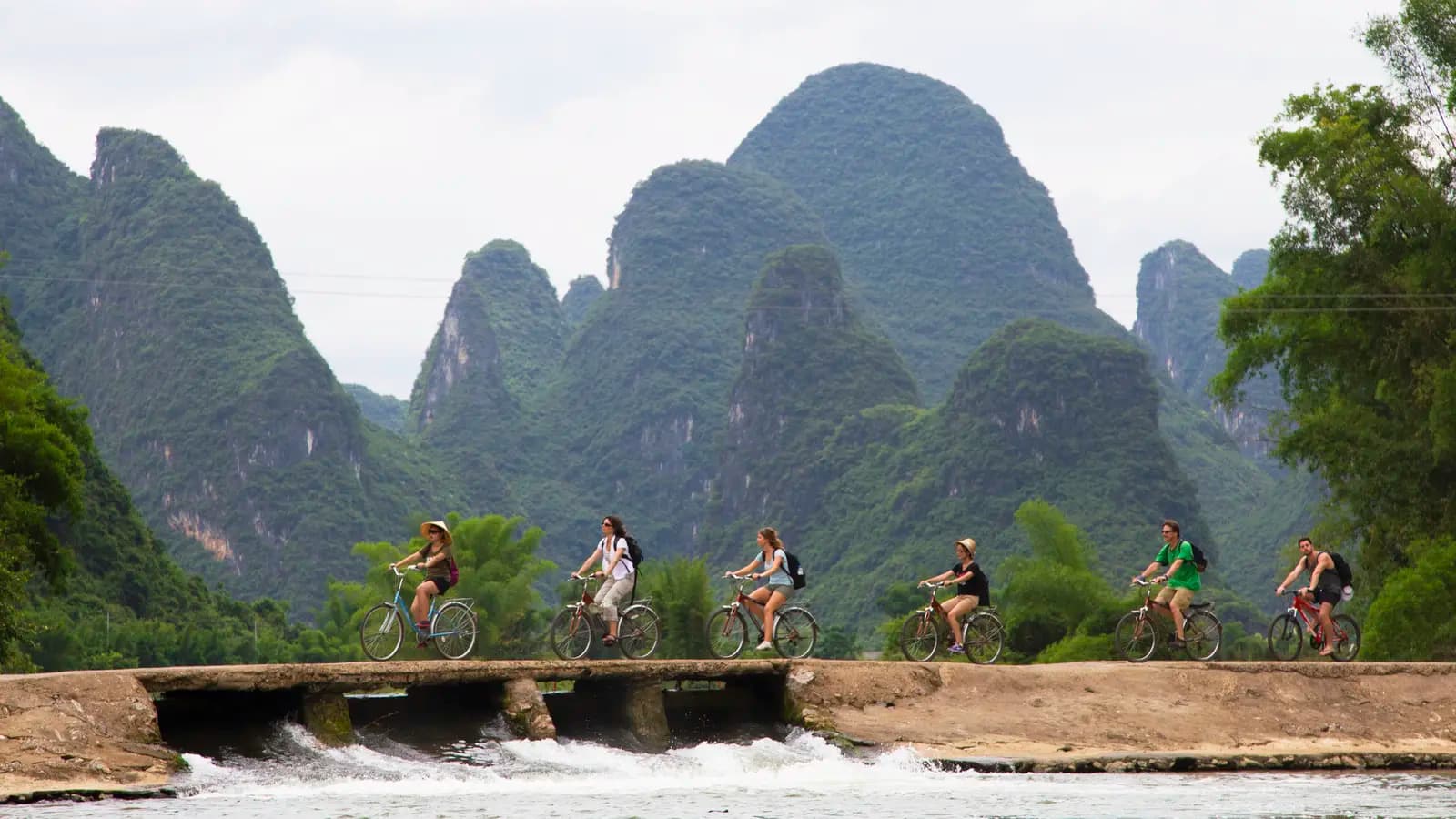
Some routes through this part of China lean further into that unhurried reputation, favouring bicycle rides through nearby villages and countryside walks over a strictly sightseeing-driven pace, among them a dedicated cycling and walking itinerary that starts, like most others, in Chengdu. It suits the region: the Sichuan Basin's flat, fertile land has supported farming for thousands of years, irrigated in part by the Dujiangyan system, an engineering project from the third century BC still in use today, which makes the surrounding countryside as much a piece of enduring history as the pandas themselves, even if it draws rather less attention.
Spring and autumn are the most comfortable seasons for Chengdu itself, avoiding the basin's humid summer haze and its damp, grey winters. The pandas, fortunately, are on display year-round regardless of what the sky above Sichuan is doing, though an early visit, before the midday heat sends them off to nap, tends to be the more rewarding one.
By Arthur Penhallow, the name Atlas & Passage’s editorial team writes under. Prices and dates in the trips below come from the operators and can change.