Journeys
Zhangjiajie, the stone pillars that look made up
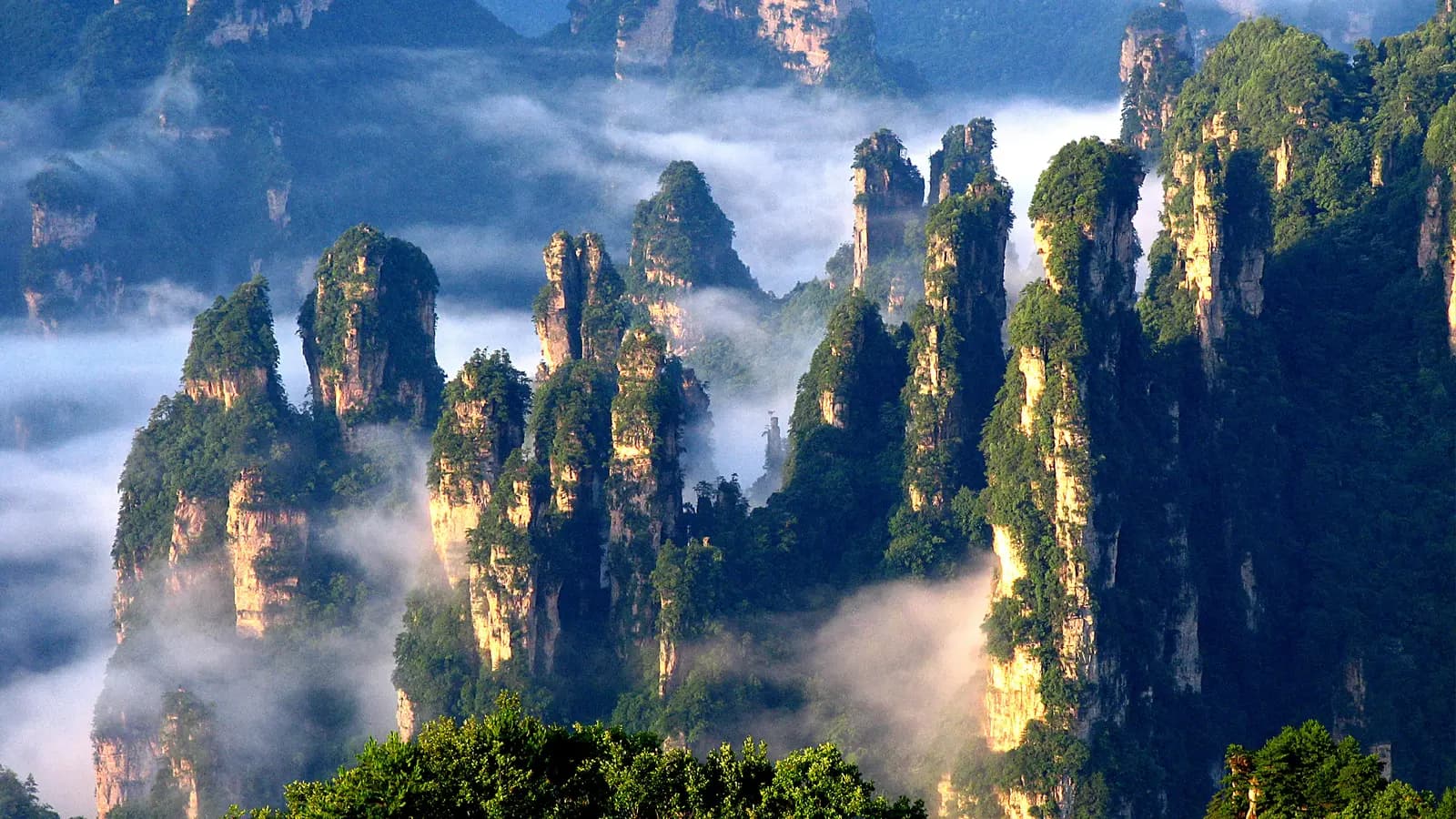
In the mountains of Hunan, thousands of sandstone pillars rise sheer out of the forest, their tops crowned with pines and wrapped in mist. They look like a painter's invention, or a film set, and in a sense they became one.
By Walter Pellow20 October 20264 min read
Chinese landscape painting has a long tradition of impossible mountains: tall, thin peaks rising straight up from the clouds, with a pine clinging to the top and perhaps a tiny scholar's pavilion halfway up. Western visitors have often assumed these were stylised fantasies. Then they see Zhangjiajie. In the Wulingyuan area of north-western Hunan province, more than three thousand pillars and peaks of quartz sandstone rise from forested valleys, many of them hundreds of metres high. Their sides are sheer, their tops are crowned with trees, and when the mist drifts between them, as it often does, they look exactly like a scroll painting.
How they formed
The pillars are the remains of a thick layer of sandstone laid down in an ancient sea, then lifted up by movements of the earth's crust. Over hundreds of thousands of years, water seeped into vertical cracks in the rock, widening them as it froze and thawed, while rivers cut down through the plateau. The stone between the cracks was left standing as columns and walls, which are slowly being worn away in their turn. The vegetation that grows on them, pines and shrubs rooted in cracks and ledges, gives them their particular character. The whole area, Wulingyuan, was inscribed as a World Heritage Site in 1992. Zhangjiajie National Forest Park, its best-known part, was established in 1982 as China's first national forest park.
The Avatar connection
In 2009 the film Avatar showed floating mountains on a distant moon, and the designers had drawn inspiration from mountain landscapes in China. Zhangjiajie was quick to make the connection. In 2010 one of its pillars was officially renamed Avatar Hallelujah Mountain, after the floating mountains in the film. The publicity drew huge numbers of visitors, particularly from within China, and the area has been heavily developed for tourism.
What to expect
The scale of the development is the honest caveat. The park is large, and getting around it involves shuttle buses, cable cars and, most famously, the Bailong Elevator, a glass lift built up the side of a cliff, which carries visitors more than three hundred metres up in a minute or two. On the plateaus at the top, paved paths and viewing platforms lead to the famous viewpoints, which can be extremely crowded on Chinese public holidays and summer weekends. Within a few minutes' walk of the main paths, though, the crowds thin, and walking down one of the valley trails, such as the Golden Whip Stream at the bottom of the gorges, gives a quieter perspective, looking up at the pillars from below.
The mist that makes the pillars so photogenic can also hide them completely. Spring and autumn generally give the best balance of clear views and comfortable temperatures. Summer is hot, humid and busy, with frequent rain, and winter brings occasional snow, which can be beautiful but closes some paths.
Getting there is easier than it used to be. The city of Zhangjiajie, at the edge of the scenic area, has an airport and a high-speed railway station. The town of Wulingyuan, at the main entrance, is full of hotels for visitors, and staying close to the park makes an early start much simpler.
The tours that go
Zhangjiajie is far from the classic China route of Beijing, Xi'an and Shanghai, and tours that include it usually pair it with other landscapes.
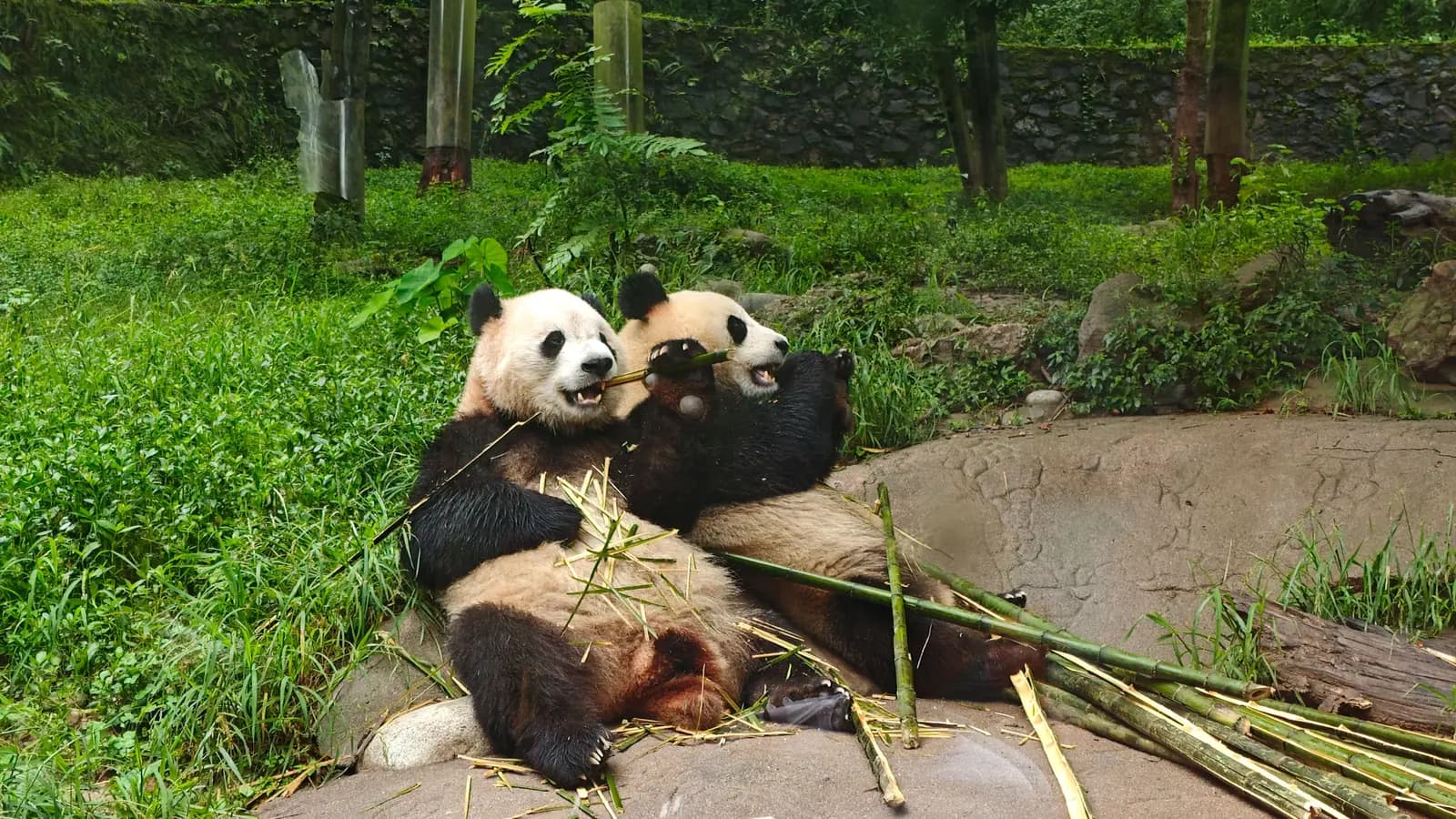
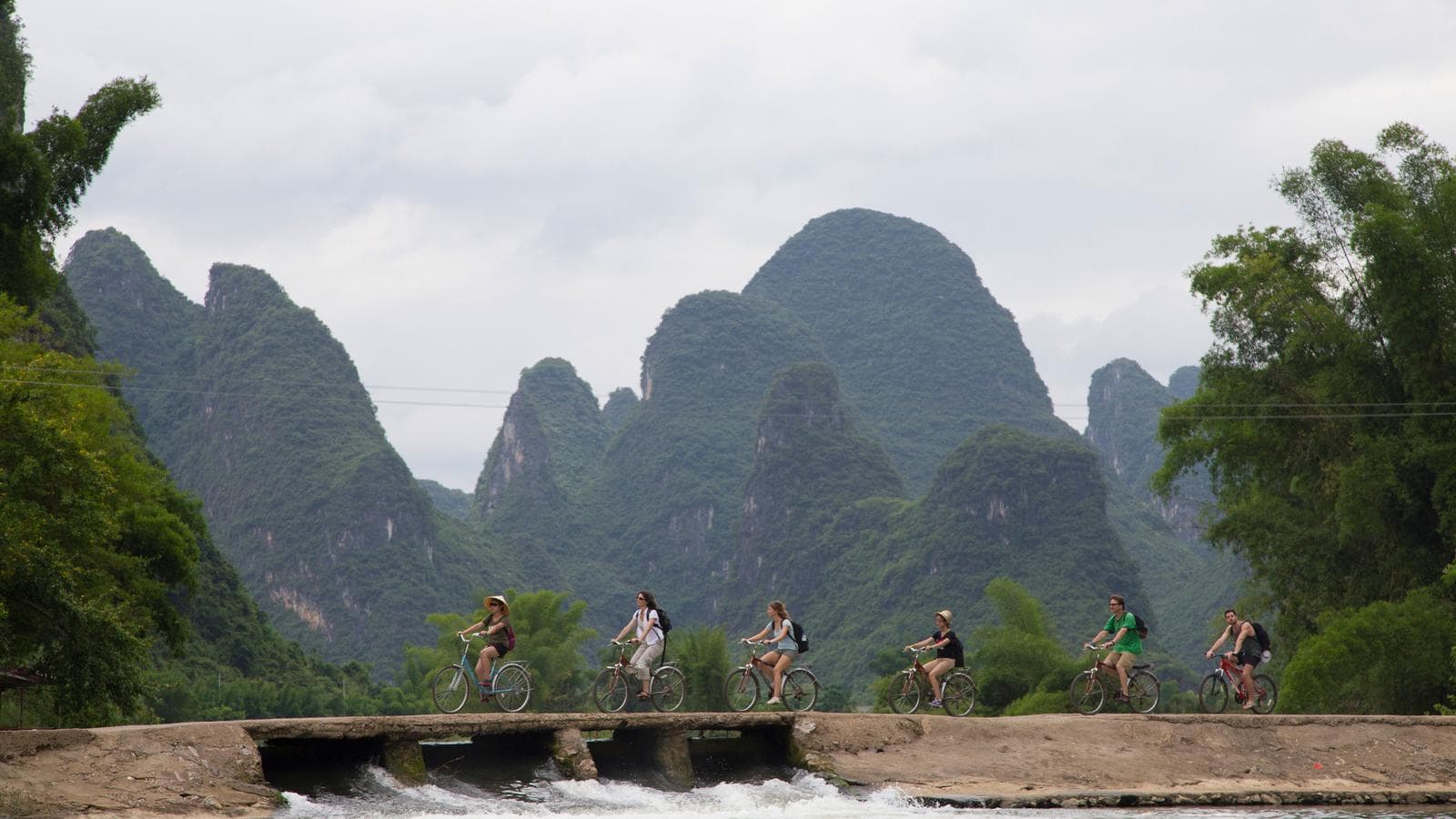
G Adventures' Journeys: Pandas and the Peaks of Zhangjiajie, nine nights from May to August, combines the park with Shanghai, Chengdu, home of the giant panda breeding centre, the karst hills of Yangshuo, and Hong Kong.
G Adventures' nine-night China national parks and cities trip, in December and January, adds the riverside city of Chongqing to Chengdu, with the old town of Ciqikou and the stilted buildings of Hongyadong, then Zhangjiajie and Yangshuo. A winter departure means fewer crowds, and a chance of snow on the peaks.
G Adventures' Journeys: Iconic China, fifteen nights, takes the long view, combining Zhangjiajie with Beijing and the Great Wall, Xi'an, Shanghai, Chengdu and Yangshuo.
However you get there, give the park at least two full days, and get up early. The first cable car of the morning, with the mist still lying in the valleys and the pillars rising out of it, is worth more than an afternoon on the crowded viewpoints.
By Walter Pellow, the name Atlas & Passage’s editorial team writes under. Prices and dates in the trips below come from the operators and can change.