Slow travel
Takayama and Shirakawa-go, the Japan of thatch and mountains
High in the mountains of central Japan, a merchant town of dark wooden streets and a valley of steep thatched farmhouses kept their old shape while the cities rebuilt. They are best taken slowly.
By Walter Pellow20 October 20264 min read
The mountains of central Honshu, the Japanese Alps, cut the island in two. For most of history the region of Hida, in their midst, was remote and hard to reach, a land of steep valleys, heavy winter snow and forests that supplied timber and carpenters to the capital. The isolation that made life there hard is also what has preserved it. Takayama, the old capital of Hida, and the farming villages of the Shō river valley to the west are two of the best places in Japan to see what the country looked like before the twentieth century.
Takayama, the merchant town
Takayama grew up as a castle town in the sixteenth century and then, under the shoguns, as a directly governed territory rich in timber. Its merchants prospered, and their houses and shops still line the old streets of the Sanmachi district: long, low, dark-wooden buildings with latticed fronts, narrow alleys between them, and small canals running along the edge of the pavement. Several of the old houses belong to sake breweries, marked by a large ball of cedar leaves hanging over the door. The ball is hung fresh and green when the new sake is pressed and turns brown as it matures, and a few of the breweries offer tastings.
The town has two morning markets, one along the Miyagawa river and one in front of the Takayama Jinya, the old government house of the shogun's officials, the only such building to survive in Japan. Local farmers sell vegetables, pickles, flowers and crafts. Hida beef, a well-marbled local wagyu, is the town's culinary pride, and it turns up everywhere, from grilled skewers at street stalls to sushi.
Takayama is also known for its festivals in spring and autumn, when great carved and lacquered floats, some with mechanical puppets, are paraded through the streets. Outside festival days, many of the floats can be seen in the town's exhibition hall.
Shirakawa-go and the thatched houses
West of Takayama, in the deep valley of the Shō river, are the villages of Shirakawa-go and, further down the valley, Gokayama. They are famous for their gasshō-zukuri farmhouses, great timber buildings with steep, high thatched roofs. The name means "praying hands", from the shape of the roof, which is built steep to shed the deep snow that falls here every winter. Inside, the big attic floors were used for raising silkworms, and families lived together in large households under one roof. The thatch is still replaced every few decades by the community working together, in a tradition of mutual help.
The villages are a World Heritage Site, and the largest, Ogimachi, is busy with visitors in the middle of the day. The best of it is in the early morning or the evening, or seen from the viewpoint on the hill above, from which the steep roofs look like a scattering of tents in the green valley. In winter, under heavy snow, it is one of the most famous scenes in Japan.
How to fit them in
G Adventures' Discover Japan, thirteen nights from October to December, includes Takayama on a route that also takes in Tokyo, Lake Kawaguchiko, Kanazawa, Kyoto, Hiroshima and Miyajima. Travelsphere's Japan, Land of the Rising Sun, twelve nights, includes both Takayama and Shirakawa-go, along with Matsumoto, the Daio wasabi farm, Hakone and Mount Fuji, Kyoto, Nara and Hiroshima.
For a slower and more active way through the region, Explore Worldwide's Cycle Japan, twelve nights in May, October and November, includes Shirakawa-go on a route from Kyoto and Kanazawa towards the Sea of Japan coast. Its places include Tonami, with its farmhouses scattered among the rice fields, and Takaoka, a town long known for bronze casting. It also includes Imizu, Itoigawa and Joetsu, and Sado Island. Sado is a large, quiet island once used as a place of exile and famous for its gold mines, now part of a World Heritage listing.
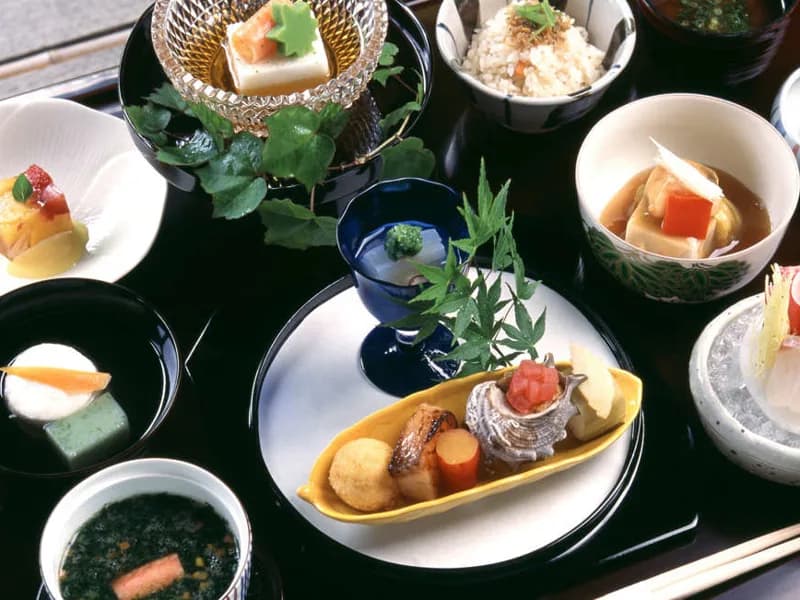
Whichever way you go, the region rewards those who stay the night. Takayama after the day visitors have gone, with the lanterns lit along the old streets, is a different place. A night in a traditional inn, with a hot bath and a long dinner of mountain vegetables, river fish and Hida beef, is part of the reason for going.
By Walter Pellow, the name Atlas & Passage’s editorial team writes under. Prices and dates in the trips below come from the operators and can change.