History
Tokyo, the city that rebuilt itself twice in one century
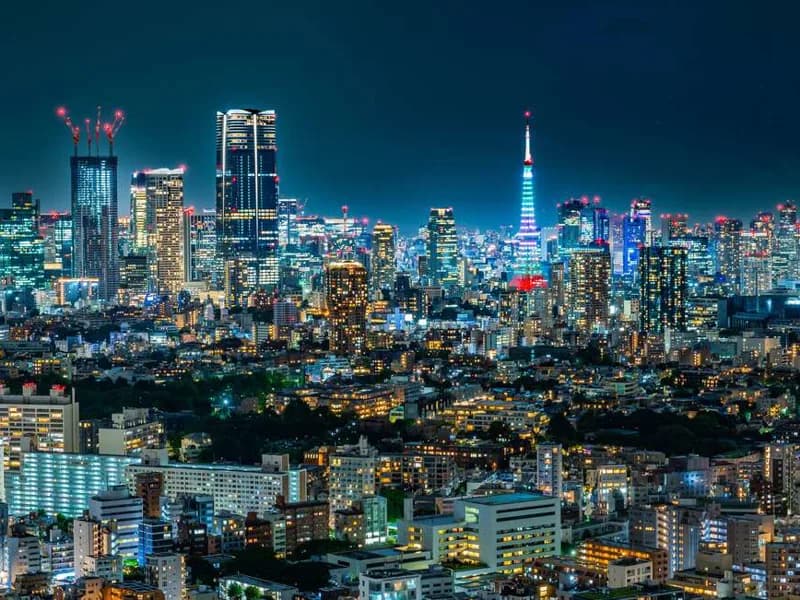
Tokyo looks almost entirely new, and for good reason. In the space of about twenty years it was destroyed twice, once by earthquake and fire and once by war. The old city survives in fragments, and knowing where to look changes how you see the whole.
By Walter Pellow20 October 20264 min read
Visitors to Tokyo often remark that it doesn't look old. Compared with Kyoto, or with European capitals, there is very little in the way of historic streets, and most of what you see was built after the 1960s. Yet Tokyo is an old city. As Edo, the castle town of the Tokugawa shoguns from 1603, it grew into one of the largest cities in the world by the eighteenth century, with well over a million people. It was renamed Tokyo, the "eastern capital", when the emperor moved there in 1868. The reason so little of that history is visible lies in two catastrophes, barely twenty years apart.
1923: the earthquake and the fire
Just before noon on 1 September 1923, the Great Kantō earthquake struck the Tokyo and Yokohama region. The shaking itself was severe, but the greater destruction came from the fires that broke out as lunch was being cooked over open flames in a city built largely of wood and paper. Driven by strong winds, they burned for days. More than a hundred thousand people died, and large parts of the city were destroyed. The disaster is still marked each year on 1 September, Japan's Disaster Prevention Day.
Tokyo rebuilt quickly, and in a new way. Wider roads, parks to act as firebreaks, and new buildings in reinforced concrete changed the face of the city. The 1920s and 1930s produced a modern, cosmopolitan Tokyo of department stores, cafés and cinemas.
1945: the firebombing
It lasted barely twenty years. In the last months of the Second World War, American bombers attacked Tokyo repeatedly with incendiary bombs. The raid of the night of 9 to 10 March 1945 was the most destructive single air raid in history. It started a firestorm across the densely populated east of the city, and an estimated hundred thousand people died in one night. By the end of the war, much of Tokyo had been burned again.
The second rebuilding, after 1945, made the city that visitors see today. It accelerated in the run-up to the 1964 Olympics, the first held in Asia, when Tokyo gained elevated expressways, a monorail and the first bullet train line. The city has been rebuilding itself continuously ever since, in steel, glass and concrete, with earthquake engineering among the most advanced in the world.
Where the old city survives
The old Tokyo survives in pockets, mostly rebuilt but faithful to the past. Asakusa, in the north-east, grew up around the temple of Sensō-ji, founded, by tradition, in the seventh century. Its main hall was destroyed in 1945 and rebuilt in the 1950s, but the long approach of small shops, the Nakamise, and the great gate with its huge red lantern still give it the feel of the old merchant city of Edo. Ueno, nearby, has a great park of museums and temples, and the market of Ameyoko under the railway tracks, which began as a black market in the years after the war. Yanaka, a short walk north of Ueno, is the most complete survival. It came through both disasters relatively lightly, and it is a quiet district of temples, cemeteries, wooden houses and small shops.
The Imperial Palace, in the centre, stands on the site of Edo Castle. Its moats and massive stone walls are the most substantial reminder of the shoguns' city. Shibuya, Shinjuku and Harajuku, on the other hand, show the newest Tokyo at full volume.
Tours that start in Tokyo
Explore Worldwide's Essential Japan, seven nights in spring and autumn, spends its Tokyo days in Asakusa, Ueno Park and the Ameyoko market, Yanaka, Shibuya and Shinjuku. It then heads for the country around Mount Fuji, including Shizuoka and Suruga Bay, Lake Tanuki and the Shiraito and Otodome waterfalls, and on to Kyoto.
G Adventures' Tokyo to Osaka: Neon-lit Cities and Tranquil Countryside, seven nights in May, travels from Tokyo to Kanazawa, Hiroshima and Miyajima Island, and Osaka. G Adventures' Active Northern Japan: Winter in Tokyo and Hokkaido, ten nights in February and March, includes Asakusa, the Nakamise shopping street, Harajuku, Ueno Park and the Imperial Palace as well as the snow of Hokkaido.
Seen with its history in mind, Tokyo's newness becomes part of its story rather than a lack of one. It is a city that has twice lost almost everything, and twice decided to carry on.
By Walter Pellow, the name Atlas & Passage’s editorial team writes under. Prices and dates in the trips below come from the operators and can change.