Walking
Walking the wall, one dynasty at a time
The Great Wall is not one wall but many, built and rebuilt over two thousand years. The stretches near Beijing that most people walk are the youngest of them, and the steepest.
By Arthur Penhallow26 September 20264 min read
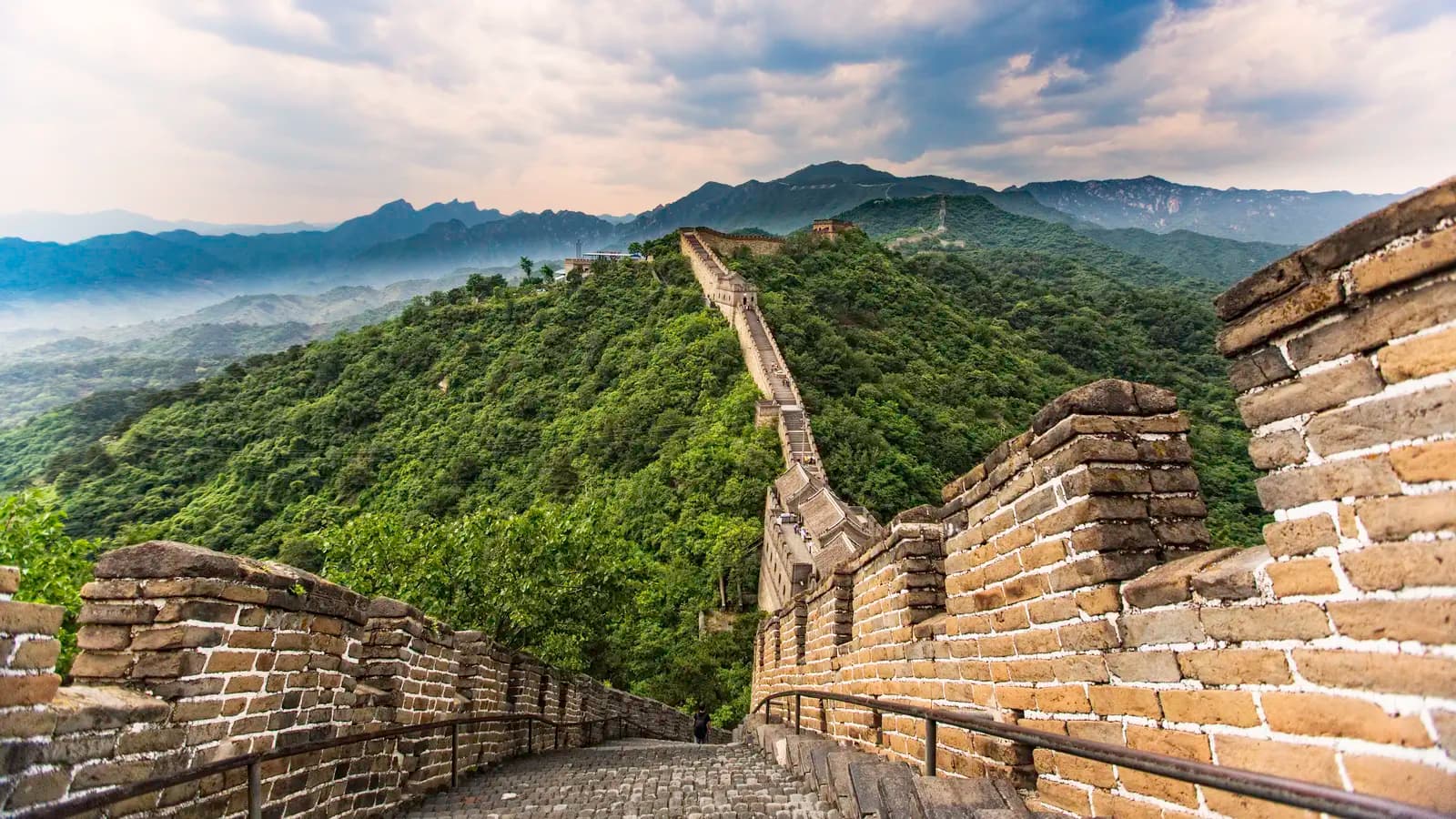
There is a persistent claim that the Great Wall of China is visible from space with the naked eye. It is not; astronauts have said so repeatedly, and a structure a few metres wide, however long, is not built to be seen from orbit. It is built to be seen from the ground, ideally by an approaching army, which is rather the point. The wall was never one continuous project but a patchwork of fortifications raised, abandoned and rebuilt by different dynasties over more than two thousand years, and the sections that most visitors walk today, watchtowers marching along a mountain ridge north of Beijing, are almost all Ming-dynasty work, built from the fourteenth century onward to keep Mongol and other northern forces out.
A national survey completed in 2012 measured every wall, spur and fortification from every dynasty combined and arrived at a figure of just over twenty-one thousand kilometres. The Ming sections alone, the ones built to last and mostly still standing, run to roughly nine thousand. Walking any single stretch of it, even a strenuous day's worth, is a reminder of how much labour and how many centuries the whole structure represents.
Why the wall goes where it goes
The wall does not follow the easiest route between two points; it follows the ridge line, because a fortification on high ground is harder to storm and easier to signal from. This is obvious in principle and considerably more persuasive in the legs. Mutianyu, Jinshanling and Simatai, the three sections most walking itineraries use, climb and drop along the contours of the mountains rather than cutting through them, with watchtowers spaced at intervals that allowed beacon fires, and later gunpowder signals, to relay a warning along the whole line within hours. Some stretches near Simatai are steep enough that the original builders added stone steps of markedly uneven height, on the reasonable assumption that an attacker unfamiliar with the rhythm would stumble.
Restored, and deliberately not restored
Mutianyu, the section closest to Beijing and the most heavily visited, has been extensively restored and comes with a cable car for those who would rather not climb the access path. Further from the capital, at Jinshanling and especially Simatai, the wall is left rougher: crumbling in places, unrailed in others, walked by far fewer people. Neither version is more authentic than the other in any simple sense, since both are the product of choices made about what to repair and what to leave, but the difference in atmosphere is considerable. A restored section gives a clear sense of how the wall was meant to look; an unrestored one gives a clearer sense of how long it has been standing since anyone last meant it to look like anything.
The wall as a working border, not a monument
It is worth remembering that the wall was infrastructure before it was a landmark: garrisoned, provisioned and manned by soldiers who lived along it for years at a time, with customs posts controlling trade at the passes. Shanhaiguan, at the wall's eastern end where it meets the sea, was one of the most important of these passes, guarding the narrow coastal corridor between Manchuria and the North China Plain. A walking itinerary that starts there, rather than at the tourist-friendly sections near Beijing, gives a better sense of the wall as a functioning line rather than a backdrop, though it asks considerably more of the legs.
A shorter introduction
Not every visitor wants a multi-day walking trip, and the wall accommodates that too. Mutianyu can be seen, and its watchtowers climbed, as a single day out from Beijing on almost any general itinerary through the city, a fair way to get a sense of the structure without committing several days to it. It will not deliver the solitude of Simatai or the scale of a coast-to-mountains walk, but it delivers the wall, which for a first visit to China is very often enough.
The best months for walking any of these sections are spring and autumn, when the ridge lines are clear of both summer haze and the ice that can make the steeper stone steps treacherous in winter. Good boots matter more here than on most European hillwalks; the steps were not built with comfort in mind. Shorter general tours through Beijing, which stop at Mutianyu for half a day rather than several, are listed alongside the dedicated walking trips below.
By Arthur Penhallow, the name Atlas & Passage’s editorial team writes under. Prices and dates in the trips below come from the operators and can change.