Journeys
Mount Fuji, and why you may not see it
Japan's sacred mountain is the most painted, photographed and revered peak in the country, and a great many visitors who go to see it see only cloud. Knowing when and where to look improves the odds considerably.
By Walter Pellow20 October 20264 min read
Mount Fuji is, at 3,776 metres, the highest mountain in Japan, and it is very nearly the perfect volcano: a symmetrical, snow-capped cone rising alone from the surrounding country, visible on a clear day from Tokyo, about a hundred kilometres away. It last erupted in 1707, covering Edo in ash, and it is still classed as active. For more than a thousand years it has been a sacred mountain, a dwelling place of gods, climbed by pilgrims and worshipped at shrines around its base. Hokusai's Thirty-Six Views of Mount Fuji made it the emblem of Japan around the world. In 2013 it was inscribed as a World Heritage Site, not for its geology but as a place of worship and a source of artistic inspiration.
It also has a habit of disappearing. A great mountain standing alone attracts its own weather, and Fuji is very often wrapped in cloud, or simply lost in haze, for days at a time. Visitors who have travelled a long way to see it sometimes leave without a glimpse.
When to look
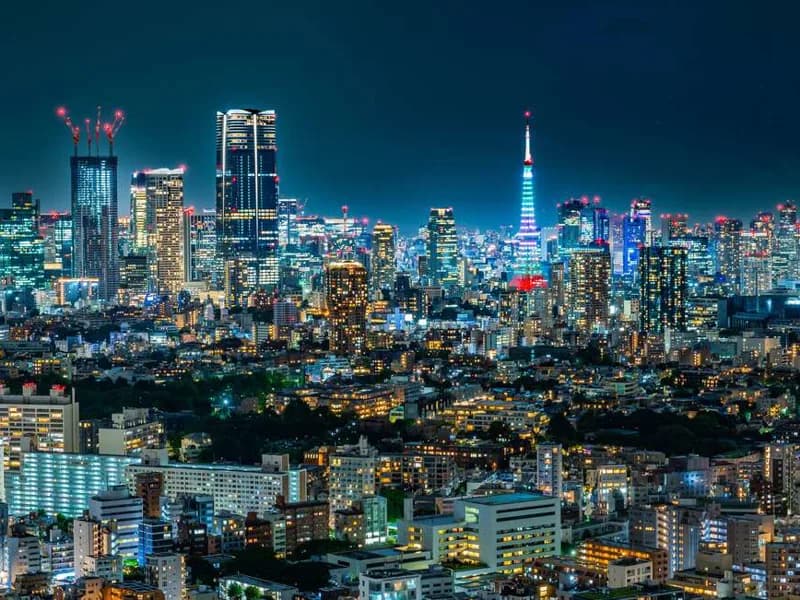
The odds depend heavily on the season. Winter, roughly from late October to February, is by far the best time. The air is cold and dry, the skies over the Pacific side of Japan are often clear for days at a time, and the summit is capped with snow, which makes it stand out sharply against a blue sky. Even from central Tokyo, the mountain can be seen on clear winter mornings from high buildings.
Summer is the worst. From June through to September, warm, humid air brings haze and cloud, and on many days the mountain is not visible at all from the surrounding lakes, let alone from Tokyo. The rainy season in June doesn't help. Spring and early autumn are in between.
The time of day matters too. Early morning is generally clearest, before the day's heat builds cloud around the summit, and the mountain often vanishes by midday. If you are staying near it, it is worth getting up at dawn and looking out of the window.
Where to look
The Fuji Five Lakes, on the northern side of the mountain, are the classic place to stay for a view. Lake Kawaguchiko, the most developed, has the mountain rising directly across the water, and on a still morning its reflection appears in the lake. Hakone, to the south-east, is a hot spring resort area in the hills, where the mountain can be seen across Lake Ashi on a clear day. To the west, the Shiraito Falls are curtains of spring water emerging from the rock in hundreds of thin streams. The water is snowmelt from Fuji that has filtered through the volcanic rock, and the falls are part of the mountain's World Heritage listing. Suruga Bay, to the south, gives views of the mountain from the sea.
As for climbing it, the official season is short, generally from early July to early September, when the snow has gone and the mountain huts are open. Many climbers set out in the night to reach the summit for sunrise. In recent years numbers on the most popular trail have been limited, so it is worth checking the current rules.
The tours that include Fuji
Explore Worldwide's Essential Japan, seven nights, runs in spring and autumn, with departures in October and November that give a better chance of a view. After Tokyo, it spends time in the country around the mountain, with Shizuoka, Suruga Bay, Lake Tanuki and the Shiraito and Otodome falls, before Kyoto.
G Adventures' Japan: Osaka, Kyoto, Mount Fuji and Tokyo, six nights, includes Lake Kawaguchiko. It runs in May and June, when the chance of a clear view is lower, so it is worth treating Fuji as a bonus rather than the point. Travelsphere's Japan, Land of the Rising Sun, twelve nights, includes Hakone and Mount Fuji on a longer route through Takayama, Matsumoto, Shirakawa-go, Kyoto, Nara and Hiroshima.
If you don't see it, you are in good company. Generations of Japanese pilgrims and poets have written about the mountain hidden in cloud. And if you do, on a clear winter morning, with the snow catching the first light, you will understand at once why it has been worshipped for so long.
By Walter Pellow, the name Atlas & Passage’s editorial team writes under. Prices and dates in the trips below come from the operators and can change.