Seasons
Where to go in November, when Southeast Asia dries out
While Britain settles into its wettest, greyest month, half of tropical Asia is doing the opposite. November is when the monsoon lifts from Vietnam and Cambodia and the seas around the Maldives calm down for the whole of the winter.
By Arthur Penhallow26 September 20264 min read
November in Britain is the month of drawn curtains and early dark, which makes it a reasonable time to be reminded that half the world is on an entirely different weather clock. Across mainland Southeast Asia, the wet season that has defined the second half of the year finally breaks in October and November, leaving a long, dry, comfortable stretch that runs through to the following spring. In the Maldives, a thousand miles further south-west across the Indian Ocean, the seas that the north-east monsoon has been stirring up settle at almost exactly the same time. None of this is coincidence so much as geography, but the effect for a traveller is the same: November is when a large part of Asia opens for business.
Vietnam, from Hanoi to the Delta
Vietnam runs nearly seventeen hundred miles from north to south, which means its weather rarely does the same thing in two places at once, but by November the wet season has cleared from Hanoi and the north, and the days along the length of the country settle into something reliably pleasant. A route from Hanoi, out to the limestone karsts of Halong Bay, down through the old imperial capital of Hue and the lantern-lit trading port of Hoi An to Ho Chi Minh City and the Mekong Delta, uses the whole length of the country to tell a fairly complete story of it, from dynastic capital to French colonial port to the fast, chaotic south.
Cambodia, and the temples at their sharpest
Just across the border, the same tour typically continues to Siem Reap and the temple complex of Angkor, built by the Khmer Empire between the ninth and fifteenth centuries and, at its core, still the largest religious monument in the world. Angkor is a demanding place to visit in the wet season, when the causeways flood and the heat sits heavy under grey skies; November's clearer air and firmer ground make the difference between a trudge and a genuinely absorbing few days among the ruins.
For families, the same dry-season logic applies further south, on a route that adds Thailand to the mix, with time in Ho Chi Minh City, the Mekong Delta, the beaches around Sihanoukville and Bangkok, built at a pace and with the kind of activity days that keep children interested between temples.
The Maldives, once the swell drops
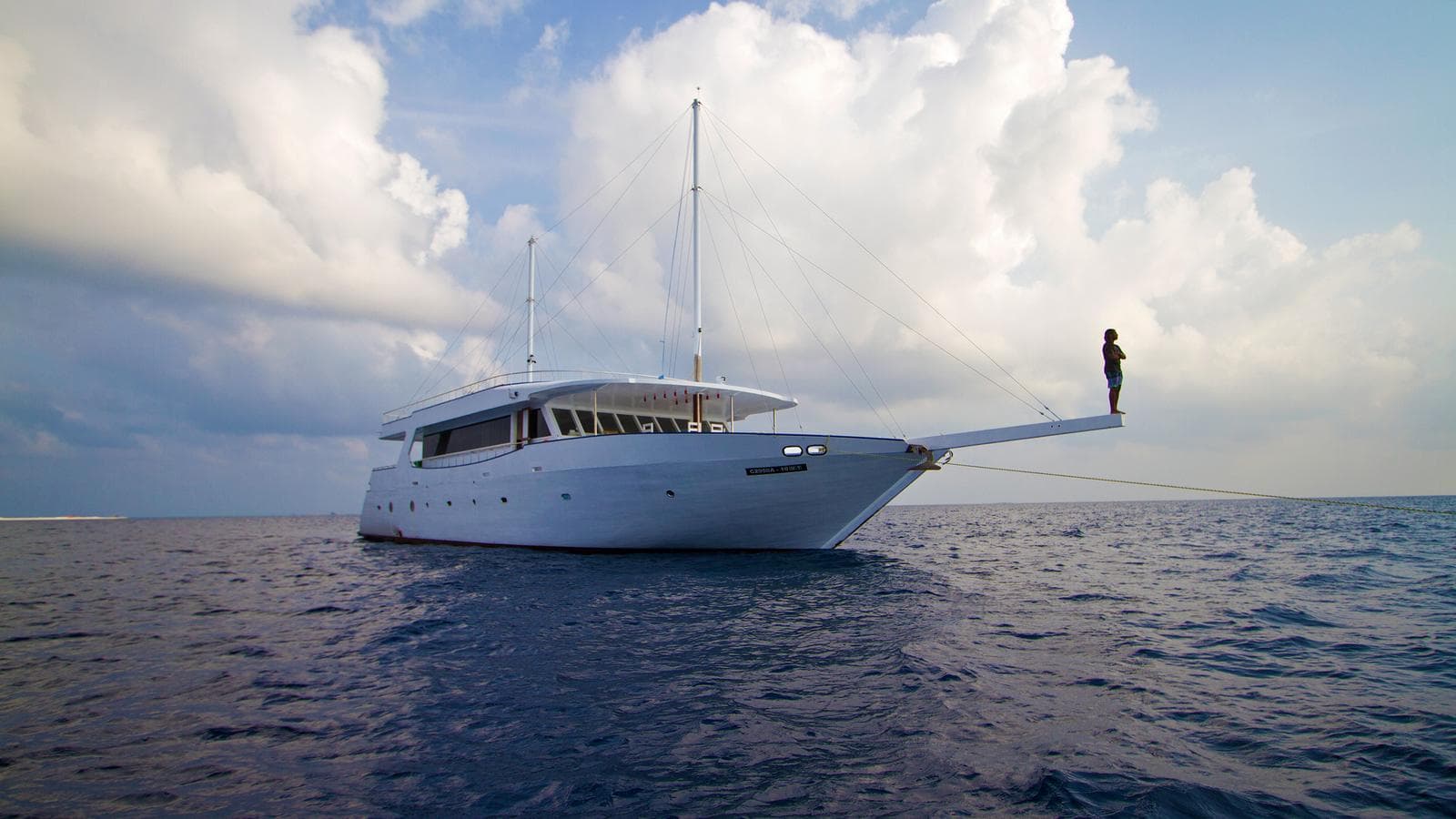
The Maldives sit close enough to the equator that temperature is never really the issue; what changes through the year is the state of the sea. The north-east monsoon, which brings drier, calmer conditions, typically sets in around November and holds through the following spring, which is why cruises through the atolls south of Malé, visiting smaller islands such as Fulidhoo and Felidhu aboard a traditional dhoni, tend to cluster in exactly this window. It is a slower, more contained kind of trip than Vietnam or Cambodia, closer to a boat-based house party among a scatter of low coral islands than a journey through history.
A dhoni, the traditional Maldivian sailing vessel now usually fitted with an engine, gives a different vantage point on the atolls from a resort stay: island-hopping by day between low, palm-fringed sandbanks that barely clear the waterline, snorkelling over reef systems reached only by boat, and evenings anchored somewhere with almost nothing else in sight. It suits travellers who want the Maldives without committing a fortnight's budget to a single overwater villa, and November's settled seas make the crossings between atolls considerably more comfortable than they would be even a month earlier.
Choosing your November
If you want a single country told well, Vietnam alone is more than enough for a fortnight, and its length means the north and south feel like genuinely different places. If ruins are the draw, add Cambodia and time the trip for the temples at Angkor rather than the beach afterwards; the difference between visiting in the wet season and the dry one is not subtle. If what you actually want is calm water and very little to decide each day, wait for the Maldives' dry season to begin, because for once, in a month that Britain spends indoors, it already has.
By Arthur Penhallow, the name Atlas & Passage’s editorial team writes under. Prices and dates in the trips below come from the operators and can change.